
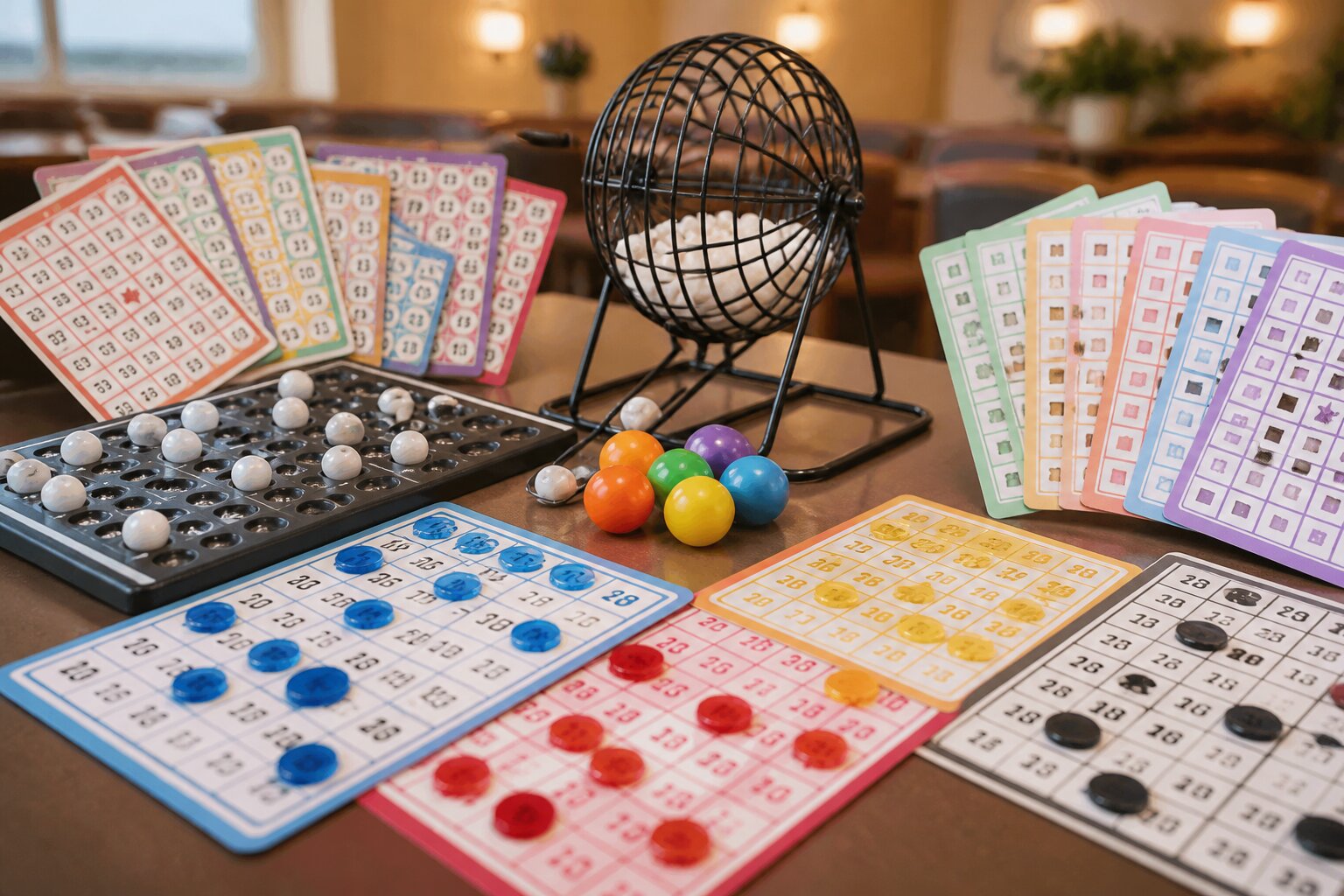
Bingo is one of the UK’s best-loved games, but there’s more to it than just calling out “house”. From lively halls to online rooms, bingo comes in a range of formats—each with its own pace, rules and style.
Whether you’re new to the game or you’ve been playing for years, knowing the differences between versions will help you pick the right game for your mood and timetable.
Curious about how 90-ball bingo compares with 75-ball, or what makes speed bingo different? Read on to learn how each variation works and what to expect when you join a game.
What Are The Main Types Of Bingo?
Bingo appears in several common forms, each giving a distinct playing experience. The three main types you’ll encounter in the UK are 90-ball bingo, 75-ball bingo and 80-ball bingo.
90-ball bingo is the traditional version played in many British bingo halls. Tickets have three rows and nine columns, and there are three ways to win: one line, two lines, or a full house.
75-ball bingo is more common in the United States but is widely available online. Tickets use a 5x5 grid and the centre square is often marked “free”. Games use specific patterns—such as a line, an X or a full house—which are declared before play.
80-ball bingo is a modern, quicker option usually played on a 4x4 grid online. It offers a variety of winning patterns, frequently focusing on lines or small shapes rather than the full house structure of 90-ball.
Each format changes the rhythm of play and how you follow your tickets, so trying different types is the best way to see which suits you.
How Do 90-Ball And 75-Ball Bingo Differ?
The main differences are ticket design and the way wins are formed.
90-ball bingo uses tickets with three rows and nine columns. Each row contains five numbers and four blank spaces. Prizes are typically awarded for completing a single line, two lines, and finally a full house where every number on a ticket is marked.
75-ball bingo uses a 5x5 grid, with a central “free” square that helps form patterns more quickly. Games announce a target pattern at the start—this might be a straight line, a cross, an X or a more complex shape—and the first player to form that shape wins.
Both games rely on random number draws for their outcomes, so the experience is shaped by the format rather than any strategy. After a few rounds you’ll find which layout and pace you prefer.
What Are The Rules Of Popular Bingo Games?
At its core, bingo is straightforward: players have tickets and mark numbers as they are drawn. Each variant has clear rules about which combinations constitute a win and what the prize structure is.
In 90-ball bingo, prizes commonly follow a sequence: one line, two lines, then full house. Numbers are drawn at random and announced either aloud in halls or on a screen online, so paying attention to calls is key.
For 75-ball bingo, the host specifies the winning pattern before play begins. That pattern defines the target, and wins are awarded to the first ticket that completes it. Online systems typically verify wins automatically, whereas in clubs a player will claim a win audibly.
In 80-ball bingo, the smaller 4x4 grid and fewer numbers called make for shorter, faster games. Patterns are usually simpler—lines, squares or diagonals—and the structure of prizes will vary by organiser.
Knowing the rule differences helps you focus on the right objectives in each game and makes the experience more enjoyable.
Less Common Bingo Variations You Should Know
If you want to explore beyond the classics, several other styles put unique spins on the game. These versions tweak:
- the pattern required to win,
- the timing or speed of play,
- extra features or mini-games added to rounds.
These small changes keep sessions varied and can help players find a format that suits their pace and preference.
Pattern Bingo
Pattern bingo asks players to form a specified shape on their ticket, such as a plus sign or an L. The required design is announced before play, and the first person to match it wins.
This format emphasizes visual recognition and can feel more creative than straight-line games. Because the shapes vary, it keeps attention levels high and rewards quick scanning rather than just waiting for a familiar line to appear.
Speed Bingo
Speed bingo accelerates the pace: fewer numbers are called and rounds finish rapidly. The quick format appeals to players who prefer brief sessions or want to play multiple rounds in a short period.
Rounds can be intense, so it is important to play at a comfortable tempo and take breaks as needed. Speed bingo is well suited to social events or online play where compact sessions are desirable.
Deal Or No Deal Bingo
This themed variant incorporates an endgame feature inspired by the TV show. Winners of the full house may trigger a mini-game where boxes are opened and offers are made, adding an extra layer of strategy to the finale.
The added feature can increase suspense and provide choices beyond simply claiming a prize, but it also introduces more complexity. Ensure you understand the rules and any prize structures before taking part.
These alternatives refresh the core mechanics while keeping the basic idea of marking drawn numbers intact, so trying one can be a fun change of scene. Play responsibly and choose formats that fit your time, budget and comfort level.
Are Bingo Rules The Same Online And In Clubs?
The essential rules—using tickets, marking off drawn numbers and achieving a declared objective—remain the same whether you play in a club or online. What changes is how the game is managed and how you interact with it.
In clubs, players mark physical tickets and call out wins; the atmosphere is social and interactive. Online, the software typically marks numbers for you and detects wins automatically, reducing the chance of missed calls and allowing you to play multiple cards with ease.
All regulated bingo in the UK is subject to oversight designed to ensure fair play and clear player protections, so operators must follow established standards. Before joining a new provider or variation, it’s wise to check the game rules and the provider’s terms so you know how wins are verified and prizes are paid.
How Do Bingo Tickets And Cards Work?
A bingo ticket or card contains a unique set of numbers laid out according to the game format. Ticket generation is random to ensure fairness, and the layout determines what counts as a win for that version of the game.
In physical halls, tickets are printed and players mark numbers with a dabber or pencil. Online, tickets are displayed on-screen and the system may auto-mark calls; some sites still allow manual marking for those who prefer it.
You cannot choose numbers on most tickets, and outcomes depend on the sequence of numbers drawn. Understanding the ticket layout for the game you’re playing helps you spot potential wins more quickly and enjoy the flow of each round.
What Prizes Can You Win In Different Bingo Games?
Prizes vary by organiser and game type. Common rewards include cash payouts, vouchers or occasional themed items, and some games feature progressive jackpots or special bonus rounds.
In traditional formats, prizes are often tiered—smaller amounts for one line, larger for two lines, and the biggest for a full house. Pattern games award prizes for the specific designs announced in advance. The scale of prizes reflects factors like ticket cost, number of players and promotional structure.
Prizes are not guaranteed for every player; they depend on being the first to meet the game objective. The appeal is the shared experience and the chance to win a reward when your ticket matches the draw.
Do Bingo Myths About Rules And Variations Exist?
Yes. A common misconception is that some versions are “easier” to win than others. In truth, the outcome in any bingo game follows the same principle of random number draws, and ticket allocation is designed to be impartial.
Another myth is that specific ticket choices or patterns can change the probability of winning. Because tickets are distributed randomly and numbers are drawn at random, no ticket selection method can influence outcomes.
If you hear claims that a particular game or pattern improves results, it’s sensible to treat them with scepticism. Focus instead on choosing formats you enjoy and understanding the published rules and prize structures.
Choosing The Right Bingo Game For You
Picking a game comes down to the experience you want and the time you can commit. Consider pace, ticket layout and how interactive you want the session to be.
Think about game pace. Some games move slowly, offering relaxed sessions where conversation and atmosphere are part of the draw. Others are brisk and designed for quick rounds.
Look at ticket formats. If you prefer larger grids and longer sessions, the three-row tickets of 90-ball may suit you. If you like compact cards and pattern-based goals, 75-ball or 80-ball could be more appealing.
Play for enjoyment. Outcomes are determined by random draws and there are no guarantees of winning, so approach games as entertainment. Set personal spending limits and use any safety tools offered by the operator to keep your play within comfortable boundaries. Choosing a style you enjoy will make the experience more satisfying.
If you’re ready to try a new variant, browse the available games and pick one that fits your timing and interests — then sit back and see how the round unfolds.
**The information provided in this blog is intended for educational purposes and should not be construed as betting advice or a guarantee of success. Always gamble responsibly.