
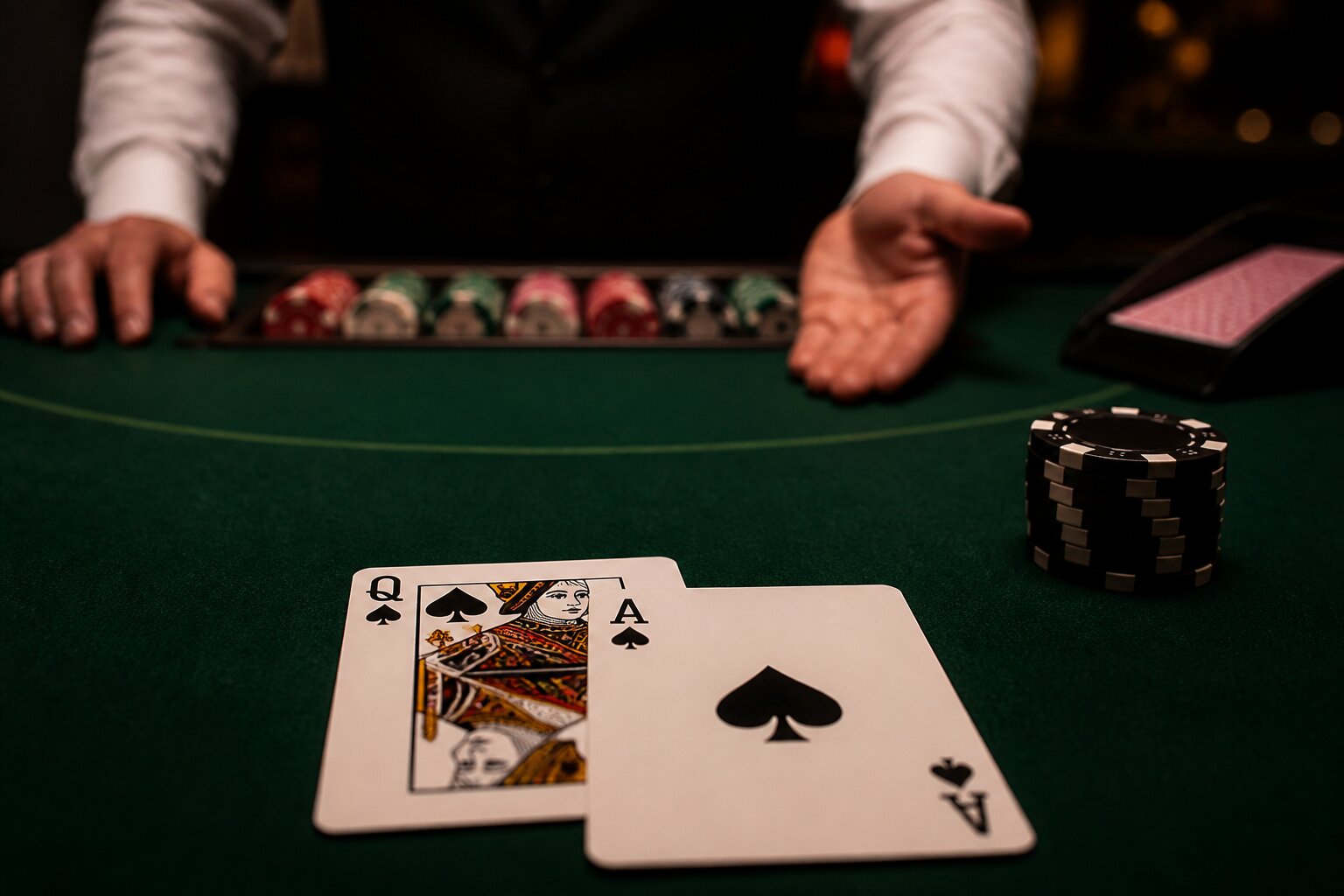
Ever wondered whether you can end your game of blackjack by landing on a power card? You’re not alone—this question trips up plenty of players because modern games come in so many flavours.
Before you hit or stand on your next hand, it helps to know exactly what the rules allow. Clear rules matter for both your strategy and your comfort at the table.
In this post, we’ll explain how power cards are used (or not used) in blackjack, how different venues handle them, and what to expect if a dispute arises. Read on to get the facts and avoid confusion when you play.
What Is a Power Card in Blackjack?
The phrase "power card" isn’t part of classic blackjack terminology. Most often people use it informally to mean cards that have a large effect on the hand’s total: the tens, jacks, queens, kings and aces. Those cards can turn a weak total into one that competes with the dealer’s.
Some commercial variants and novelty side games do introduce specially marked cards or added cards with unique effects; these are sometimes marketed as power cards. When they appear, they come with bespoke rules that change how a hand resolves or how payouts are made. Because this is not standard, it’s important to recognise whether you are at a traditional blackjack table or a themed variant with different mechanics.
If a table or game advertises special cards, the specific features and any limitations should be set out alongside the game rules so you understand the impact before you play.
Is It Legal to End a Hand on a Power Card?
There is no law that singles out “finishing on a power card” as illegal. Standard blackjack play simply follows the established rules of the variant you are playing: a hand ends when you stand, bust, reach 21, or the round is otherwise resolved by the rules in play.
In the UK, operators must publish clear rules for any variant they offer and comply with regulatory requirements that ensure games are fair and transparent. That means if a game does treat certain cards specially, those conditions should be accessible to players in advance. If you’re unsure whether a particular card is treated differently, look for the game rules or ask staff for clarification before you take part.
How Do Casino Rules Differ for Power Cards?
Most traditional blackjack tables treat every card according to its face value, without special status for particular ranks. Variants that introduce power cards are the exception and they tend to appear in themed digital games or as novelty side bets.
When power-card mechanics are present, how they affect play varies: they might trigger bonus payouts, change how totals are calculated, or prompt additional side-game interactions. The variation in implementation means you can’t assume one game’s rules apply to another, even if the two are both labelled “blackjack.”
If you move between venues or try an unfamiliar online game, take a moment to scan the rule summary for any special cards or modifiers. That quick check prevents surprises during a hand and helps you compare games more effectively.
Common Myths About Power Cards in Blackjack
Several persistent myths circulate about power cards. One widespread idea is that ending on a high-value card guarantees success; in reality, no single card automatically wins a hand. Outcomes depend on the specific rules in play and the dealer’s hand, as well as the mathematical odds that underlie the game.
Another misconception is that some operators secretly alter card behaviour to favour certain players or to conceal special cards. Reputable venues must make their rules available, and regulated operators are required to be transparent about game mechanics. If an operator were to hide major rule changes, that would breach regulation.
Finally, no strategy or system centred on one type of card can change the fundamental odds of the game. Experienced players focus on playing decisions that map to the rules and probabilities of the specific variant being offered, rather than relying on single-card ideas.
Why Do Some Casinos Prohibit Finishing on a Power Card?
When special cards are included, a venue may restrict how they can be used to avoid ambiguity. Limiting whether a hand may finish on a marked card can remove edge cases that would otherwise lead to disputes over payouts or hand resolution.
These constraints tend to be practical decisions designed to keep play smooth and understandable for all participants. They also ensure that any novelty features fit cleanly into the operator’s overall game integrity framework and regulatory obligations.
If a table has a constraint of this kind, it should be stated in the game rules. Asking a staff member for confirmation before you play gives extra assurance that you and the dealer share the same understanding of the table conditions.
What Happens If You Finish on a Power Card?
If a hand ends on a card that is treated specially under the house rules, the outcome depends on those published procedures. Many operators will resolve the round by following their rule set precisely—this could mean the hand stands, a bonus is applied, or in rare cases the bet is voided and returned if a rule has been breached.
Where rules have been broken deliberately or through repeated careless behaviour, staff may take further action consistent with their terms and conditions. Typically this starts with an explanation of the ruling to the player and a record of the incident; more serious or repeated breaches can lead to stronger measures.
If you ever find a resolution unclear, request to see the relevant rules and an explanation of how they were applied. Clear documentation and a calm query usually settle most issues.
Are There Differences Between UK and International Blackjack Rules?
Blackjack fundamentals are widely shared, but local practice and variant offerings vary between countries. In the UK, operators must present their rules and adhere to regulatory standards that demand transparency and fairness. Elsewhere, different jurisdictions may require other disclosures or permit novel variants without the same level of oversight.
You will also notice small procedural differences when travelling: the number of decks used, the dealer’s standing rules, and the availability of particular side bets or themed features can change. Those differences matter because they affect how a variant plays and how outcomes are determined.
When you play outside your usual territory, consult the posted rules for that venue and be mindful that a novel feature labelled as a power card could behave quite differently from anything you’ve seen before.
Summary: Key Points to Remember About Power Cards
Understanding power cards comes down to two things: recognise whether a game actually uses them, and read the rules that explain how they behave. That approach keeps expectations realistic and reduces the chance of disputes.
Here are the key takeaways to keep in mind before you sit down at a table:
- Power cards are not a standard part of classic blackjack; the term usually refers to high-impact ranks or to specially marked cards in certain variants.
- If a game adds special cards, the operator should publish clear rules telling you how those cards affect play and payouts.
- No single card guarantees a win; outcomes are determined by the rules of the variant and the mathematical structure of the game.
- UK operators must make rules available and meet regulatory requirements, which helps protect players and keeps gameplay consistent.
If you’re tempted to try a variant with power cards, scan the rules first and choose games where the terms are clearly explained. That way you can focus on playing within the stated conditions and leave surprises out of the hand.
**The information provided in this blog is intended for educational purposes and should not be construed as betting advice or a guarantee of success. Always gamble responsibly.