
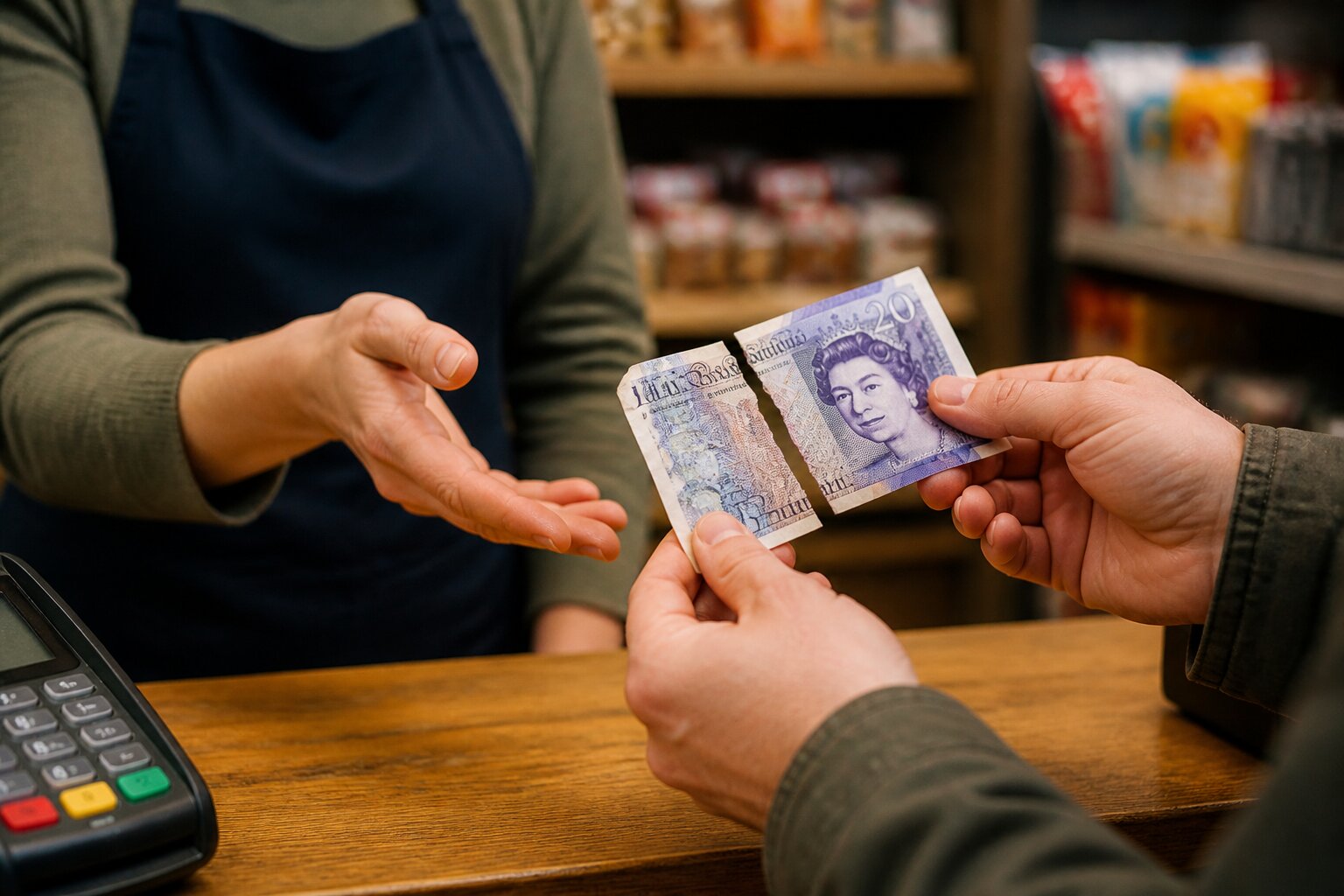
Ever tried to pay with a damaged banknote and seen the shop assistant hesitate? You’re not alone. Torn, crumpled or worn notes can cause awkward moments at the till and leave you unsure of your rights.
We handle cash every day, but few people know what happens when money gets damaged or what options are available. This guide explains the rules, what counts as too damaged, and the practical steps you can take if a retailer refuses a note.
Read on to make sure you’re never caught out with a tatty note again.
Bank of England Guidance on Damaged Banknotes
The Bank of England recognises that notes get damaged in everyday use and provides guidance and a service for exchanging them. A note can still be legal tender even if it’s torn, dirty or worn, and the Bank accepts many damaged notes for replacement.
That said, the Bank’s willingness to exchange a note does not mean every shop must accept it. Retailers decide what they will take at the till, and they may refuse notes that look altered, incomplete or hard to verify. If a shop refuses a note, the Bank of England service is the reliable route to recover its value.
If you want to check whether a note qualifies for exchange, the Bank’s published criteria explain how much of the note must remain and which security features they look for. This is the practical fallback when day‑to‑day businesses won’t accept an item of cash.
What Types of Damage Are Accepted or Rejected?
Retailers and financial institutions assess damaged notes with two main concerns: can the note’s value be verified, and is it complete enough to exchange. Typical damage falls into categories such as tears, missing corners, heavy soiling, scribbles, stamps, burns or water damage.
Small tears, minor dirt and light creasing rarely prevent acceptance, because the note’s security features and serial numbers remain visible. Bigger problems arise where a significant portion is missing, printed features are obscured, or the note looks altered. Stamping, writing over key elements or severe burn or water damage commonly leads to refusal because verification becomes difficult.
Every shop sets its own acceptance threshold. If staff doubt whether a note is genuine or intact enough, they are likely to decline it. In those cases, using the Bank’s exchange service is the sensible next step.
How Can You Exchange Damaged Banknotes?
Exchanging through the Bank of England gives a clear, official route to recover the value of damaged notes. The Bank reviews submitted notes and, if they meet the criteria, supplies replacements.
To use this service you complete the Bank’s damaged banknote application and send the note by post, or visit their office in person. The guidance sets out how to package and describe the damage so the assessment can be made fairly. The Bank will return a replacement if the note meets their requirements; if it does not, they provide an explanation.
Never try to pass off an altered or suspected counterfeit note. That risks legal consequences. If a retailer refuses a note, keeping it safe and applying for an exchange is the calm, practical response.
What Should You Do If a Shop Refuses a Damaged Note?
When a retailer declines a note, it’s usually because staff are following company policy or protecting their tills from disputed payments. Rather than argue, it’s best to stay calm and keep the note safe.
You can head home and use the Bank of England’s exchange route, or, if convenient, take the note to a bank branch that offers a validation or exchange service. Staff at tills rarely have the authority to override their employer’s rules, so insisting on acceptance at the point of sale rarely helps.
Keeping a quick mental checklist—whether a note is missing pieces, has heavy markings, or hides its serial number—can help explain the problem if you need to show the note to bank staff or the Bank’s assessors.
Tips to Avoid Issues With Damaged Notes
A little care with your cash avoids bother. Small habits make a difference so you don’t get stuck trying to spend a note that might be refused.
Before paying, glance at the note to check for large tears, missing pieces or heavy markings that could cause a problem. Storing notes flat in a wallet or purse keeps them in better condition than stuffing them in pockets or loose bags. If you spot a damaged note, set it aside and use a different one for transactions.
Handle banknotes honestly: don’t try to fix or disguise damage, and never pass on a suspected counterfeit. These practises protect you and make transactions smoother for everyone, supporting responsible use of cash.
By taking these small steps you’ll reduce the chance of being turned away at the till and have a clear route to reclaim the value of any seriously damaged notes.
**The information provided in this blog is intended for educational purposes and should not be construed as betting advice or a guarantee of success. Always gamble responsibly.