
Ever wondered how the news seems to know exactly where a jackpot-winning ticket was bought, sometimes just hours after the draw? It can feel surprising to see a headline naming a town or shop so quickly.
If you’ve wondered what happens after a winning ticket is drawn and who finds out first, this article explains the steps involved, the safeguards in place, and what information is shared publicly. Read on to see how location details become known and what that means for players.
Who Tracks Lottery Ticket Sales and Winners?
Ticket sales and winners are recorded by the official lottery operator. Every sale, whether in a shop or online, is logged electronically through secure systems that connect to a central database. Those records include the retailer identifier for in-person purchases and the account details for online buys.
After a draw, the operator checks sold tickets against the winning numbers using that central system. If a ticket matches, the database shows when and where it was sold, allowing the operator to begin the validation process. This work is overseen by regulators to ensure accuracy, security and transparency.
These controls and audits protect the integrity of the game and the privacy of players. Next, we’ll look at what actually happens to a winning ticket during validation.
How Are Winning Tickets Processed?
When a draw concludes, all tickets are compared automatically against the winning numbers. Tickets that match are flagged for validation.
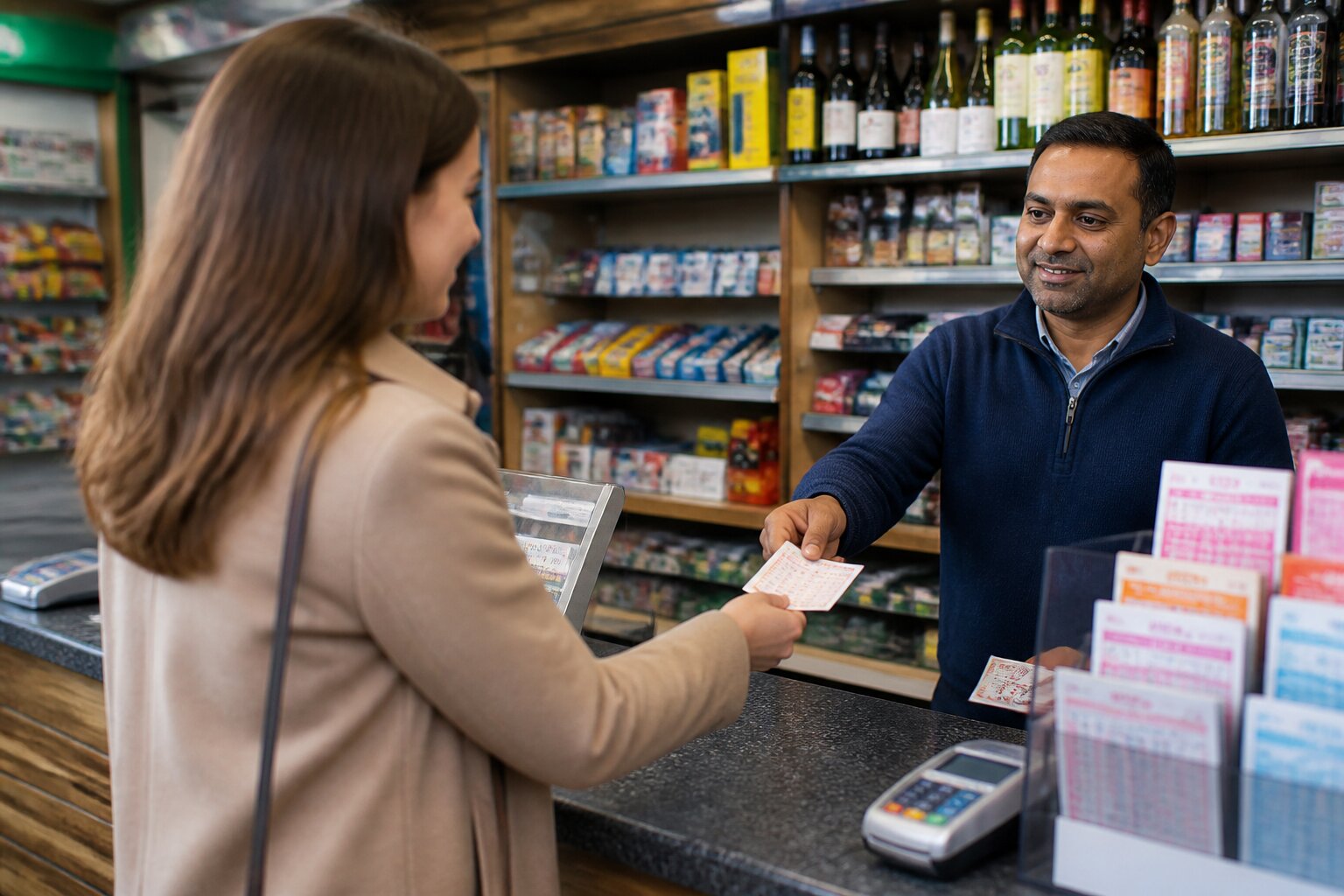
For physical tickets, the holder typically presents the ticket at a retailer or contacts the operator. The retailer scans the ticket and the system confirms whether it is a winner, producing an official confirmation slip if it is. For online tickets, account holders receive notifications and, depending on the prize level, winnings may be paid directly into the account or require additional steps.
Claims undergo verification to prevent fraud. Larger prizes trigger enhanced checks, which can include interviews and formal claim forms to verify identity and ownership. Winners must claim within the operator’s specified timeframe to receive their prize. The next section explains how the system traces the precise sale location.
How Is the Location of a Winning Ticket Determined?
Each sale record contains details that identify where and when a ticket was sold. For in-person purchases that includes the retailer’s ID, and for online purchases it includes the account and payment method used. When a winning ticket is validated, those records reveal the point of sale.
Operators use this information to confirm the retailer involved and to support any publicity about the win, while keeping personally identifying details secure. Systems and procedures are designed to prevent unauthorised access to sales data, and only authorised staff use location information during validation and communications.
Understanding how locations are traced helps explain what the public may learn next about a win.
Privacy and Security: What Information Is Revealed to the Public?
Public announcements are carefully controlled to protect winners and retailers. Operators follow data protection rules and will only release the details necessary to acknowledge a win without exposing personal information. Any publicity is managed to meet legal obligations while avoiding unnecessary disclosure.
How Much Detail Is Disclosed About the Shop or Area?
Typically, announcements state a general area such as the town or city. Occasionally a specific retailer is named, but this is handled with caution and sometimes only with the retailer’s consent. When a shop is named it is usually because the retailer has agreed to be identified, or because the information is already in the public domain.
Public statements aim to avoid revealing the winner’s identity or sensitive information. Broad location descriptions such as the county or neighbourhood are preferred, as these let the public know where a winning ticket was sold without pinpointing an individual.
Why Is Anonymity Sometimes Maintained?
Winners can choose to remain anonymous to reduce the risk of unwanted attention or fraud. When anonymity is requested, only limited location details are released, for example the region where the ticket was sold. This approach balances public interest in the result with safety and privacy for the individual.
Maintaining anonymity also helps protect winners from targeted scams, aggressive publicity or personal safety concerns. Operators will respect requests for privacy where legally permitted and where doing so does not conflict with regulatory reporting requirements.
With that background on what is and isn’t shared, the next section clarifies what retailers themselves know at the point of sale.
Do Lottery Retailers Know When They Sell a Winning Ticket?
Retailers cannot tell whether a ticket they sell will be a winner at the time of sale. Tickets are issued without indication of outcome, and the draw happens separately. Retail staff only learn about a win after the draw when a ticket they sold is validated.
If a significant prize was sold at a shop, the retailer may be notified afterwards and could be mentioned in publicity, but only after validation and with care for privacy. Retailers receive no advance knowledge or advantage from the operator, and processes are in place to keep sales impartial and properly monitored.
Next, we dispel several widespread misconceptions about where winning tickets come from.
Common Myths About Lottery Winnings and Locations
There are a few persistent misconceptions that can mislead players. One is the idea that certain shops or locations produce more winning tickets. In truth, every ticket sold has the same chance of matching the drawn numbers regardless of where it was bought. Another misconception is that retailers can influence or predict winners; they cannot, because they have no access to draw outcomes.
Some players believe timing a purchase, such as buying just before the draw, affects the result. Timing does not change the result; outcomes are determined by the draw and then matched against sold tickets. These points help avoid false assumptions and explain why location-based headlines should be seen as factual reporting about a validated sale rather than evidence of any pattern.
Understanding these myths clears the way for considering how location details are used publicly.
How Is the Information Used by Media and Lottery Operators?
Details about where winning tickets were sold serve a few purposes. Operators publish location information to confirm the legitimacy of a win and to acknowledge winners in a way that protects their privacy. Media outlets report these announcements, often focusing on the area or retailer rather than individuals, which can bring attention to local shops.
Communications are handled to meet regulatory standards, protecting underage and vulnerable people and avoiding messages that could be misinterpreted as encouragement to play. Publicity is framed to be informative, not sensational, and every step is subject to oversight to preserve fairness and safety for participants.
**The information provided in this blog is intended for educational purposes and should not be construed as betting advice or a guarantee of success. Always gamble responsibly.