
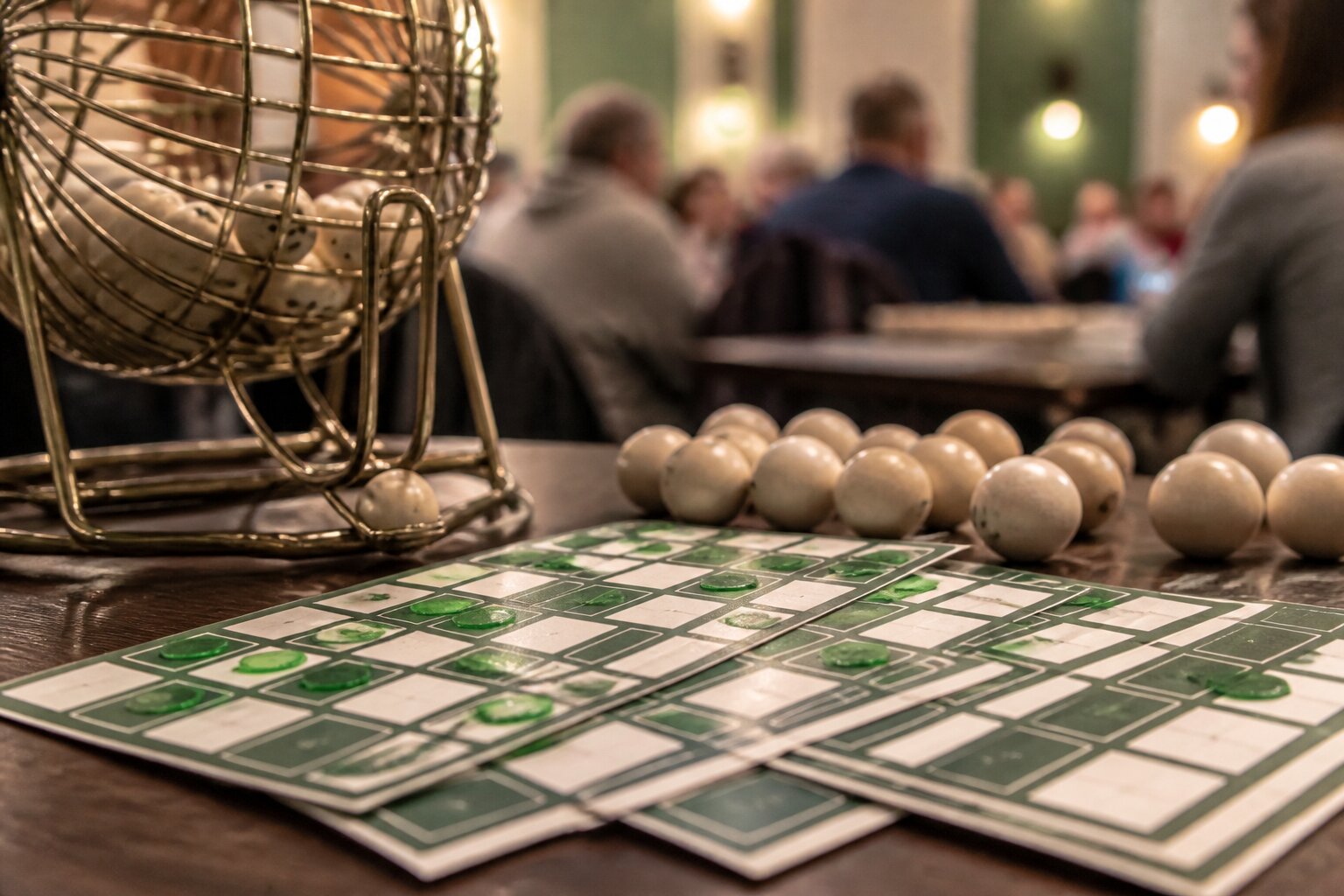
Thinking of trying Irish bingo? Whether you’re completely new to the game or want a clearer picture of how it works, this guide walks you through the essentials in a friendly, easy-to-follow way.
Irish bingo mixes the familiar structure of 90-ball bingo with lively calling and a strong social element. Read on to learn how the game plays out, what to expect from the calls, and where you can join a game.
What Is Irish Bingo?
Irish bingo is a 90-ball variant widely played in Ireland and popular in the UK as well. Players receive cards with three rows and nine columns; a caller draws numbered balls at random and announces them, and players mark any matching numbers on their cards.
What gives Irish bingo its character is the social setting and the style of the number calls: callers use playful phrases and local expressions that make each session feel more like a social event than a competition. The core mechanics, though, are simple and consistent: mark numbers as they are called and aim to complete predefined patterns.
This format suits both venue-based games in halls and online sessions, where the same numbers and patterns apply and marking can be automated.
How Do You Play Irish Bingo?
Starting a game involves obtaining one or more bingo cards for that round. Cards display a selection of numbers across three rows; as the caller announces numbers, you note any matches on your card.
The common objectives are forming a single horizontal line, completing two lines, or achieving a full house by marking every number on a card. When you believe you have fulfilled the announced pattern, you call out “Bingo!” so your card can be checked and the result confirmed.
Practical points to bear in mind include using a pen or dabber for paper cards, and relying on the platform’s marking features for online play. Winnings are awarded if a claim is verified; simultaneous winners split prizes according to the rules in place for that game.
This straightforward loop of numbers being called, marked and checked is what keeps the play moving and the atmosphere lively.
Irish Bingo Rules Explained
Irish bingo follows a set of clear rules designed to keep games fair and orderly. Below are the main points you’ll encounter at most events.
1. Buying Cards
Cards must be purchased before a specific game begins. Only cards bought for that game are valid for claiming wins, so make sure you have completed your purchase well before the caller starts.
Different venues and sites may set cut-off times, so always check the details for the session you are joining. Keep your receipt or confirmation until the game is finished in case you need to show proof of purchase.
2. Marking Numbers
Match any announced number on your card and mark it in the appropriate way for the format you’re using. Online systems usually mark cards automatically, while paper cards require manual marking.
If you are using a paper card, use a clear, neat mark so staff can read it during verification. In electronic play, keep an eye on your account to ensure cards are linked and updating correctly.
3. Winning Patterns
Before a game starts, the caller or organiser will state which pattern or patterns are in play. Only the announced patterns count for that round.
Typical patterns include:
- Single line
- Two lines
- Full house
- Other special wins which will be named before play
Make sure you understand which patterns are active before the first number is called.
4. Calling Bingo
Make your claim immediately when you have the correct pattern. The game will pause while staff or the system verifies your card.
Do not delay your claim, as late claims may be invalid. Be prepared to show your card or account details for verification when asked.
5. Claiming Prizes
Confirmed wins receive whatever prize is advertised for that particular game. If multiple players claim the same prize at once, the rules for distribution, such as splitting, are applied.
Prizes are awarded only after verification is complete. Keep in mind that venues or sites may have additional terms for prize payouts, so check these before you play.
A quick note on conduct: play within your means and be aware of the rules at the venue or on the site you’re using. Responsible play safeguards your enjoyment and others’ experience.
If you feel gambling is affecting you or someone you know, seek help and use available support tools such as deposit limits, time-outs, and self-exclusion where offered.
Popular Irish Bingo Calls & Their Meanings
One of the most entertaining parts of an Irish bingo session is the calls themselves. Callers use nicknames and rhymes to announce numbers, and these phrases often reflect local humour, simple visual links to the digits, or long-standing tradition.
Different callers and halls will have their own local variations, so it is part of the fun to hear new twists as you play. The names help make the game more social and memorable, and they can vary from the widely recognised to the distinctly local.
Here are some commonly heard calls and what they refer to:
Kelly’s Eye (1)
A traditional phrase used for the number one. It is often one of the earliest calls learned by players, and it evokes a familiar, punchy way to start the sequence of numbers.
Two Little Ducks (22)
So-called because the shape of the digits resembles a pair of ducks. The rhyme makes the number easy to remember and adds a bit of charm during play.
Top of the Shop (90)
Refers to the highest number in the 90-ball game. It signals the top end of the range and is commonly used in halls across Ireland and the UK.
Lucky Seven (7)
A popular name for the number seven; it is part of the calling tradition rather than an indication of any likely outcome. The phrase taps into wider cultural associations with seven being lucky, but in bingo it is simply one of the recognised calls.
Legs Eleven (11)
Named because the two ones can look like a pair of legs. The visual comparison has made this one of the most enduring and widely used calls in the bingo lexicon.
Half a Century (50)
Marks the midpoint number, fifty. Callers use it to highlight the central point of the 1–90 range, and it often feels like a milestone during a game.
Clickety Click (66)
A rhyming, memorable phrase used for sixty-six. The repeated sounds make it stick in the memory and it is frequently used by callers wanting a light-hearted touch.
Different callers and halls will have their own local variations and additional phrases, so expect to hear new twists and regional favourites as you play.
What Makes Irish Bingo Different From Other Types?
At heart, Irish bingo shares the same 90-ball structure and basic rules found in similar formats, but the tone of play is often what sets it apart. Games tend to emphasise social interaction, with callers who inject humour and local colour into each announcement.
Another distinction is how sessions are often embedded in community events or fundraisers, giving them a communal feel. The varied terminology and personalised calls used by different callers add a distinctive flavour without changing the game’s mechanics.
If you enjoy an event that feels like a get-together rather than a purely competitive fixture, that social element is the main difference you’ll notice.
Where Can You Play Irish Bingo in the UK?
Irish bingo is widely available across the UK in both physical and digital settings. You can find 90-ball games in a range of local and commercial locations, including:
- Community centres that run regular sessions for local residents.
- Dedicated bingo halls and social clubs with scheduled games.
- Charity events and fundraisers where bingo supports a cause.
Online platforms also host sessions that replicate the same structure and calls, often with multiple daily sittings to suit different schedules.
If you prefer the atmosphere of being with other players, in-person games are easy to find in local listings and on venue websites. Online play offers convenience and often a wider choice of session times, plus the ability to join from anywhere with an internet connection. In either case, choose venues and platforms that follow regulatory standards and provide clear information about the game rules, prize structures and any fees.
If you want to keep the experience enjoyable, set a spending limit before you play and stick to it. Consider practical steps such as:
- Deciding a maximum amount you can afford to spend on a session.
- Using site tools or venue measures to enforce that limit where available.
- Taking regular breaks and avoiding chasing losses.
Online Vs. In-Person Irish Bingo: What Are the Options?
Online Irish Bingo
Online sites mirror the 90-ball format and commonly include chat functions so players can interact while automated systems handle marking and verification. Typical features you might find include:
- Automated card marking and instant verification of wins.
- Chat rooms or message boards for social interaction.
- Multiple session times and themed rooms to choose from.
- Clear help pages explaining rules and prize payouts.
Online play is practical for joining sessions at different times and can be a good way to experience the variety of calls from different callers and platforms.
In-Person Irish Bingo
Venue-based games deliver the full social experience: the caller’s personality, the shared reactions, and the immediate interaction of players. These events often have a community focus and can be part of larger social or fundraising evenings.
Common benefits of playing in person include:
- Direct social contact and a lively atmosphere.
- Immediate prize collection and the chance to support community causes.
- Special nights or themes that add variety to the game.
Both formats offer the same core gameplay; the difference lies mainly in the social setting and convenience, so choose the option that best fits your preferences and budget.
Common Irish Bingo Myths & Misconceptions
Several misunderstandings about Irish bingo persist, so it helps to address them upfront.
Myth 1: Certain strategies can guarantee a win.
No strategy can ensure a win. Numbers are drawn at random, whether the game is in a club or online, and results cannot be predicted with certainty.
That said, sensible approaches can make the experience more enjoyable. For example, choosing a manageable number of cards and paying attention to the game helps you avoid missing a win, but it does not change the underlying odds.
Myth 2: Bingo calls influence the outcome.
The calls are there mainly for entertainment and to help players follow the game. They do not affect which numbers are drawn.
On licensed sites and in regulated halls the draw process is independently tested or overseen to ensure fairness. The call is separate from the mechanism that generates the numbers.
Myth 3: Some people are inherently “luckier” than others.
Every game begins with the same basic conditions for all players. Outcomes depend on which numbers are drawn and how many cards are in play, not on a player’s personal luck.
Over time some players will win more often purely by chance, while others will win less. Short-term patterns are normal in random games and do not indicate any lasting advantage for particular people.
Myth 4: You can play as much as you like without risk.
Playing heavily or chasing losses can cause financial and emotional harm. It is sensible to set a budget for how much you will spend, limit the time you play, and take regular breaks.
Be aware of signs that gambling might be becoming a problem, such as spending more than you can afford, neglecting other responsibilities, or feeling distressed about play. If you are concerned, consider self-exclusion schemes and support from organisations such as GAMSTOP or GamCare.
Clearing up these myths helps you approach the game with realistic expectations, keeps play enjoyable, and supports safer, more responsible bingo sessions.
Is Irish Bingo Suitable for Beginners?
Irish bingo is well suited to newcomers because the rules are straightforward and play moves at a steady pace. New players typically pick up the format quickly, and guidance is usually available at venue games or within online help pages.
Beginners benefit from starting with a small number of cards to follow along comfortably, and observing a round before joining can help familiarise you with the caller’s style and the specific patterns being used.
Choose reputable venues or platforms and maintain sensible spending limits to ensure the experience remains firmly in the enjoyment zone.
Enjoy the game, the calls, and the company—and remember that a clear understanding of the rules and your own limits makes for better sessions for everyone.
**The information provided in this blog is intended for educational purposes and should not be construed as betting advice or a guarantee of success. Always gamble responsibly.