
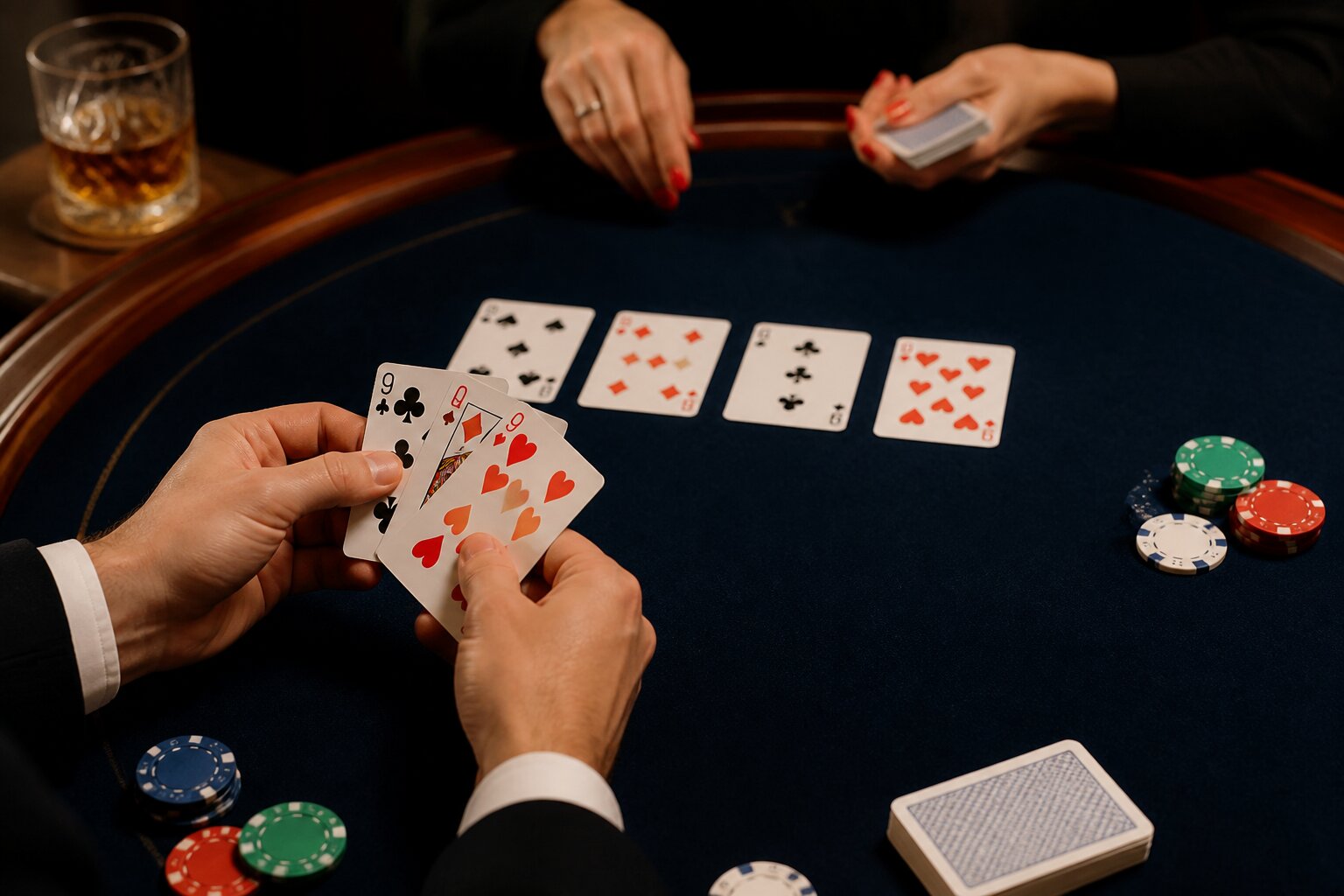
Ever wondered how to play Pontoon, the classic British card game that shares some DNA with blackjack but has its own rules and rhythm? If you enjoy close decisions and quick turns, Pontoon offers a compact, social game that rewards good judgement and familiarity with its special terms.
This guide walks you through the game in plain language — what you need, how hands rank, the options you’ll have on your turn and where you can play. Read on and by the end you’ll know enough to join a friendly game or try a table online.
What Is Pontoon & How Does It Differ From Blackjack?
Pontoon is a British card game that resembles Blackjack in its objective — form a hand worth up to 21 — yet several rules and terms set it apart. The best hand is called a “pontoon” rather than a “blackjack,” and players say “twist” to take another card and “stick” to keep their total. Those words change the feel of the game and how players talk through their choices.
Deal mechanics differ too. In Pontoon, the dealer’s cards are kept face down, which keeps the information hidden until the end of the round and alters the decision-making dynamic for everyone. Hand rankings and payouts are also distinct: a five card trick (five cards totalling 21 or less) is stronger here than it usually is in standard Blackjack, and both pontoons and five card tricks typically pay better than ordinary winning hands.
These differences create a slightly more concealed, tense game where decisions hinge on your own cards and on risk management rather than reading an exposed dealer card.
Essential Equipment Needed To Play Pontoon
You do not need much to play Pontoon. A single 52-card pack is fine for home games, though larger groups or casino-style tables often use multiple decks shuffled together to reduce the need for frequent reshuffling.
Typical equipment includes:
- A standard 52-card pack for small games; two to eight decks are common in organised play.
- Chips or simple counters to represent stakes.
- A clear, flat surface for dealing and arranging cards and bets.
- Optional items such as a dealer shoe, discard tray or a pen and paper for keeping notes in informal games.
Keeping items simple makes it easy to set up quickly and focus on the game itself. Always play responsibly and follow local rules and age restrictions.
How Many Players Can Participate In Pontoon?
Pontoon is flexible in party size. Practical home games run comfortably with three to eight people, with one person bankrolling the round as dealer and the rest playing as punters. If you prefer variety, the banker role can be rotated from round to round so everyone gets a turn.
Smaller groups can still play, but with fewer players the table dynamic changes. Decisions and outcomes happen faster, and rotating the banker more often keeps things fair and engaging.
In organised settings such as casinos or online rooms, table limits may be different. Casinos often allow more players at a table but will have rules about maximum bets and the number of hands dealt. Online versions may simulate larger tables or offer heads-up play against a virtual dealer.
The number of players also affects card distribution and strategy. With fewer people, more of the deck remains available to you, which can change the odds when deciding to draw or stand. With larger groups, more cards are seen each round, which can influence how cautious or aggressive you choose to be.
How Do You Set Up A Game Of Pontoon?
Starting a game is straightforward and social. Before any cards are dealt, make sure everyone understands the house rules, table limits and who at the table is eligible to play. It is also sensible to confirm that all players are of legal age and comfortable with the chosen stakes.
Follow these agreed steps to begin the round:
- Agree the stakes and the chip denominations so everyone knows what is being risked.
- Decide who will act as the banker for the first round; this may rotate in later rounds.
- Shuffle the deck thoroughly; add more decks for larger groups if needed.
- Place the agreed bets into the pot before any cards are dealt.
- The banker deals two cards face down to each player, including themselves, keeping all hands hidden until play proceeds.
Keeping the hands face down maintains fairness and prevents information being revealed prematurely. Clarifying the rules and bets up front helps the round run smoothly and ensures every player knows the basic conditions before choices are made. Remember to play responsibly and stop if gambling stops being fun.
What Are The Main Rules Of Pontoon?
Pontoon centres on creating a hand that is as close to 21 as possible without exceeding it. Each player examines their two face-down cards and then chooses whether to take additional cards (twist) or stop (stick). Twisting can continue until the hand exceeds 21, at which point it busts and is out for that round.
The top-ranking hand is a pontoon — an Ace plus a 10-value card — which beats all other hands. Next comes the five card trick: holding five cards that total 21 or less. After those, hands are compared by how near they are to 21; ties favour the banker. When the play among the punters is complete, the banker turns over their hand and the comparisons determine winners and losers.
Bear in mind that, as with any table game, you should set and respect personal betting limits; this keeps the experience enjoyable and sustainable.
What Are The Card Values & Hand Rankings In Pontoon?
Card values are simple and familiar. Number cards count at face value. Jacks, Queens and Kings count as 10. Aces can count as either 1 or 11, whichever benefits the hand without pushing it over 21.
When you have multiple Aces, each one is treated independently to give the best total that does not exceed 21. For example, two Aces can be valued as 1 and 11 for a total of 12, or both as 1 if needed to avoid a bust.
Hand rankings, from strongest to weakest, are:
- Pontoon: an Ace plus a 10-value card.
- Five Card Trick: five cards totalling 21 or less.
- Any other hand valued 21 or under, ranked by how close each is to 21.
- Bust: any hand over 21, which loses automatically.
Pontoon is the top hand and beats all other hands except in very specific rule variants where ties or pushes are defined differently. The Five Card Trick is a strong secondary hand because it can beat any 21 reached with fewer cards.
Understanding these values helps you weigh the relative strength of your hand and decide whether to draw more cards. Remember that taking extra cards increases the chance of improving your total, but also raises the risk of exceeding 21 and busting.
What Actions Can Players Take In Pontoon?
On their turn, a player has several options that shape their strategy. The most common are twisting (taking one extra card) and sticking (keeping the current total). Unlike many casino Blackjack setups, Pontoon also allows buying — increasing your stake to receive an extra card under certain conditions — and splitting when the initial two cards are the same value, creating two separate hands with corresponding additional stakes.
Which option to choose depends on the composition of your hand and the table rules in play. Buying can be attractive when the potential reward outweighs the extra stake, while splitting can convert a marginal situation into two chances to win. Each decision trades risk against potential reward, so consider your limits and the likely outcomes before committing extra chips.
How Are Winnings Decided In Pontoon?
Winnings are settled by comparing each player’s final hand with the banker’s hand. The better hand wins according to the table’s payout structure, and equal-value hands are typically treated as a push, though specific tie rules can vary by venue.
Payouts differ by hand type and by table. Common outcomes include:
- Pontoon (an ace plus a ten-value card) and five card tricks often pay at higher odds, commonly 2 to 1.
- Ordinary winning hands usually pay even money (1 to 1).
- If your hand busts (goes over 21), the stake for that hand is lost immediately.
House rules, stake limits and exact payouts can vary from table to table, so it is sensible to confirm the rules and any limits before play starts. Clear table rules help avoid disputes and keep the game moving smoothly.
Common Pontoon Variations In The UK
Pontoon has several recognised variants across the UK, each preserving the central aim but tweaking particular rules. House Pontoon — the form often encountered in casinos — adheres to strict buying and payout rules and is run by a professional dealer. Social or family games tend to be more flexible: players may agree on different deck counts or friendly adjustments to splitting and buying. Some games rotate the banker, giving everyone a chance to deal and bank, while multi-deck games increase card availability and slightly alter hand frequencies.
These variations keep Pontoon adaptable to different settings, whether you’re at a casino table or playing at someone’s kitchen table.
Are There Any Myths Or Misconceptions About Pontoon?
Several misunderstandings crop up among new players. One is treating Pontoon as identical to Blackjack; while related, the concealed dealer hand, the specific terms and the prominence of the five card trick make for a distinct game. Another is the idea that betting patterns or “systems” can guarantee success — outcomes are governed by the game’s random card distribution and probability, so no method can eliminate variance over time. Finally, although the banker has advantages such as winning ties, rotating the banker or playing fair rules prevents any one player from holding an overwhelming edge.
Clearing up these points helps set reasonable expectations and keeps play grounded.
Pontoon Etiquette & Common Mistakes To Avoid
Good etiquette keeps Pontoon enjoyable for everyone. Wait your turn, keep conversation light, and handle cards carefully to avoid disputes. Be clear about your bets before cards are dealt and agree table limits in advance.
Common mistakes include misunderstanding how Aces are valued, attempting buys or splits when the table rules don’t allow them, and moving too quickly so that mistakes go unnoticed. Managing chips and staying mindful of your pre-set limits helps prevent overspending and keeps the mood positive around the table.
A calm, considerate approach to the game makes for better play and a more pleasant experience for all involved.
Where Can You Play Pontoon In The UK?
Pontoon is available in licensed casinos across the UK and at reputable online casinos that operate under UK regulations. Land-based venues provide trained staff and a supervised environment, while online platforms offer both real-money and free-play modes for practice. Always confirm that the venue is properly regulated, choose sites or tables with clear rules, and make use of any available safety features such as deposit limits and self-exclusion if you need them. If gambling ever starts to feel problematic, support is available from organisations such as BeGambleAware.
Pontoon remains a compact, social card game that rewards familiarity with its rules and measured decision-making. With the basics covered here, you’ll be ready to join a game and enjoy the distinctive pace and choices Pontoon offers.
**The information provided in this blog is intended for educational purposes and should not be construed as betting advice or a guarantee of success. Always gamble responsibly.