
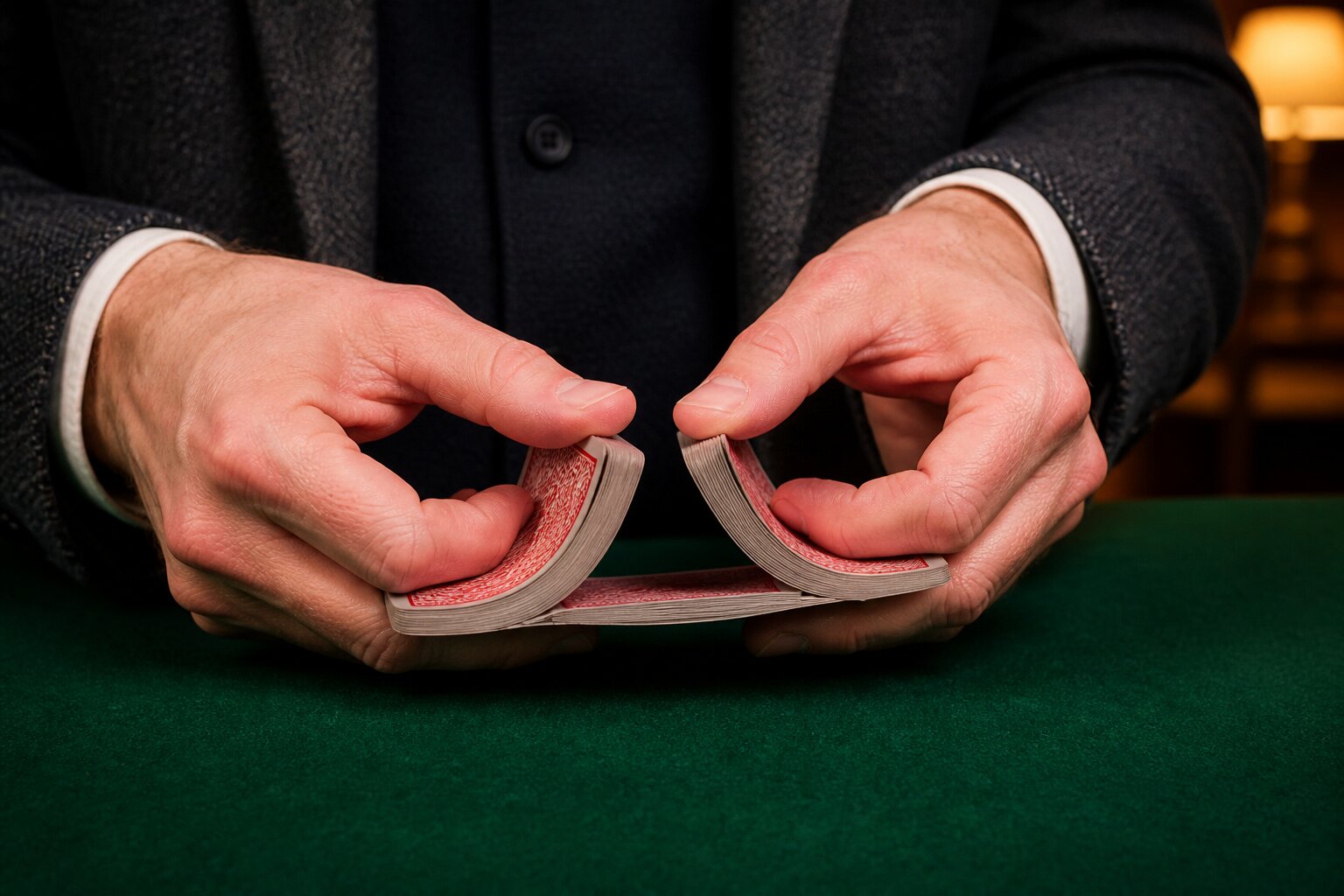
Ever wondered how to shuffle a deck of cards with confidence? Whether you’re hosting a game night, practising card tricks, or simply want fair play, learning a few solid techniques makes a big difference.
Shuffling mixes the deck so no one can predict the order, helps prevent cheating and adds a little finesse to your handling. You don’t need any special kit—just a standard deck and a bit of practice.
If you want to improve your technique or get started from scratch, this guide walks through the essentials and common pitfalls in a clear, approachable way.
Why Is Shuffling Cards Important?
Shuffling plays a central role in keeping card games fair. A well-mixed deck reduces predictable sequences and makes it much harder for anyone to exploit the order of the cards. That protection benefits everyone at the table and keeps the contest focused on skillful play rather than memory or prior knowledge.
Consistent shuffling also helps to preserve the integrity of results. When the deck has been mixed correctly, outcomes are more likely to reflect the decisions and ability of the players rather than the initial order of the cards. This reduces the chances of disputes and makes the game run more smoothly.
There are several clear advantages to proper shuffling:
- It increases unpredictability, so individual hands are not systematically favoured or disadvantaged.
- It promotes fairness by giving each player an equal chance based on play rather than card order.
- It builds trust among participants, helping everyone accept results with confidence.
- It supports the overall integrity and reputation of the game or venue.
What Equipment Do You Need to Shuffle Cards?
You do not need much to shuffle effectively. At its simplest, the essentials are:
- A standard 52-card deck (or the appropriate deck for your game) in reasonable condition
- A clean, flat surface on which to work
Bent, torn or marked cards can compromise fairness and make handling awkward, so always inspect your deck before you begin. Cards that are sticky or warped will not interleave cleanly and increase the risk of accidental reveals.
A stable table or bench helps to steady the cards for certain styles of shuffle, particularly riffling and tabled shuffles. Anything too rough, sticky or uneven will interfere with how the cards slide and interleave, so choose a smooth surface where the cards can move freely.
There is no need for machines or special accessories for casual play. Some players find optional items useful, such as sleeves to protect cards, a cloth to reduce noise and wear, or a shuffling mat to protect your table, but none of these are essential. Mostly, good care of your equipment and clean, dry hands are all that’s required for reliable shuffling.
How to Prepare Your Cards for Shuffling
Taking a moment to prepare the deck makes shuffling smoother and prolongs the cards’ life. Confirm the deck is complete and that no cards are visibly damaged or marked. Small creases or stains change how cards move and can unintentionally reveal information, so replace any defective cards.
If cards are a little grubby, a gentle wipe with a soft, dry cloth will remove surface oils or crumbs without warping the card stock. Always handle cards with clean, dry hands to avoid transfer of dirt or moisture.
If you’ve checked your deck and set a suitable surface, you’re ready to explore different shuffling methods.
What Are the Different Methods of Card Shuffling?
Several shuffling styles are commonly used, each producing a well-mixed deck when performed properly. The main approaches differ in hand position and the way cards are transferred or interleaved, so you can pick one that suits your comfort and the situation.
Below are the most familiar techniques, described so you can try them and see which suits your hands.
Overhand Shuffle Explained
The overhand shuffle is straightforward and ideal for beginners. Cards are transferred from one hand to the other in small packets, causing them to reverse order repeatedly as they move. This method is quick and gentle on cards, making it a good choice for social play or when you want to preserve the deck’s condition.
To vary the mix, try changing the size of the packets you pull off; smaller packets generally increase interleaving, while larger packets keep more of the original order.
How to Do the Riffle Shuffle
The riffle shuffle interleaves two halves of the deck and is often used where a thorough mix is desired. The deck is split, each half held in one hand, and the cards are released so they fall together, then the halves are squared up. The riffle gives a strong level of randomisation when done carefully and can be finished with a light push together to align the cards.
Because it involves sliding and pressure, a gentle touch avoids creasing or buckling the cards.
What Is the Hindu Shuffle Technique?
The Hindu shuffle involves repeatedly drawing small portions from the top of the deck into the other hand. It’s a fluid motion and popular in many parts of the world because it’s fast and preserves card edges. This style tends to keep some local order unless repeated several times, so it is often combined with other shuffles for a more thorough mix.
Its smooth rhythm can be easier for smaller hands, and it’s useful when a quick shuffle is needed without rough handling.
Common Mistakes to Avoid When Shuffling Cards
Several familiar errors undermine both the mix and the deck’s condition. Not shuffling enough leaves runs or clumps of cards in place, so repeat a method until the order appears well dispersed. Taking a few extra passes is often enough to break noticeable sequences.
Using too much force can also cause problems. Pushing or bending cards hard can crease or warp them, and persistent rough handling shortens the life of the deck. Gentle, even pressure protects the cards while still achieving a good mix.
Shuffling on uneven, sticky, or dirty surfaces causes further issues. Cards can catch at the table edge, pick up marks or debris, and fail to align properly. For best results, use a clean, flat surface that lets packets slide and interleave smoothly.
Common mistakes to watch for include:
- not shuffling enough, which preserves clumps and predictable runs;
- applying too much force, which can bend or crease cards and speed wear;
- shuffling on poor surfaces, which leads to marks, sticking, and misalignment;
- always using the same technique, which can leave subtle patterns in the deck.
Finally, relying on a single technique every time risks leaving patterns. Alternating methods or varying your packet sizes helps reduce predictable structure and gives a more thoroughly randomised deck. Regularly checking your technique and the condition of your cards will keep both the shuffle and the deck in good order.
How to Maintain Clean and Durable Playing Cards
Simple habits keep cards in good shape. Store decks in their box or a protective sleeve when not in use to avoid dust and accidental damage. Keep them somewhere cool and dry, out of direct sunlight, as heat and UV can fade colours and weaken card fibres.
Clean hands and a tidy table make shuffling easier and reduce staining or grime build-up. Avoid eating or drinking over the cards and remove jewellery that might catch or scratch edges. If you are handling collectible or tournament decks, consider using card clips or a dedicated case for extra protection.
If a card becomes lightly soiled, a soft, dry cloth usually does the trick. Do not use water or solvents, which can warp the card or strip protective coatings. For stubborn dirt, a specialised card-cleaning cloth or a very slightly dampened lint-free cloth may be used with care, then dried immediately.
If you play frequently, follow basic maintenance steps to keep play fair and cards lasting longer:
- Rotate decks so individual packs do not become overly worn.
- Replace cards that show permanent marks, bends or creases to maintain fairness.
- Use sleeves for high-value or collectible cards to prevent edge wear and surface damage.
Frequently Asked Questions About Card Shuffling
Shuffling prompts a few regular questions, and here are clear answers to the most common ones.
How many times should I shuffle a deck?
There’s no single correct number, but repeating a shuffle until the deck looks well mixed is sensible. Different shuffles mix differently, so combining a couple of methods usually gives a thorough result.
Can I use an automatic shuffler at home?
Automatic shufflers are fine for casual use and can be convenient for reducing handling or speeding up play. They’re not necessary for fairness, but they are a practical option when you want a quick, consistent mix.
Why does card condition matter when shuffling?
Cards that are clean and free from marks slide and interleave more predictably. Damaged or marked cards can stick, catch or reveal information, so keeping them in good condition protects the integrity of play.
Is there a ‘best’ shuffling method?
No single method is always superior; the best choice depends on your goals—speed, gentleness, or how thoroughly you want to mix the deck. Practise a few styles so you can select the most appropriate one for each situation.
Can shuffling affect the outcome of a game?
Shuffling’s purpose is to randomise the deck so the deal is fair. When performed properly, it prevents predictable sequences and supports honest play. Focus on doing it well and the game remains centred on skill and decision-making rather than pre-arranged order.
Remember to treat cards and fellow players respectfully, keep the deck in good condition, and ensure the game is fair and enjoyable for everyone.
**The information provided in this blog is intended for educational purposes and should not be construed as betting advice or a guarantee of success. Always gamble responsibly.