
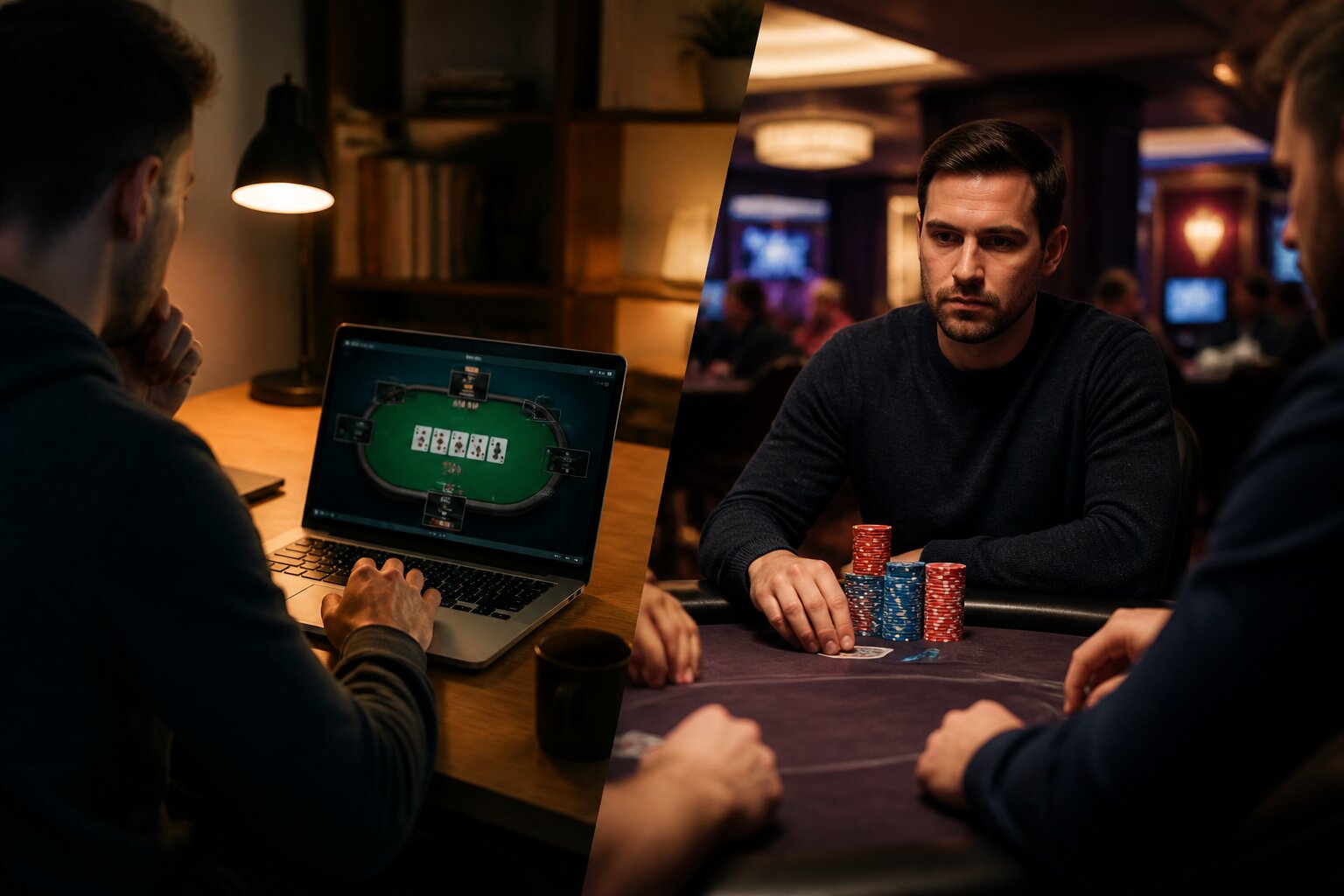
Poker has always been a game of skill and nerve, whether you’re sitting at a felt table with chips in hand or clicking away on your computer at home. But have you ever wondered if playing online is actually tougher than sitting down to a live game in your local casino?
Millions of players now log in to play online, facing fast-paced games that test decision-making and discipline. At the same time, a brick-and-mortar casino brings its own demands, from reading body language to coping with the arena-like atmosphere.
If you’ve been weighing which format challenges you more, or you just want a clearer view of how the two compare, this article will walk you through the key differences and obstacles so you can decide where your skills are best tested.
What Makes Online Poker Different From Live Poker?
Online poker presents an entirely digital environment: your cards, chips and the table are all on screen. That removes the tactile elements of live play, such as handling chips or physically sliding cards, and it changes how you experience the game.
The pace is a major factor. Online hands come thick and fast, with minimal downtime between decisions. Many sites also enable multi-tabling, so you can be involved in several games at once and experience far more situations in a short span than at a single live table.
Interaction changes too. In a live room you read body language and pick up on tone and timing; online, opponents are screen names and avatars. That means the information you use shifts from physical tells to timing, bet sizing and betting patterns.
Finally, online platforms typically offer a wider range of game types and stakes around the clock, which expands choices but also increases the need for self-discipline. Play within limits and be mindful of how long you spend at the table to keep the experience positive.
How Do Online and Live Poker Player Pools Compare?
The scale and composition of the player pool differ markedly between formats. Online rooms draw players from a broad geography, producing a wide mix of styles and skill levels. That variety means you can encounter a new type of opponent in nearly every session.
Anonymity is greater online, so building a reputation or tracking a particular opponent across sessions is harder. Conversely, live games often involve smaller groups that remain together for longer periods, allowing patterns and personal histories to develop. That familiarity can be an advantage, as you learn who tends to bluff or who dislikes big pots.
Both environments include a spectrum of players, from casual to highly experienced. Knowing how to adjust your approach to match the field is a fundamental skill in either setting.
Speed of Play: Does It Impact Difficulty?
Speed affects both the nature of decisions and the cognitive load on players. In online poker, the rapid rhythm forces quicker judgements and makes errors more likely if concentration lapses. Playing several tables multiplies that pressure, requiring excellent mental stamina and a streamlined decision process.
Live poker, by contrast, lends itself to more deliberation. The slower tempo allows for deeper reads and more nuanced adjustments to opponents’ tendencies. However, the extra time can also encourage overthinking, which brings a different kind of challenge.
Recognising how pace influences your play helps you adapt your mental approach and avoid poorer decisions brought on by fatigue or haste.
Psychological Factors: Reading Opponents Online vs Live
Reading opponents is a core element of poker, but the cues differ by format. In live play you observe posture, facial expressions and small gestures, then factor those impressions into your decisions. Online, those physical signals are absent. Instead, players rely on behavioural data visible on screen: bet sizes, timing, frequency of raises and patterns across hands.
This shift means successful online players develop an analytical habit of mind, looking for statistical tendencies rather than relying on one-off impressions. Live players benefit from people-reading skills and the ability to manage table dynamics through conversation and presence.
Either way, psychological awareness matters. It’s less about one approach being superior and more about matching your reading methods to the environment you’re in.
Accessibility and Volume: Are Online Games Tougher?
Online poker wins on convenience. You can join a table at any hour and encounter more hands and formats in less time. That volume accelerates learning, because repeated exposure to situations tests and refines your decision-making quickly.
But higher volume raises the risk of cognitive overload. With more hands and more choices, discipline becomes crucial to maintain quality decisions. The temptation to chase short-term results or to keep playing when tired is greater online simply because opportunities are so readily available.
Live poker’s lower throughput provides more time to reflect between hands and fosters a measured pace of improvement. Choosing the format that fits your capacity to focus and learn will usually lead to better long-term outcomes.
Handling Distractions: Home Vs Casino Environment
Where you play affects your focus. At home, everyday distractions like family activity, incoming messages or household noise can interrupt concentration during important hands. These interruptions are often sudden and unpredictable, so they can be particularly disruptive to decision making.
In a casino, the surroundings are different. Background chatter, bright lights and other tables create a constant level of sensory noise that can wear on attention over extended sessions. Many venues are designed to be lively, which can be entertaining but also tiring if you are trying to concentrate for long periods.
Both environments benefit from modest adjustments to reduce distraction and protect your focus. Consider simple steps such as:
- At home: choose a quiet corner, put your phone on do not disturb, and let household members know you need an uninterrupted period.
- In a casino: pick a seat away from the busiest walkways and bar areas, and avoid tables or machines with excessive visual or audio stimuli.
Small routines can also help you settle into play, for example a short warm-up, wearing headphones for background noise reduction, or taking scheduled breaks. Recognising when focus is slipping and taking a sensible pause can prevent mistakes and preserve your enjoyment of the game.
It is good practice to set time and spend limits before you start and to take regular breaks when you notice fatigue or frustration. Managing distractions is part of playing responsibly and helps protect both your performance and wellbeing.
Common Myths About Online Poker Difficulty
There are several persistent misconceptions. One is that online games are inherently unfair or manipulated. Reputable sites use certified randomisation methods and monitoring to maintain integrity, and most have measures to detect unfair software.
Another myth is that the online field is packed with professionals, making it impossible for recreational players to succeed. In practice, player ability varies widely, and many casual players populate both online and live games.
A further belief is that bots dominate online play. While automation exists, regulated platforms employ detection systems and human oversight to reduce unfair advantages.
Understanding these realities helps you evaluate the true challenges of online play and separate fact from exaggeration.
Which Version Is Right For You?
Choosing between online and live poker depends on your priorities, habits and what you enjoy about the game. Each format rewards different strengths and makes different demands.
Consider Your Playing Environment
Think about where you make better decisions. If you prefer face-to-face interaction and the rhythm of a physical table, live poker supports that. If you favour flexibility, quick sessions and exposure to many more situations, online play may be more suitable.
Think About Your Goals and Limits
Clarify whether you play primarily for social enjoyment, skill development or competition. Set sensible limits on time and money so the game stays enjoyable. Swapping formats from time to time can also help you grow as a player and avoid stagnation.
Support is Always Available
If you ever find that poker stops being fun or you’re concerned about how much you’re playing, there are established support organisations and advice services that can help. Reaching out early is a practical step if you need guidance.
Deciding which version challenges you more comes down to personal fit. Try both with clear boundaries, pay attention to how you perform and feel, and choose the route that keeps poker rewarding and manageable.
**The information provided in this blog is intended for educational purposes and should not be construed as betting advice or a guarantee of success. Always gamble responsibly.