
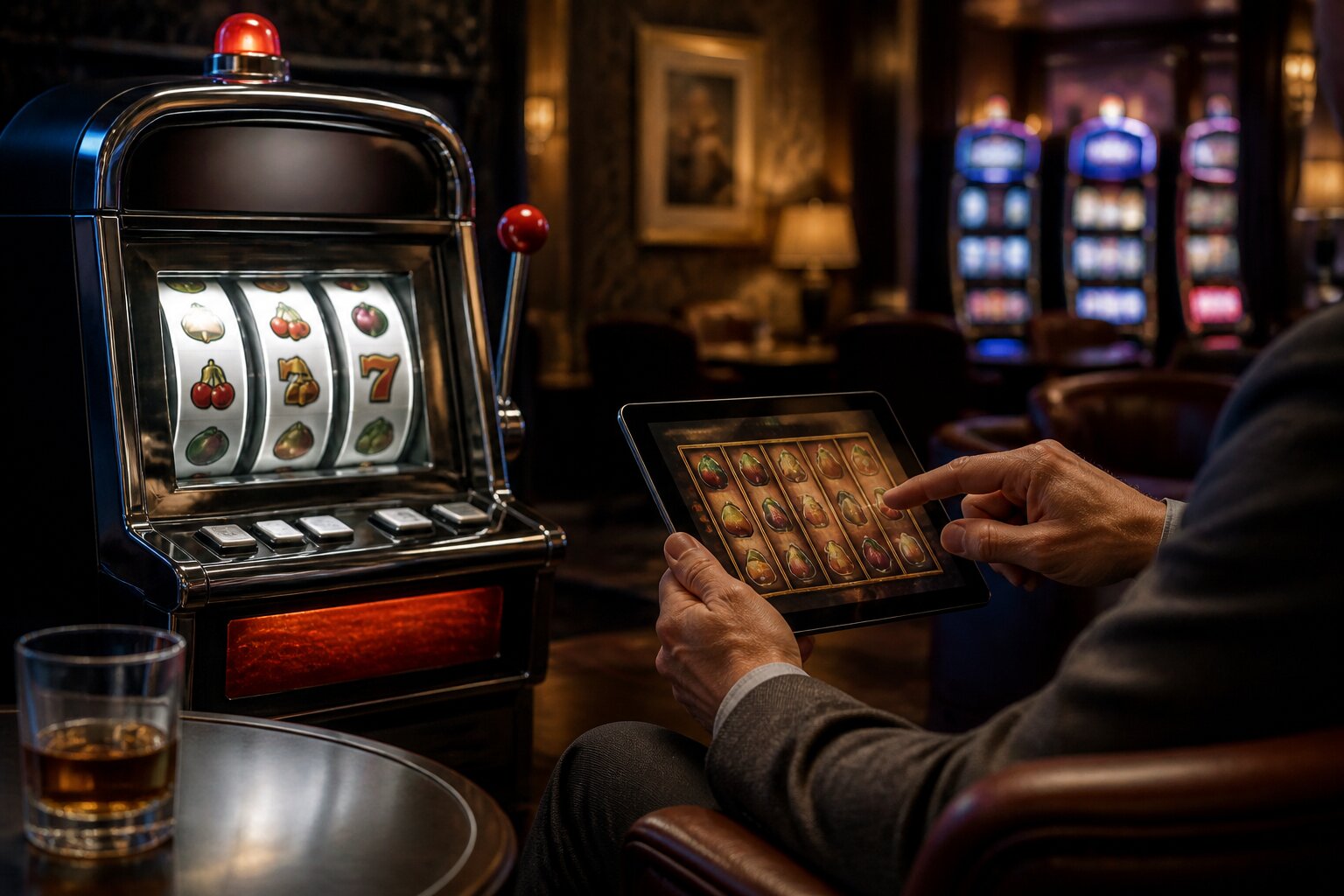
There’s something enduring about the sight of reels turning and lights flashing, and the phrase “one armed bandit” still brings that image to mind. From pub corners and seaside arcades to handheld devices, these machines have evolved while keeping the core appeal of simple, immediate gameplay.
This article traces how classic mechanical machines became digital slots, explains how they work now, and compares the two experiences so you can appreciate what each offers. Read on to discover what has changed, what has stayed the same, and how to try these games safely online.
What Are One Armed Bandit Games?
“One armed bandit” is an old nickname for classic slot machines, originally coined because early machines used a lever to spin the reels. Over time the lever was replaced by buttons and then by entirely digital interfaces, but the name has stuck in everyday language.
Historically these machines were fixtures in pubs, social clubs and arcades. The reels bore simple symbols such as fruit, bells and sevens; the basic objective was to line up matching symbols to receive a payout. Those straightforward mechanics made the games easy to learn and quick to play, which helped them fit naturally into busy social settings.
As technology advanced, developers recreated the look and feel of these originals in digital form. Some modern slots preserve the classic symbols and single-line layouts, while others build around the same basic spin-and-match idea but layer on contemporary features. Next, we’ll take a closer look at the traditional fruit machines that many people remember most fondly, and what made them distinct from later digital versions.
Classic Fruit Machines Explained
Classic fruit machines became a cultural staple in the mid-20th century, recognised for their bright fruit symbols, mechanical reels and distinctive sound effects. Their design emphasised tactile interaction: physical levers and buttons, audible clacks and the satisfying motion of real reels.
Several gameplay elements set these machines apart. “Nudges” allowed a player to move a reel one position to try to improve the result after a spin. A “hold” feature could lock a reel in place for the next spin, and simple gamble options offered a chance to increase a payout at the risk of losing it. These small mechanics added a strategic feel within an otherwise simple format, giving players choices that affected a single subsequent outcome rather than long-term odds.
Where modern online slots often focus on elaborate themes and many paylines, classic fruit machines concentrated on repeatable, compact play sessions that fit pub and arcade rhythms. They were designed to be social and immediate — a quick game between rounds of conversation — and they left a strong impression on those who grew up with them. The differences in mechanics and setting help explain why some players still seek out the traditional style when playing today.
Online Slot Machines: How Do They Work?
Online slot machines replace mechanical parts with software, but the basic idea remains: symbols align on reels and matching patterns trigger payouts. The key technical element is the random number generator (RNG), a certified programme that determines each spin’s outcome independently so that results cannot be predicted or influenced.
Digital slots may present multiple paylines, or use alternative systems such as cluster pays or tumbling reels, which open up more ways for symbols to form winning combinations. Developers also vary volatility (how often wins occur and how large they tend to be) to create different player experiences: some games aim for frequent small wins, others for rarer, larger payouts.
Return to Player (RTP) is the standard measure for how much a game tends to pay back over time, expressed as a percentage. For example, an RTP of 96% indicates that, over a very long period and across many spins, £96 is returned for every £100 wagered on average. RTP is a theoretical long-term figure and does not predict individual sessions. Game rules, paytables and RTPs are usually available in a slot’s information screen, which helps players understand the mechanics before staking real money.
Online play also makes demo versions widely available, so anyone can try a game’s mechanics without financial risk. The next section compares the two formats more directly to show what each does best.
Comparing Traditional and Online Slots
Both traditional and online slots share the reel-and-symbol heritage, but they diverge in form and function. Which is preferable depends on what a player values: the tactile simplicity and social atmosphere of a physical machine, or the variety and feature-rich designs of digital titles.
Which Offers More Features?
Traditional fruit machines tend to have a concise set of mechanics — nudges, holds and basic gamble options — designed for quick, repeatable play. Their appeal lies in immediate interaction and familiar symbols.
Online slots expand the range significantly: free spins, bonus rounds, wilds, multipliers, expanding reels and animated mini-games are common. These features can add layers of strategy and variability to sessions and allow developers to build narrative themes or tie-ins that simply weren’t possible on older mechanical machines.
Are The Odds Different?
Both formats rely on randomised outcomes, but average paybacks typically differ. Many pub fruit machines operate with RTPs in the 70–80% range, reflecting their design and the operating environment. Online slots more commonly offer higher RTPs, often between the mid-90s and upper-90s percentages. That means, over very long periods and across many plays, online titles tend to return a larger share of stakes to players on average.
Still, RTP and volatility helps set expectations and choose games that match a desired experience.
Popularity of Slot Games in the UK
Slot games remain the most-played casino category in Britain, appealing through accessibility, a wide range of themes and the ease of quick play. Millions of adults engage with slots across both physical venues and online platforms, and the genre consistently represents a significant portion of casino betting activity.
The audience for slots spans a broad age range and plays for different reasons: some prefer the familiar mechanics of pub machines, others enjoy the narrative and features of contemporary online games. Regulatory safeguards ensure play is limited to adults through identity checks and age verification, and operators provide tools such as deposit limits and time-outs to help people manage their activity. These measures aim to maintain safe, regulated access for those who choose to play.
Can You Play One Armed Bandits for Free?
Yes — many online platforms offer demo or practice modes that let players experience slot gameplay using virtual credits. Demo play mirrors a game’s mechanics and features without any financial exposure and is useful for learning how a title functions before deciding whether to stake real money.
Demo versions use the same RNG systems as paid play but have no real payouts, so they serve purely as a way to explore game rules, features and feel. Access is restricted to adults in line with legal requirements, and trying a game for free can be a practical way to choose a favourite or decide which style of slot — classic or feature-rich — suits personal preferences.
Playing in demo mode or checking a game’s published information can help players make informed choices about which titles to try with real stakes. This article has outlined the main differences and features so you can decide where to focus your attention next.
Play Online Slots at Daisy Slots
We invite you to explore our site and enjoy the experience of playing online slots with us, all at your own pace and comfort. There is always a warm welcome waiting for you at Daisy Slots.
Getting started is straightforward: simply create an account, make your deposit and you are all set to play. We look forward to seeing you spin with us soon.
**The information provided in this blog is intended for educational purposes and should not be construed as betting advice or a guarantee of success. Always gamble responsibly.