
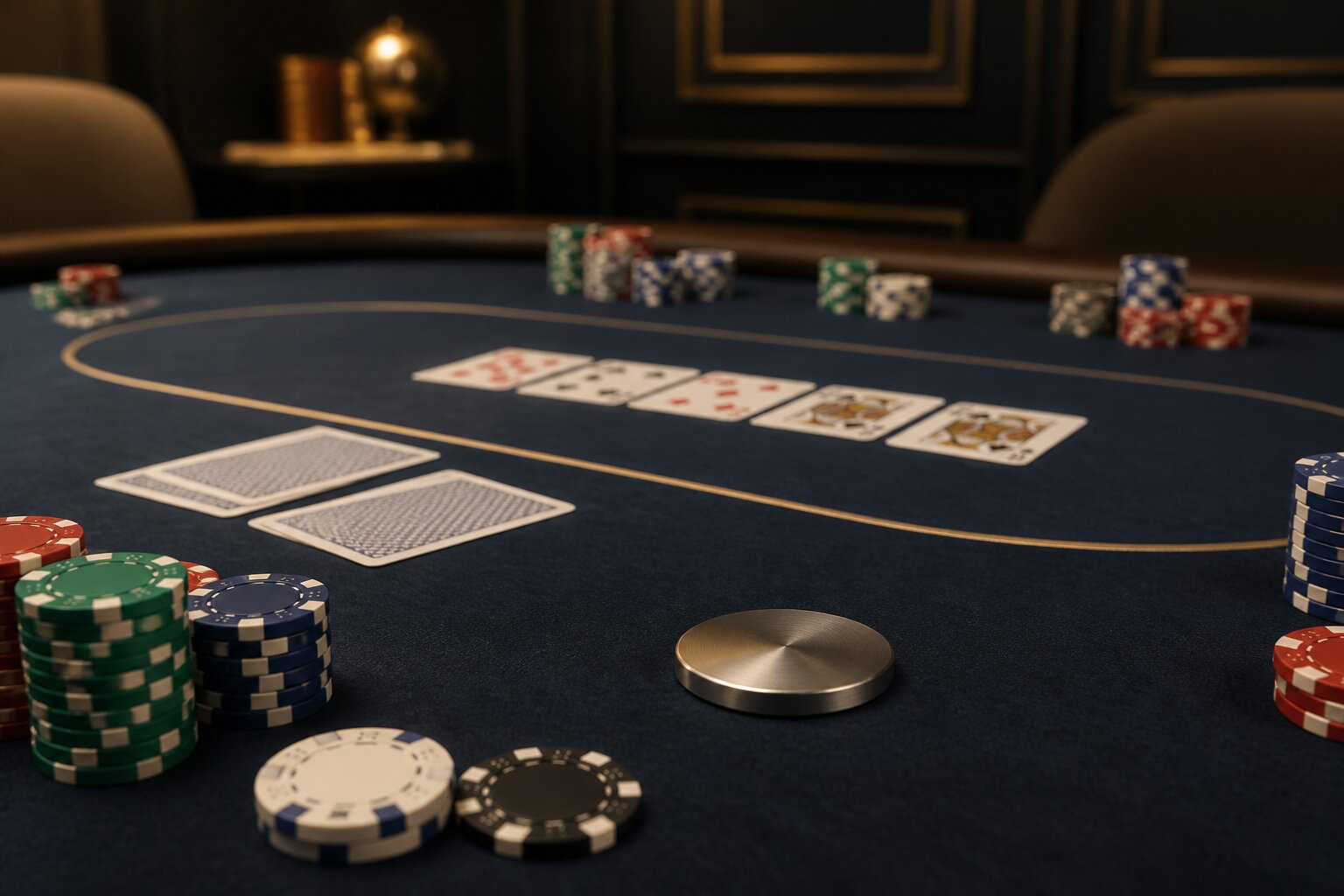
Curious about why the button is such a big deal in poker? Whether you’re at a local club or on a site, knowing where you sit at the table changes how you make decisions and manage your chips.
The button isn’t just another seat — it carries perks, responsibilities and strategic weight. Learn how it shapes the order of play, how blinds interact with it and what makes this position so useful.
Read on to see how a better grasp of the button can improve your choices at the table and give you clearer reasons for when to press an advantage or fold.
What Is the Button Position in Poker?
The button marks the dealer position for a hand and moves one seat to the left after each completed hand. In live play, the disc sits in front of the player who would be dealing if players took turns; online, software assigns the button automatically. Either way, it establishes the sequence of action for betting rounds.
Because the button sits at the end of the action after the flop, turn and river, the player there usually acts last in those rounds. That order gives the button sight of opponents’ choices before committing chips, which is why the seat is often described as powerful. The rotation also spreads posting obligations — every player will pay the small and big blind over time — so the position’s benefits are shared across the table.
Understanding this role gives a practical foundation for the more detailed rules and strategic points that follow.
Rules Governing the Button in Poker Games
Basic rule sets for popular variants such as Texas Hold’em and Omaha require the button to move one seat left after each hand. The movement preserves fairness by rotating both positional advantages and blind obligations among players.
The players to the immediate left of the button post the small and big blinds respectively; those forced bets set the starting stakes for every hand. In certain formats — for instance, short-handed tables, buttonless home games, or specific tournament structures — organisers may adopt house variations that alter minor timing or seating conventions. That’s why experienced players check the table’s rules before joining.
Although most casinos and organised games follow the same core rotation, small procedural differences can affect gameplay and etiquette, so a quick look at the posted rules keeps confusion to a minimum.
How Do Blinds Work with the Button?
Blinds are compulsory contributions to the pot that create initial incentive to play. They are always posted by the two players immediately to the left of the button: the small blind sits first, then the big blind. These amounts are placed before the cards are dealt, ensuring every pot begins with value and encouraging action.
Because the button moves between hands, paying blinds is a shared burden. Over many hands, each player will occupy the button and the blind seats, which balances the long-term influence of position. The timing of action also changes with position: pre-flop, play typically begins left of the big blind, while post-flop rounds start with the first active player to the left of the button and finish with the button last.
These interactions between blinds and the button shape both strategy and table dynamics, so noticing who is posting and how opponents behave from those seats can inform decisions later in the hand.
What Are the Advantages of the Button Position?
The main edge of the button is informational: acting last in most post-flop rounds means you see opponents’ choices before committing chips. That visibility helps with pot control, value betting and deciding whether to bluff, because the same action from different players can mean different things depending on their seating and tendencies.
Position also widens your profitable hand range. On the button, hands that would be marginal in early position can become playable because you can steer the pot size and react to the table’s actions. For example, suited connectors or small pocket pairs can be leveraged more effectively from the button where you can exercise better judgement after seeing others’ bets.
Another practical advantage is the ability to apply pressure. When opponents are forced to act earlier, you can use bet sizing to make them reveal strength or weakness, and fold out hands that might otherwise call. That said, the button is a tool to be used alongside careful observation of stack sizes, player types and the current flow of hands.
These benefits are meaningful, but they’re situational: strong position doesn’t replace sound hand selection and awareness of the table’s mood.
Common Mistakes to Avoid When Playing on the Button
Because the button often feels comfortable, players can overreach. A frequent error is widening your range too far simply because you act late; weaker hands can become costly if opponents are aggressive or the table is calling stations. Another pitfall is failing to adapt: if the players in the blinds are loose or very sticky, strategies that work at one table may not work at another.
Players also sometimes neglect stack relationships. The same button play that is profitable in deep-stack situations may be unwise in a short-stack environment where shove-or-fold dynamics dominate. Finally, ignoring previous streets is a mistake — decisions made on the flop should account for how the action developed pre-flop and what opponents have shown about their likely holdings.
Watch how your opponents respond to pressure, factor in stack depths and avoid assuming the button solves every tough spot. That measured approach keeps the position productive rather than costly.
Button Position Myths: What Should UK Players Know?
There are a few persistent myths about the button that can mislead newcomers. One common belief is that simply being on the button guarantees a big advantage; in truth, while the position offers information, it does not override weak starting hands or poor post-flop play. Another myth says you should play almost every hand from the button — overly loose play here can quickly erode any positional benefit.
Some players assume button play compensates for bad decisions elsewhere in the session. Effective use of the button complements sound fundamentals like hand selection, bet sizing and reading opponents; it does not replace them. And finally, the idea that button plays are the same regardless of context is mistaken: table composition, blind levels and stack sizes all change what’s profitable from this seat.
Keeping expectations realistic about what the button delivers helps you use it correctly rather than relying on it as a catch-all advantage.
If you’re ready to move on, the next section clears up the practical questions players most often ask.
Frequently Asked Questions About the Button Position
Many players want straightforward answers about how the button behaves and what to expect. Below are clear replies to common points of confusion, though exact procedures can vary slightly between venues and software.
Does the button always move after every hand?
In the majority of games, yes — the button advances one seat to the left after each hand. This rotation spreads positional benefits and blind duties evenly among players over time.
What happens if a player leaves during their turn on the button?
If someone leaves while they hold the button, play continues and the marker moves to the next eligible player. Organisers or software handle any seat changes to maintain correct rotation; specific penalties or delays depend on local rules.
Is the button always the last to act?
After the flop, turn and river in games like Texas Hold’em and Omaha, the button usually acts last. Pre-flop is different: action there begins left of the big blind, so the button acts last only after those opening forced bets are in place.
Can two players be on the button at once?
No. Only one player is on the button for each hand. If the position looks unclear, the dealer or system will confirm the correct spot before play resumes.
Should I play more hands on the button?
The button allows a wider, more flexible approach, but that doesn’t mean playing recklessly. Adjust the range you open from the button to suit the table’s tendencies and stack sizes. Keeping decisions disciplined will preserve the seat’s value without exposing you to unnecessary risk.
If any point here feels uncertain for your particular game, ask the dealer or check the house rules before sitting down. With the basics of button play understood, you’ll be better placed to make informed choices and get the most from your position at the table.
**The information provided in this blog is intended for educational purposes and should not be construed as betting advice or a guarantee of success. Always gamble responsibly.