
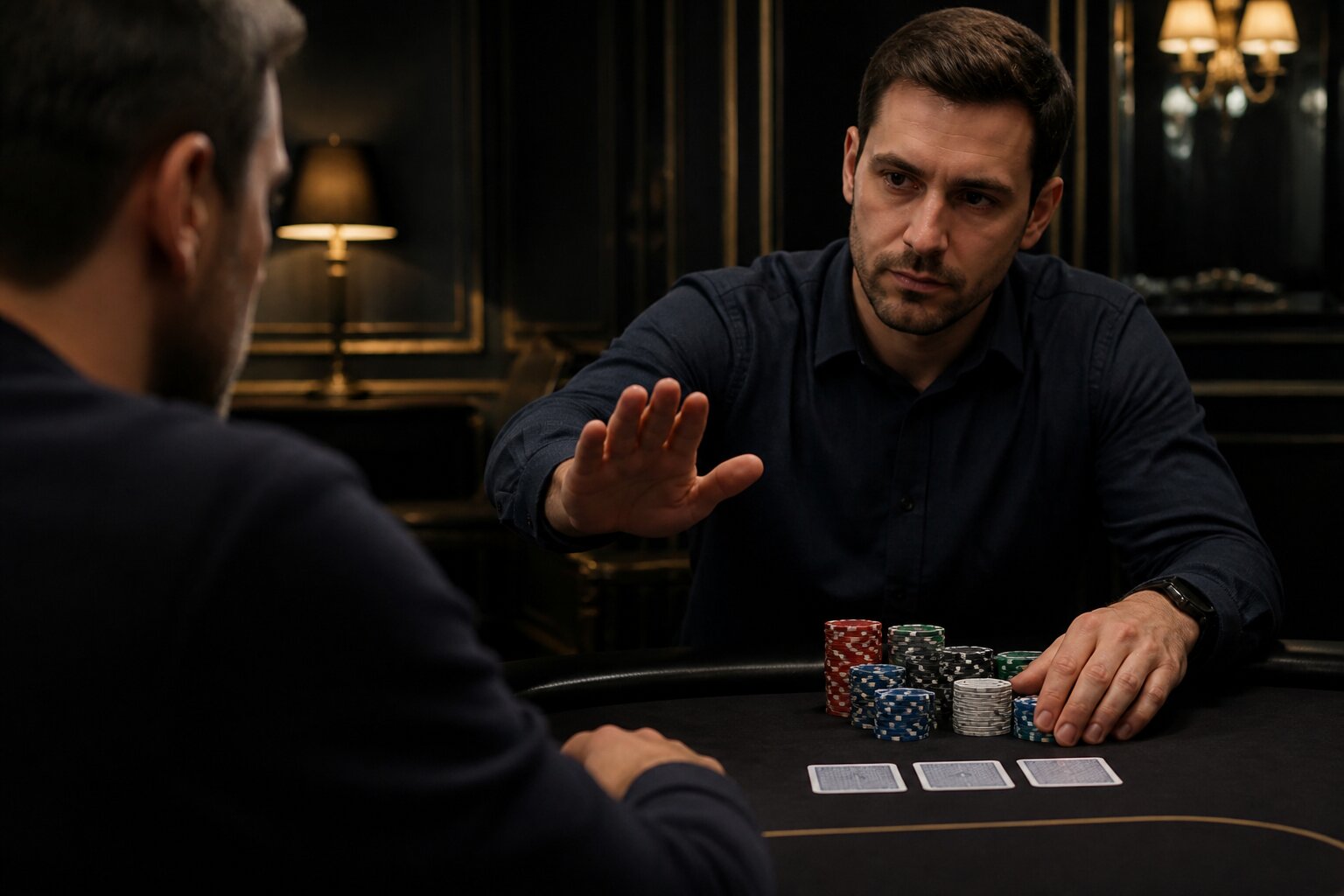
Ever watched a poker table and wondered how skilled players seem to snatch big pots with nothing more than nerve and timing? The check raise can be one of those moves that separates steady players from the ones who control a hand.
Knowing when to hold back and when to strike is what turns routine choices into decisive plays. Mastering the check raise does more than win a few pots, it changes how opponents perceive a player and how hands unfold.
Whether the goal is to sharpen bluffing or to read opponents more clearly, this guide walks through the concept, common mistakes, table reads, and practical ways to use the check raise effectively. Ready to add it to a poker toolkit?
What Is a Check Raise in Poker?
A check raise occurs when a player checks on their turn, another player bets, and the first player then raises that bet. The action creates pressure and can change the dynamics of a hand by inflating the pot after information has been revealed by an initial bet.
This move can serve different purposes. With a strong hand it is a way to extract more value; as a bluff it can force opponents to fold hands they might otherwise have continued with. It also acts as a testing tool, revealing how opponents react to changed stakes.
The check raise is not a magic solution. It is one element within a broader strategy that depends on timing, the board, and how opponents are playing. Use it thoughtfully so it contributes to consistent, considered decision making.
When Should You Use a Check Raise?
Deciding when to use a check raise comes down to reading the table and the likely responses of opponents. Players who frequently bet after an opponent checks are obvious targets, because their tendency to seize initiative can be turned against them.
A check raise is often used with a strong hand to build the pot while disguising strength at first. It can also be employed when the board layout suggests that showing strength is believable, for example when community cards complete possible draws that favour the raiser.
There are times when a check raise functions best as a bluff. If the board presents patterns that a player would plausibly have, then a well-timed raise can cause opponents to fold medium-strength holdings. The decision depends on the overall picture: position, previous actions, and the likely expectations of others at the table.
Common Mistakes to Avoid With Check Raising
The check raise is most damaging to an opponent’s plans when it is used selectively. Overuse is a frequent mistake: repeatedly check raising makes the move predictable and easy to counter.
Another error is attempting a check raise in an environment where betting is rare. When opponents are passive or the table is cautious, checking proactively without the expectation of a bet removes the opportunity to raise and wastes the tactic.
A lack of plan is also costly. Effective check raising requires a clear idea of the expected reaction and a sense of how the hand might play out on later streets. Finally, failing to account for table image—how others perceive a player’s tendencies—can turn a bluff into an expensive misread.
Thinking through these factors improves consistency and helps the check raise remain a potent option rather than a habit.
Myths About Check Raising: What Are the Facts?
Several myths surround the check raise. One is that it is only useful as a bluff. In practice, it can be equally valuable for extracting value from strong hands, since it disguises strength early and often leads to larger pots.
Another misconception is that mastering the check raise guarantees better outcomes. No single tactic can assure success; the check raise must fit within a player’s broader approach and be used in appropriate contexts.
Some regard the move as unnecessarily aggressive. In truth it is a flexible tool that can be tempered by the size of the raise, the stage of the hand, and the opponents involved. Judgement, not aggression for its own sake, determines whether the check raise succeeds.
How Do You Read Opponents When Planning a Check Raise?
Reading opponents is an exercise in pattern recognition. Observing how players behave across multiple hands reveals tendencies, such as whether they bet when checked to or whether they prefer slow-play and cautious calls.
Bet sizing is informative. Smaller bets often indicate a desire to probe or to keep pots manageable, while larger bets can signal commitment. The pace of action also matters; quick bets sometimes reflect routine decisions, while pauses can mean hesitation, though players will sometimes vary timing to appear misleading.
Accurate reads come from aggregating many observations rather than relying on a single tell. Over time a picture of an opponent’s style emerges, and that picture guides whether a check raise is likely to succeed or backfire.
Is Check Raising Effective in Online vs Live Poker?
The fundamental logic behind a check raise applies in both online and live environments, but the available information differs. In live play, physical reactions and the rhythm of the table provide extra clues that can inform whether a check raise will be respected.
Online play removes those physical cues, shifting the emphasis to timing patterns and betting behaviour across hands. Players who track opponents’ actions over many rounds can still find profitable check raise spots by recognising consistent tendencies.
Neither setting makes the check raise inherently superior, but the signals used to choose it change. Adapting to the available information—body language live, timing and bet sizes online—keeps the tactic relevant in either format.
Improving Your Timing: How Can You Perfect the Check Raise?
Timing a check raise develops through experience and reflective play. Over repeated sessions, good opportunities become clearer: moments when opponents are likely to bet, or when the board makes a believable strong hand for the raiser.
Patience is important. Forcing a check raise into a marginal situation usually reduces its effectiveness. Instead, recognising the table flow, adjusting to how others respond, and reviewing hands afterward builds better judgement.
Accepting that mistakes happen helps improvement. Each hand that does not go as planned provides information about opponents and a chance to refine when to apply the move.
Recognising Prime Opportunities for a Check Raise
Prime moments include boards that make plausible strong hands for the raiser and opponents who act on perceived weakness. When a player shows habitual aggression after checks, a well-timed raise can capitalise on that tendency while maximising pot value with strong holdings.
Uncertainty in opponents’ actions is also a sign. Hesitation or inconsistent betting can indicate a spot where pressure applied by a raise will force difficult choices.
Adapting to Different Player Types
Adjusting the approach to different styles improves outcomes. Against aggressive opponents a check raise can extract value as they continue to bet; against cautious players the same move might simply end the hand prematurely unless the raiser is confident in the value of the holding.
Observing how often opponents call, fold, or re-raise helps shape the decision. Flexible tactics, guided by accumulated reads, keep the play effective across a range of opponents.
Protecting Yourself Against the Check Raise
Awareness and reserve reduce vulnerability to opponents’ check raises. Watching for patterns where an opponent tends to check and then raise, or noticing sudden shifts to tight or deceptive play, prepares a player to respond more cautiously.
Bet sizing and hand composition should inform decisions. On tricky boards, committing large amounts without clarity increases exposure. Folding a marginal hand in the face of a raise is often the sound choice, preserving chips for better opportunities.
Keeping stakes and exposure manageable is part of good play. If a session stops being enjoyable or starts to feel pressured, stepping away and reviewing the approach helps maintain healthy habits. Overall, the check raise is a powerful component of poker strategy when used selectively, with attention to timing, table image, and opponent tendencies.
**The information provided in this blog is intended for educational purposes and should not be construed as betting advice or a guarantee of success. Always gamble responsibly.