
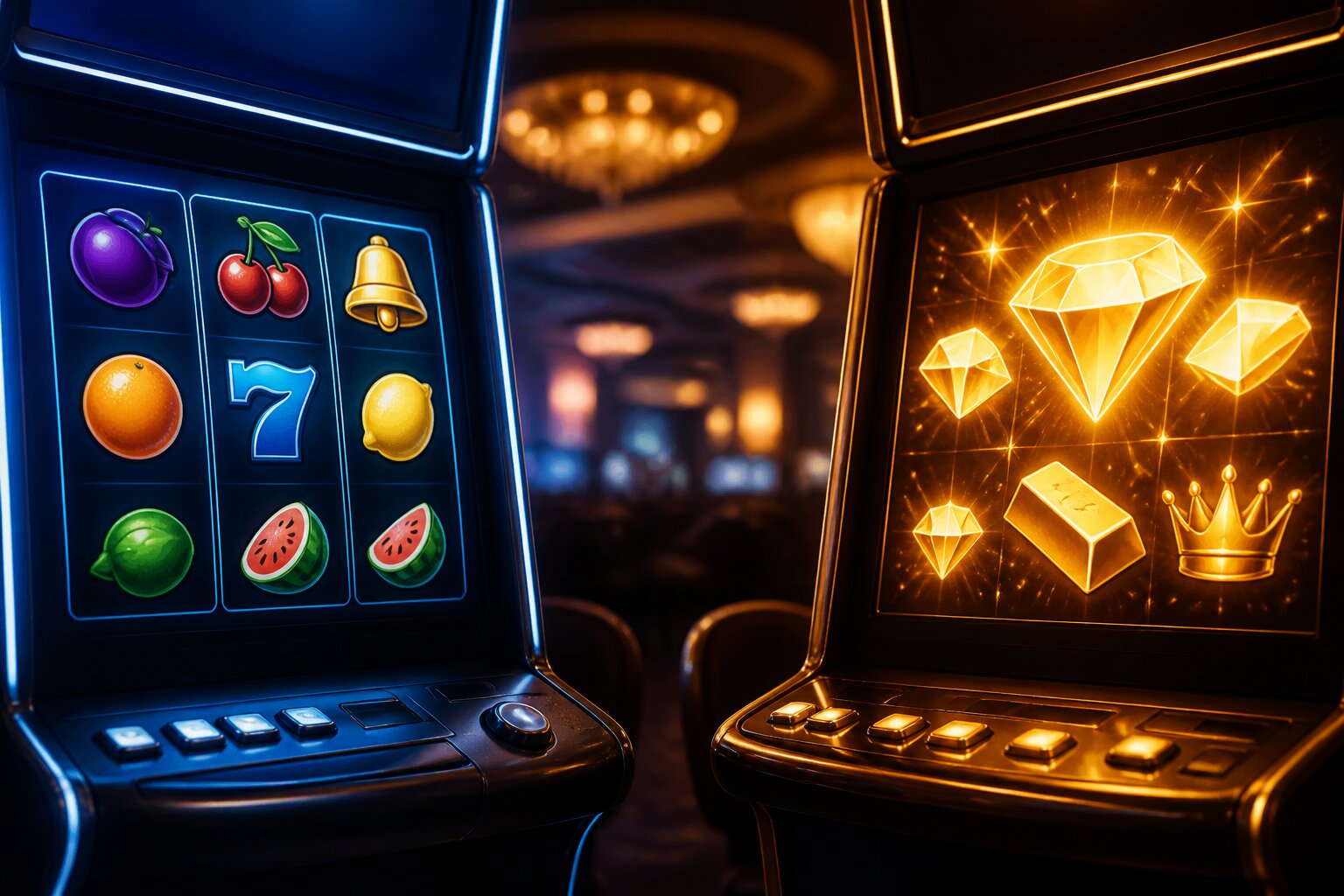
Ever scrolled through an online casino and wondered what really sets regular slots apart from those tempting jackpot games? You are not alone. With rows of colourful reels and flashy themes, it can be hard to know which type of game will suit your style.
Choosing between regular slots and jackpot slots is less about chance and more about understanding what each offers and how they behave over time. Read on to learn the key differences, the features that matter, and how to pick the option that matches your preferences.
What Are Regular Slots?
Regular slots, also called standard or classic slots, follow a straightforward format: you spin the reels, match symbols and win according to the game’s paytable. These games typically have fixed top prizes that do not increase as the game is played.
Designs range from three-reel fruit machines to feature-rich video slots with multiple paylines, wilds and bonus rounds. The emphasis is on clear, predictable prize structures and accessible gameplay. Payouts are determined by the game’s programmed probabilities and displayed paytables, so you always know the maximum a game will pay.
These titles suit players who prefer simplicity and consistency. You can explore different themes and mechanics without having to factor in a growing prize pool.
What Are Jackpot Slots?
Jackpot slots add an extra layer to standard play by offering a chance at a much larger top prize. There are two common forms: fixed jackpots, where the top prize is set, and progressive jackpots, where a portion of each stake is added to a collective prize pool that grows until it is won.
Progressive jackpots can link across multiple machines or remain within a single game. To support those escalating prizes, a small percentage of each bet is diverted into the jackpot fund. In return, individual wins from the base game can sometimes be smaller than in non-jackpot titles because of this contribution.
Jackpot games often include specific features that allow players to trigger the jackpot opportunity, such as wheel-style bonus rounds or special symbol collections. These features sit alongside the usual free spins or multipliers, creating a very different rhythm from many regular slots.
How Do Regular Slots and Jackpot Slots Work?
Both types operate on the same basic mechanics: you choose a stake, spin the reels and aim to land matching symbols on paylines. What distinguishes them is how their prizes are funded and the potential size of the top prize.
Both regular and jackpot slots use certified random number generation to determine outcomes. That means each spin is independent and follows the game’s programmed probabilities. Regular slots award wins according to a fixed paytable, while jackpot slots offer the additional possibility of a jackpot event, which may be funded from a progressive pool.
If you prefer a predictable payout ceiling, regular slots deliver that. If you like the idea of a prize that can grow over many players’ stakes, jackpot slots provide that extra potential.
Key Differences Between Regular and Jackpot Slots
The most important differences are prize potential, funding method and feature design.
- Regular slots have fixed top prizes set by the developer and shown in the paytable. That top prize is constant regardless of play volume.
- Jackpot slots—particularly progressive ones—offer prizes that can increase over time because part of each bet contributes to the jackpot pool.
- Feature sets differ: regular slots focus on standard bonus mechanics, while jackpot games often include distinct jackpot-trigger features, such as bonus wheels or symbol collection mechanics.
These distinctions affect gameplay rhythm and volatility. Jackpot titles tend to be higher volatility because the jackpot component changes the distribution of payouts, whereas regular slots often deliver more predictable, smaller wins.
You’ll find that both categories are subject to testing and regulation, ensuring the games meet required standards for fairness and transparency.
Which Features Are Unique to Each Slot Type?
Regular slots emphasise classic elements: straightforward paylines, wilds and scatters, plus bonus rounds and free spins that pay according to the fixed structure. Their features are designed to enhance the core spin-and-match experience without altering the prize ceiling.
Jackpot slots introduce mechanics linked specifically to accessing the jackpot. Progressive jackpots are exclusive to certain jackpot games. Bonus features in these titles may trigger the jackpot only under specific conditions, such as reaching a bonus game or collecting certain symbols in the base game. Some jackpot slots also have multiple jackpot tiers, like mini, major and mega prizes, each with their own trigger routes.
These specialised features affect how the game feels from session to session. If the prospect of a rare, substantial prize appeals, the extra mechanics in jackpot slots are the attraction. If you want consistent play with known outcomes, regular slots are more likely to deliver that experience.
What Are the Pros and Cons of Regular Slots?
Pros
- Easy to understand, which is helpful if you want straightforward gameplay and a gentle learning curve.
- Available in a wide range of themes and styles, so you can find something that suits your taste without extra complexity.
- Fixed prizes mean you know the maximum win in advance, giving clear expectations about potential returns.
- Lower volatility options are often available, which can suit players seeking steadier, more frequent payouts.
- Generally fewer rules and fewer bonus mechanics, making sessions quicker to follow and less demanding on attention.
Cons
- Top prizes are limited compared with progressive jackpot or high-variance games, so they are less likely to deliver very large headline wins.
- Less escalating excitement for players who enjoy big bonus rounds or evolving jackpots.
- Some players may find the straightforward design less engaging over long periods, particularly if they favour complex features.
- Fixed prizes and simpler mechanics can mean lower maximum returns for those chasing large, infrequent payouts.
Regular slots are well suited to players who value predictability and simple entertainment. Choose them when you want consistent play and clear expectations, and remember that all gaming involves risk. Play responsibly and set limits you can stick to.
What Are the Pros and Cons of Jackpot Slots?
Pros
Jackpot slots stand out for their potential to award much larger prizes than many standard slot games, particularly when they link into progressive pools that grow as more players contribute. That growing prize can create extra tension and excitement during play and give sessions a sense of purpose beyond routine spins.
Many jackpot slots also include dedicated features that diversify gameplay, such as special bonus rounds, qualifier events or separate jackpot triggers. These mechanics can make sessions feel more varied and engaging, even when base game wins are modest.
For some players, the entertainment value of chasing a large prize is a major draw. The rare possibility of a life-changing win can turn a short play session into an unforgettable moment, which is part of their appeal.
Cons
The odds of winning a jackpot are generally low, and the volatility is often higher, which can mean longer stretches between notable payouts.
Because a portion of each bet often funds the jackpot, standard payouts in the base game can be smaller than they would be in some non-jackpot titles.
Other considerations include:
- Smaller average returns per spin compared with non-jackpot slots.
- Fewer frequent, smaller wins, which some players prefer.
- The emotional impact of long losing runs if you are chasing the big prize.
Jackpot slots suit players who accept greater variance in exchange for the possibility of a substantial payout. They work best when treated as entertainment rather than an investment, and players should only stake what they can afford to lose. If you are concerned about your play, seek help or use available responsible gambling tools.
How Does Payout Potential Vary Between Regular and Jackpot Slots?
Payout potential across slots is summarised by the RTP figure, which indicates the theoretical percentage a game returns over the long term. Both regular and jackpot slots display RTP values so you can compare games before you play.
Regular slots often present a payout profile with more frequent smaller wins and a fixed top prize. Jackpot slots can offer smaller regular payouts because of the contribution to the jackpot pool, but they compensate with the possibility of a much larger top prize. That makes the overall distribution of returns different between the two types.
Understanding RTP and volatility together gives a clearer picture than looking at RTP alone. Volatility tells you whether wins tend to be frequent and small or rare and large. Use those two metrics to match a game to your bankroll and preference.
Choosing Between Regular and Jackpot Slots: What Should You Consider?
Deciding which type to play comes down to budget, play preferences and tolerance for volatility. Think about how you want a session to feel. Do you prefer steady, frequent wins and simpler features? Or are you looking for the heightened anticipation that accompanies a rising jackpot?
Budget matters because jackpot slots can require longer play to reach a big outcome, and high-volatility games may deplete a bankroll faster. Volatility influences session length and the size and frequency of wins. Checking the game’s RTP and volatility will help you form realistic expectations.
Set clear spending and time boundaries before you begin. If play stops being enjoyable, seek support and consider using the site’s account tools to manage activity. A measured approach keeps the experience pleasurable and sustainable.
Common Myths About Jackpot and Regular Slots
There are several persistent misconceptions that can skew how people approach slot play. Addressing these helps set realistic expectations.
“Slots Are Due a Win”
Some believe a machine is more likely to pay out after a dry spell. In reality, each spin is independent and governed by the game’s probability model. No past spins change the odds of the next one.
“Playing at Certain Times Helps”
The idea that time of day or week affects payouts is unfounded. Outcomes are not linked to external timing; the programmed probabilities remain constant.
“You Can Influence the Outcome”
No skill or sequence of plays alters the programmed probabilities. Slot play does not respond to strategy in the way skill-based games do.
“Jackpot Slots Guarantee Big Wins”
Progressive jackpots can grow large, but they do not guarantee a win. The chance of securing a jackpot is low, and these games are designed for entertainment rather than as a means of income.
Keep these points in mind when selecting games and forming expectations. If you pick a slot that fits your style and play within set limits, you can enjoy the variety the market offers without mistaking play for a financial strategy.
**The information provided in this blog is intended for educational purposes and should not be construed as betting advice or a guarantee of success. Always gamble responsibly.