
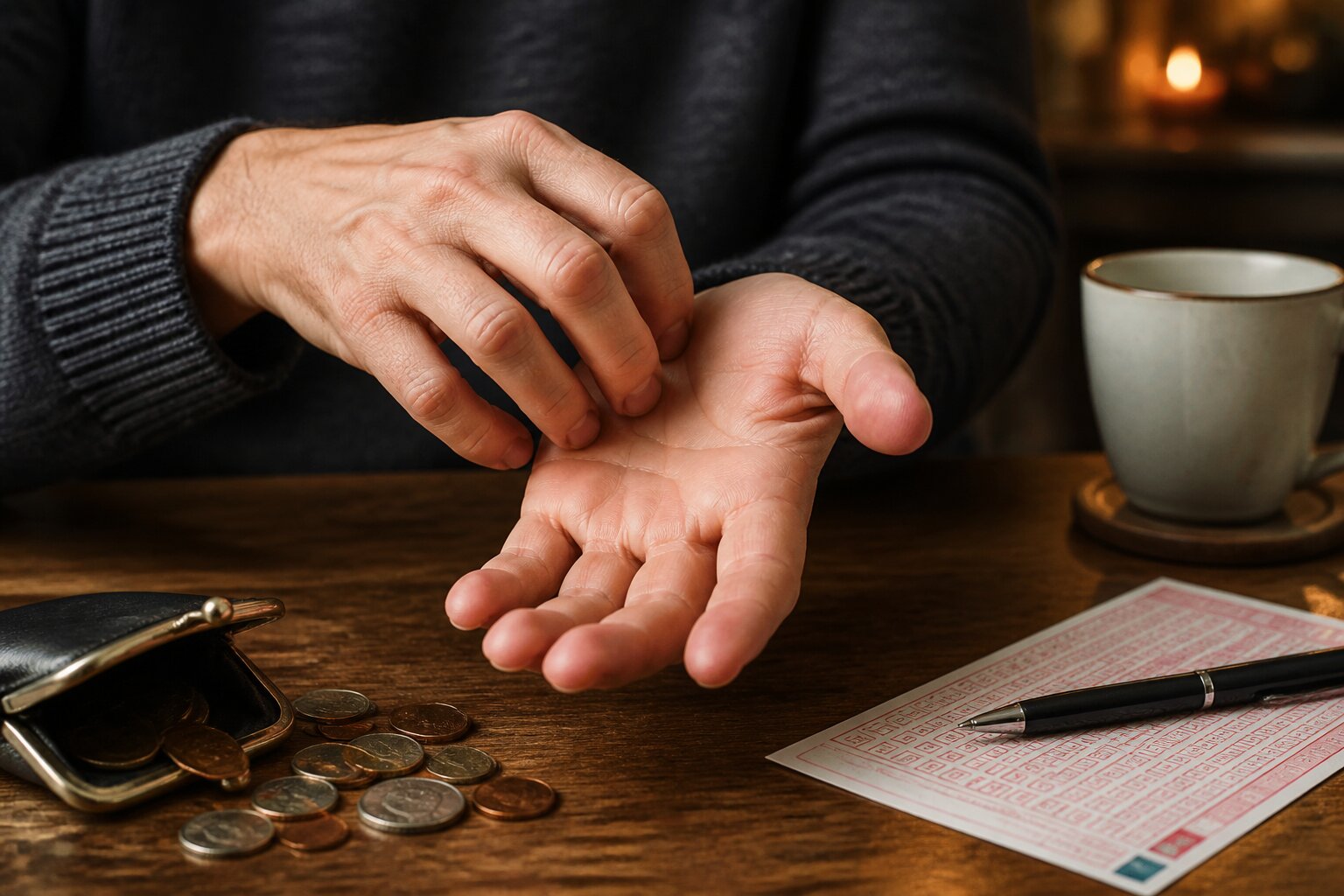
Ever felt an unexpected itch in your right hand and wondered if money might be coming your way? That reaction is more common than you might think—people have long attached meaning to small bodily sensations.
Stories about itchy palms appear in family anecdotes, folklore and online chatter, often framed as a sign that money or a favourable turn is near. In the pages that follow, we’ll trace where those stories come from, how different cultures interpret the same sensation, and what medical science actually says about itchy hands.
First, let’s look at the most common interpretation of an itchy right palm and how that idea took root.
What Does It Mean When Your Right Hand Itches?
At its simplest, the belief that an itchy right hand signals incoming money is a superstition rooted in oral tradition. Families and communities have passed down short phrases and rituals to remember what an itch might mean, and these small customs add a little anticipation whenever someone feels that prickling sensation.
People often invent light-hearted behaviours around the idea—tapping a particular surface, or resisting a scratch—as a way to make the moment feel meaningful. These actions are cultural tokens rather than signals that anything tangible will follow.
Medically speaking, there is no evidence that an itchy palm foretells monetary gain. Typical causes include dry skin, contact with irritants, allergic reactions or nerve sensations. Stress can also increase awareness of itches, turning a momentary sensation into something more memorable. With that in mind, we can explore how this simple idea has branched into a variety of colourful traditions.
Popular Superstitions Around Hand Itching
Beliefs about itchy hands vary widely, but they share a common theme: people enjoy finding patterns in ordinary events. Across different communities, that enjoyment gives rise to short rhymes, small rituals and local takes on whether an itch is “good” or “bad” news.
Right Hand vs Left Hand: Different Beliefs
Many traditions draw a distinction between right and left hands. One common saying suggests the right hand brings incoming money while the left indicates money going out. Other regions reverse those meanings, or attach additional nuance based on timing or circumstances.
These opposing versions show how a tiny detail—a hand—can carry different symbolic weight in different places. Next, we’ll widen the lens to see how cultures outside Britain interpret hand itching, which broadens the picture of how such ideas spread and adapt.
Hand Itching in Different Cultures
Outside Britain, itchy-hand interpretations take many forms. In some parts of South Asia, the meaning can change according to gender; in parts of Eastern Europe, people have linked itchy palms to small domestic rituals like rubbing the skin on wood. Caribbean stories sometimes treat an itchy hand as a nudge to buy a lottery ticket just for fun, and in several African communities these tales circulate as light-hearted advice passed between generations.
These variations show that the superstition is more a cultural mirror than a universal signal: the same physical sensation is given different meanings depending on local habits and storytelling. That range of interpretations has helped the idea persist, but it’s worth separating entertaining tradition from fact.
Myths About Right Hand Itching and Wealth
Over time, the basic notion that an itchy right hand equals incoming money has been surrounded by additional claims: that the intensity of the itch predicts the size of the gain, or that refusing to scratch will strengthen the effect. These embellishments make the superstition more vivid, but they remain unproven.
Such myths can encourage people to read significance into everyday events. When those beliefs intersect with spending—especially on lotteries or other forms of betting—they can affect behaviour. Rather than rely on any supposed sign, it makes more sense to treat these stories as folklore and keep financial decisions grounded in practical considerations. With that in mind, let’s examine how this superstition connects specifically to lottery play.
The Connection Between Right Hand Itching and Lottery Wins
Stories linking an itchy palm to a forthcoming lottery ticket are common on social media and in casual conversation. People enjoy telling tales of a sudden itch that seemed to urge them to buy a ticket, and those anecdotes travel quickly because they are short, memorable and easy to share.
Despite how persuasive such stories can feel, there is no evidence that a bodily sensation can affect the outcome of a random draw. Lotteries operate on chance and procedures designed to ensure impartial results; no physical sign can alter those processes. That said, the superstition can influence behaviour: someone who takes an itchy palm as a cue may spend money on a ticket they otherwise would not have bought. Before we consider the practical implications of that tendency, it’s useful to look at what science says about itching itself.
Is There Any Scientific Basis for Hand Itching Beliefs?
From a medical standpoint, itching is a physiological response. Common causes are dermatological—dry skin, eczema, contact dermatitis—or neurological and psychological, such as heightened sensitivity during stress. Allergic reactions and exposure to irritants like soaps or cleaning chemicals are also frequent culprits.
Researchers have not found any causal link between bodily sensations and future financial events. In contexts where outcomes are determined by regulated, random processes, such as lotteries or other games, an itch cannot influence the result. Understanding the physical roots of itching helps demystify the experience and reduces the chance of making decisions prompted by a momentary sensation. With clarity about the cause, it becomes easier to consider whether the superstition should affect how someone acts.
Should You Take Right Hand Itching Seriously?
An itchy palm can be an amusing story starter and a comforting family memory, but it should not be the basis for financial choices. Treat the superstition as part of cultural folklore: enjoyable to discuss, not reliable as guidance for spending or wagering.
If an itch prompts someone to buy a lottery ticket, it’s wise to keep that purchase small and seen as entertainment rather than an investment. Gambling activities should be approached with clear limits and awareness of the risks; providers and regulations aim to ensure fairness and to promote safer play, so decisions are best made with that context in mind.
If itching is persistent, widespread or accompanied by other symptoms, a healthcare professional can identify treatable causes and offer relief. Otherwise, enjoying the story behind an itchy palm and moving on is a sensible way to handle the moment—one that keeps cultural curiosity intact while avoiding unnecessary financial choices.
**The information provided in this blog is intended for educational purposes and should not be construed as betting advice or a guarantee of success. Always gamble responsibly.