
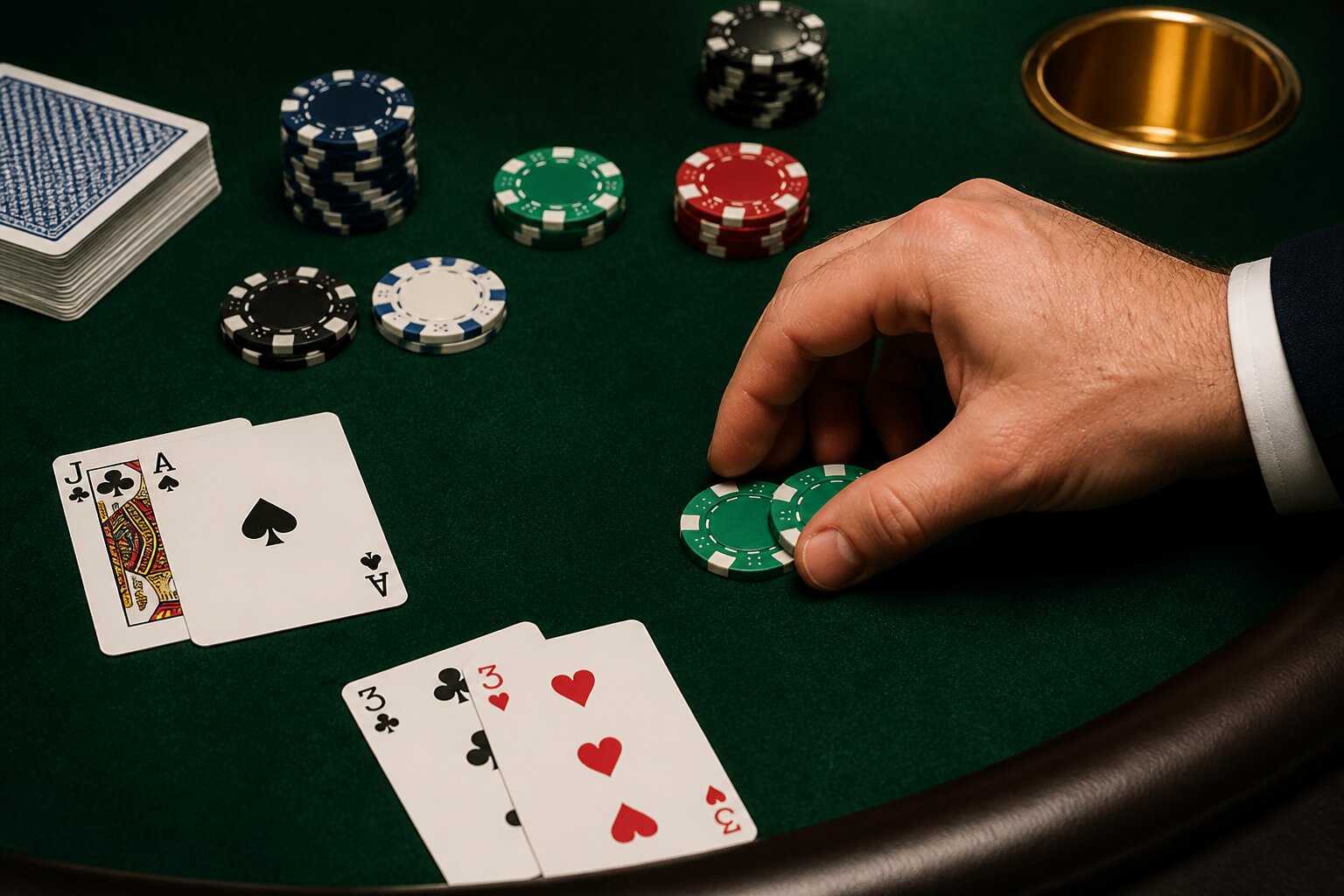
If you enjoy a variation on classic blackjack, the 21+3 side bet is a popular extra that appears at many tables. It creates a small poker-like contest from the player’s first two cards plus the dealer’s upcard, offering a separate chance to win beyond your main blackjack hand.
One of the most talked-about outcomes on the 21+3 paytable is suited trips. It pays strongly because it is exceptionally rare, so understanding exactly what it requires and how it is resolved helps you see why it attracts attention.
Read on to learn how the 21+3 bet works, what suited trips means in practical terms, and how likely you are to see one during play.
What Is the 21+3 Side Bet in Blackjack?
The 21+3 side bet is an optional wager placed alongside your regular blackjack stake. It uses only the first two cards dealt to the player and the dealer’s visible upcard to form a three-card hand that is judged against a separate paytable. Typical winning combinations mirror simple poker hands: flush, straight, three of a kind, straight flush and suited trips.
You place the 21+3 bet in a marked area before the round begins. The result of this wager is settled immediately after those three cards are dealt and it does not affect the resolution of your main blackjack bet. Payouts differ between games and casinos, and the more unusual the hand, the larger the payout tends to be.
Because the 21+3 bet is independent of the main game, it can win while your blackjack hand loses or vice versa. If you want to examine specific paytables, check them before you sit down so you know the returns for each combination. The next section explains exactly what suited trips requires and why it is placed at the top of most paytables.
How Do Suited Trips Work in 21+3 Side Bets?
Suited trips is the highest-paying 21+3 outcome because it requires three cards of the same rank and the same suit among the player’s two initial cards and the dealer’s upcard. In practical terms, this means all three cards must be identical in both value and suit.
It is important to note that suited trips can only occur when a game uses multiple decks. In a single-deck game there is only one copy of each specific card, so matching rank and suit three times is impossible. When several decks are shuffled together, duplicate copies of the same card exist, which makes suited trips achievable though still very rare.
The side bet is settled immediately after the initial three cards are exposed. If they form a qualifying combination, the casino pays the side-bet payout shown on the table’s paytable. That payment is separate from whatever happens later in the round with the main blackjack hands. Below are concrete examples to clarify what does and does not qualify.
What Defines a Suited Trips Hand?
Suited trips requires three exact matches of rank and suit across the player’s two cards and the dealer’s upcard. For instance, in a six-deck game it is possible to receive 7 of hearts, 7 of hearts, and 7 of hearts because multiple copies of that specific card exist in the shoe. By contrast, three sevens in different suits or three cards of the same rank but mixed suits do not meet the definition.
Because the requirement is so strict, suited trips is the rarest combination on the 21+3 paytable. That rarity is the reason it typically carries the largest payout on that paytable, which the next subsection covers.
How Are Suited Trips Paid Out?
Payouts for suited trips are typically the highest on the 21+3 table and are set by the game’s paytable. Commonly you will see values such as 100 to 1 for suited trips, but this varies. Before you place a side bet it is sensible to look at the paytable for the specific game you are playing to see the exact payouts for each combination.
Because the side bet resolves independently of the main game, a single hand can deliver both a side-bet win and a main-hand loss or the reverse. Having a clear sense of the paytable and the frequency of each outcome helps you decide whether the potential return justifies the extra stake.
Which Card Combinations Qualify as Suited Trips?
The qualifying condition for suited trips is strict: the player’s two initial cards and the dealer’s upcard must be identical in rank and identical in suit. In a multi-deck shoe those duplicate cards can appear, so here are examples that would qualify in such a game:
Three 10 of Spades (10♠ 10♠ 10♠)
Three Ace of Clubs (A♣ A♣ A♣)
Three Queen of Diamonds (Q♦ Q♦ Q♦)
Three 5 of Hearts (5♥ 5♥ 5♥)
Hands that look similar but do not match exactly — such as three cards of the same rank in different suits, or only two cards matching in rank and suit — do not qualify for suited trips. The specificity of the requirement explains both the rarity and the high payout for this outcome.
What Are the Odds of Landing Suited Trips?
Suited trips is extremely uncommon. Exact odds depend on how many decks are used in the shoe and the shuffling method, so probabilities vary from game to game. In typical multi-deck blackjack games the chance of getting three identical rank-and-suit cards is on the order of a few thousand-to-one, which is why it sits at the top of the paytable.
Because deck count matters, a game with fewer decks will generally offer lower odds of suited trips than the same game played with many decks. That relationship between deck number, rarity and payout is why paytables and side-bet pricing differ across casinos and tables.
There is no reliable method to influence the appearance of suited trips; it is a random event within the shuffled deck. Given the long odds and the higher house edge that side bets usually carry, many players treat 21+3 as occasional entertainment rather than a primary way to play bankroll.
How Does 21+3 Affect the Standard Game of Blackjack?
Adding the 21+3 side bet does not change how standard blackjack is played. The primary objective remains to make a hand that beats the dealer’s without exceeding 21. The side bet is an optional extra that is handled and settled separately, immediately after the initial three cards are dealt.
Because the side bet is independent, it is possible to win the side bet and still lose the main hand, or to lose the side bet while winning at blackjack. Placing the side bet increases the total amount at risk in any given round, which is why some players use smaller, separate stakes for side bets than for their main blackjack wager.
Understanding this separation between the main game and the side bet makes it easier to decide whether the added excitement and potential payout match your approach to play.
Why Do Players Choose the 21+3 Side Bet?
Players are attracted to 21+3 for the different kind of excitement it introduces: rather than altering strategy in the main game, it offers a compact poker-style contest that can deliver a large payout from just three cards. Suited trips, because of its top payout, is a frequent source of interest.
Some players enjoy the added variety and the occasional big return, while others appreciate that the side bet does not require changing their main blackjack decisions. The key trade-off is that side bets generally carry a higher house edge than the main game, so many players reserve them for occasional plays within a controlled budget.
If you choose to include the 21+3 bet as part of your session, treat it as a distinct, optional element of the game and align any extra wagers with your overall spending plan.
Play responsibly and keep your stakes within limits that feel comfortable for you.
Enjoy Casino Games at Daisy Slots
We believe playing casino games should be all about relaxing and having a good time, and that's exactly the atmosphere we've created on our site. Enjoy a friendly, welcoming space where you can unwind whenever suits you.
Getting started couldn't be easier—creating your account and making your first deposit is a straightforward process. We look forward to welcoming you and hope you enjoy your experience with us.
**The information provided in this blog is intended for educational purposes and should not be construed as betting advice or a guarantee of success. Always gamble responsibly.