
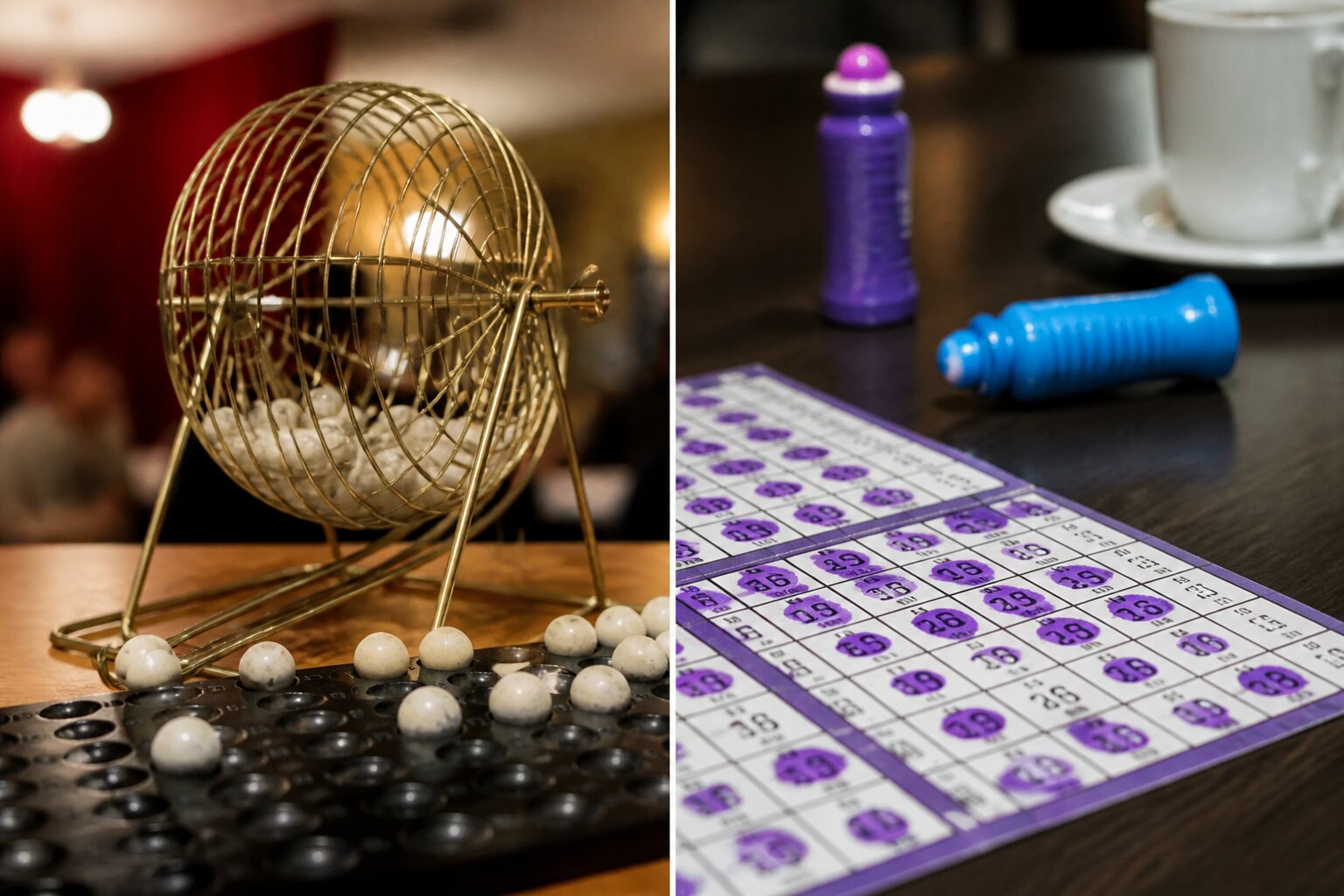
Not sure whether to try tombola or bingo? Both are familiar sights at community events and online, but they offer different experiences. This guide explains how each game works, how they differ, and which might suit you best.
Read on for clear explanations and practical examples that will help you follow along and feel confident joining a game, whether at a fundraiser, a bingo session, or online.
What Is Tombola?
Tombola is a simple, community-focused game that originated in Italy and is now common at fairs, school fêtes and charity events across the UK. Organisers prepare a drum or box filled with folded ticket stubs, each bearing a number. Some of those numbers are assigned to prizes before the event begins.
Players buy one or more tickets at random, open them immediately and check whether the number matches any of the pre-selected prize numbers. Prizes are often modest items or vouchers donated for the occasion, and organisers usually display which numbers win which prizes so players know what they might receive.
Because tombola is straightforward to set up and requires little equipment, it’s a popular choice for community fundraisers and informal gatherings.
What Is Bingo?
Bingo is a number-marking game played in halls, clubs and online. Each player receives a card or cards printed with a unique arrangement of numbers. Traditional UK bingo uses numbers from 1 to 90, arranged across a grid.
During a session, numbers are drawn and announced one at a time. Players mark numbers on their cards as they are called. The objective is to complete a predetermined pattern—commonly a single line, two lines, or a full house, which is all numbers on the card. Once a player completes the pattern, they call out to claim the prize and their card is verified.
Bingo sessions are organised with clear rules around announcing numbers, confirming wins and awarding prizes, which makes the game suitable for larger groups and licensed play.
How Do the Rules of Tombola and Bingo Differ?
The rules differ mainly in format and pacing. Tombola is an instant-draw game: tickets are picked and opened immediately, and winners are determined by whether the ticket number matches a prize number chosen in advance. There is no card to mark or sequence of draws to follow.
Bingo unfolds over a series of number draws. Players watch the game progress as they mark off numbers on their cards, aiming to form the required pattern before anyone else. Because bingo involves live calls and verification of a pattern, the process is more structured and often more social for groups.
Both games require clear oversight to ensure fairness: tombola organisers should make prize-number assignments transparent, and bingo hosts must run draws and winner checks consistently.
Which Game Is More Popular in the UK?
Bingo tends to be the more widely played recreational game in the UK, with regular sessions held in halls, clubs and on regulated websites. Its organised format and social atmosphere help explain its broad appeal.
Tombola, by contrast, is mostly associated with one-off community events, fundraising stalls and small gatherings. It is less common as a regular past-time but remains a staple at charity events because of its simplicity and low setup costs.
Each game fills a different niche: bingo suits repeated sessions and group play, while tombola fits short, casual events where quick results and modest prizes are preferred.
How Do You Play Tombola?
A typical tombola event involves a drum or box filled with folded number tickets and a display showing which numbers win which prizes. Players buy a ticket or several and open them straight away. If a number matches an advertised prize number, the player presents the ticket to claim that prize.
Because the winning numbers are determined beforehand, play is immediate and results are clear. Organisers often recycle unclaimed or losing tickets and may run multiple rounds with different prize sets. The overall process is quick, which makes tombola well suited to busy fundraising days where people come and go.
How Do You Play Bingo?
In a bingo session, each player receives one or more cards with a unique pattern of numbers. Numbers are selected at random and called out in sequence. Players mark off any numbers on their cards that match those called. The game continues until someone completes the agreed pattern and makes a claim, after which the host verifies the card before awarding the prize.
Sessions may include several rounds with different prize levels and patterns, and some venues run special games such as themed rounds or higher-value jackpots. The drawn-number format creates a steady rhythm to the session and encourages interaction among players as the game progresses.
Who Can Play Tombola and Bingo?
Both tombola and bingo involving prizes or money are intended for adults only. In the UK, laws require organisers to verify age when prizes or stakes are involved. This forms part of wider protections to prevent underage participation and to ensure play is appropriate for adults.
Responsible organisers will check proof of age at the point of sale or registration and refuse entry to anyone unable to confirm they meet the minimum age requirement. These safeguards help create a fair and safe environment for everyone taking part and reduce the risk of inadvertent underage play.
Online operators and licensed venues are expected to have robust age verification systems in place. This can include electronic checks and manual ID inspections, as well as staff training so checks are applied consistently and sensitively.
Typical forms of identification used for age checks include:
- Valid passport
- Photographic driving licence
- Proof of Age Standards Scheme (PASS) card
Organisers who fail to carry out required checks can face regulatory action and penalties. Participants who are refused entry or play because they cannot prove their age should be treated respectfully and given clear information on what is required to take part in future.
Are There Age Restrictions?
Yes. Participants must be at least 18 years old when money or prizes are involved. Event hosts and online operators are required to carry out age checks and to refuse participation to those who cannot demonstrate they meet the legal minimum.
For games that are genuinely free and offer no prizes, hosts may allow younger players, but many venues and operators still apply an 18-plus policy to avoid risk and simplify compliance. If in doubt, check the terms and conditions of the event or platform before taking part.
Can You Play Tombola and Bingo Online?
Both games have online versions available through regulated websites and apps. Online bingo replicates the card-and-draw format digitally, while tombola-style games present random ticket draws or prize-matching mechanics in a virtual form.
Choosing regulated platforms helps protect players in several ways:
- draws are independently monitored or audited to ensure fairness
- personal data is held securely and processed in line with privacy rules
- age verification checks are carried out to prevent underage play
Reputable sites and apps also use certified random number generators so results are not predictable, and they display clear terms and conditions about prize distribution and withdrawal rules. Many services include additional safety features to help players manage their activity, such as spending limits, deposit locks, time-outs and full self-exclusion options. You can also look for links to recognised support organisations and services like GamStop if you need help restricting access.
Are Tombola and Bingo Considered Gambling?
When real money or prizes are involved, both tombola and bingo are classified as gambling under UK law and fall within regulatory oversight. The key factor is whether players stake money or something of value to win a prize; if they do, the activity is likely to be treated as gambling.
That means operators must meet specific requirements designed to protect players and maintain fair play. These typically include:
- licensing from the relevant authority
- robust age verification to prevent underage play
- clear codes of conduct and fairness in how games are run
In addition, regulated operators are usually expected to follow wider safeguards such as anti-money laundering checks and responsible gambling measures. These rules help ensure games are run transparently and that prizes and payouts are handled correctly.
For small or non-commercial events, such as occasional community tombolas or fundraising bingo nights, different rules or exemptions may apply. Organisers should check the applicable guidance and legal definitions to confirm whether full regulation is required.
What Are the Main Prizes and Payouts?
Prizes for tombola are typically physical items donated for an event, such as gift hampers, vouchers or small goods. The organiser usually sets which ticket numbers correspond to each prize in advance.
Bingo prizes vary with the scale of the session. In licensed venues or online, payouts are often cash amounts determined by ticket sales or preset prize structures. Special rounds may offer larger prizes, but these vary by organiser and session.
Across both games, prize values and formats depend on the context of the event, so it is always worth checking the rules or prize table before taking part.
Myths About Tombola and Bingo
Several misconceptions persist about these games. One is that certain tickets or cards are inherently better than others. In practice, both tombola and bingo rely on random draws, and no ticket or card can alter the underlying odds. Another is that playing frequently will improve outcomes; every draw is independent, so previous results do not change future ones.
People sometimes assume low-cost community games cannot lead to losses worth noting. Even small stakes add up over time, so it is sensible to be mindful of spending. Overall, these games are designed for entertainment, and expectations should be aligned with that purpose.
Which Game Is Right for You?
Choosing between tombola and bingo comes down to what you enjoy. If you prefer quick, one-off results and the simplicity of drawing a ticket and seeing a prize immediately, tombola will likely suit you. If you enjoy a paced, social activity where you follow drawn numbers and wait for patterns to form, bingo is the better fit.
Think about the setting you prefer—short community stalls or longer social sessions—and what level of structure you want from the game. Whatever you choose, make sensible decisions about how much to spend and take breaks if a session runs long.
If you’d like to join a local event or try an online session, check the organiser’s rules and prize details first, and choose a provider that operates transparently.
This overview should help you pick the game that matches your taste and the occasion. Enjoy taking part, be clear about the rules and prize arrangements, and leave the event knowing you made an informed choice.
**The information provided in this blog is intended for educational purposes and should not be construed as betting advice or a guarantee of success. Always gamble responsibly.