
Blackjack is one of the most common card games at casinos, whether you’re playing online or in person. It moves quickly and the basic aim is simple: make a hand as close to 21 as possible without going over.
Before you feel confident at the table, it helps to know how card values work—especially the face cards. Understanding those values makes it easier to read hands and follow what’s happening, which is exactly what this guide will do.
What Counts as a Face Card in Blackjack?
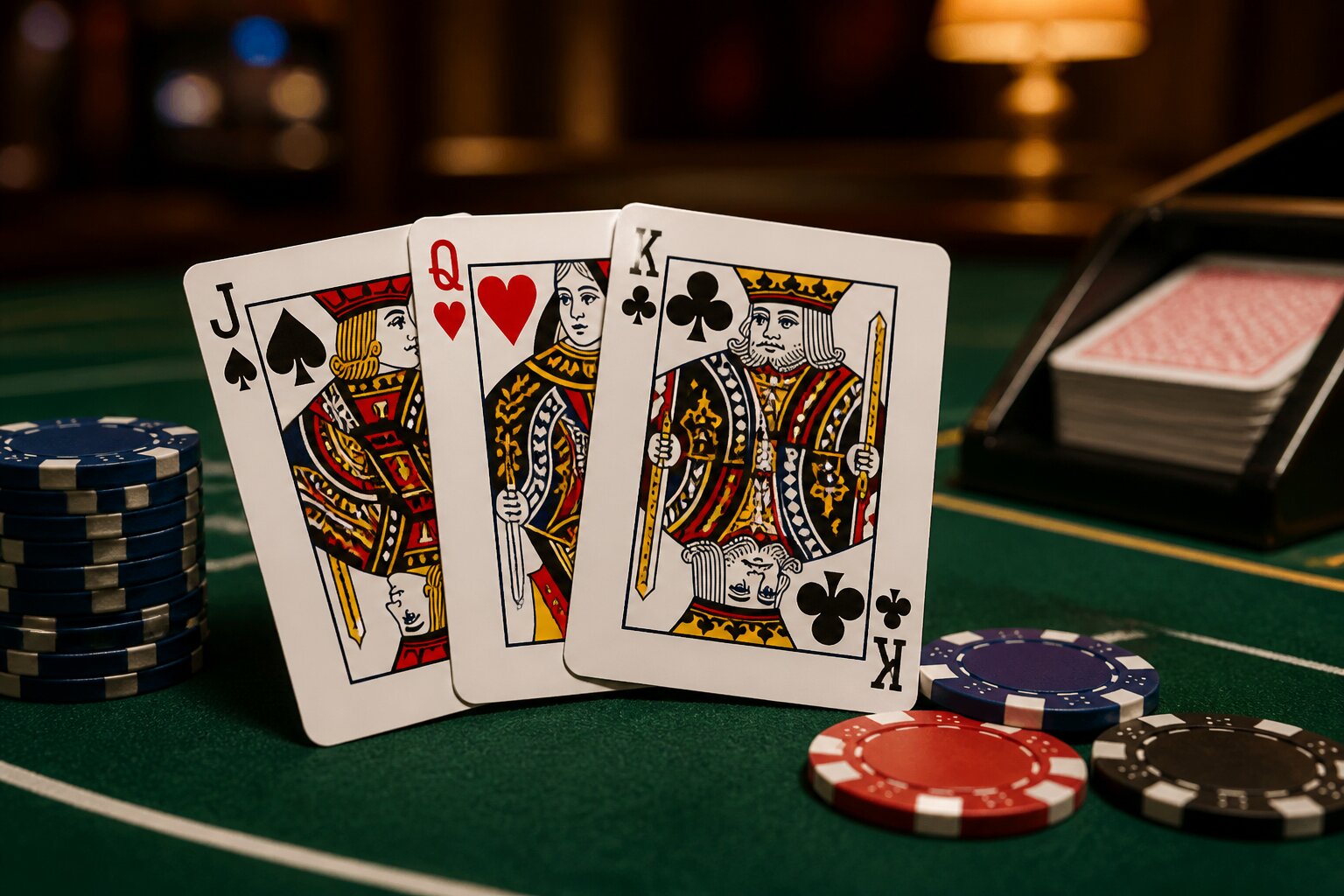
Face cards are the Jack, Queen and King in each suit. They are immediately recognisable by their illustrated faces and carry a consistent value in play: each is worth 10 points in blackjack.
There are twelve face cards in a standard 52-card deck, spread across the four suits:
- Hearts
- Diamonds
- Clubs
- Spades
Aces and the numbered cards are not classed as face cards, though they have important roles of their own in how a hand is scored. Numbered cards count at their pip value, and Aces can count as either 1 or 11 depending on which benefits the hand.
How Are Cards Valued in Blackjack?
Face cards, such as the Jack, Queen and King, each carry a value of 10 points, regardless of suit. These are often grouped together because they are all worth the same amount.
Number cards are worth their pip value, so a 2 counts as two points, a 3 as three points, and this continues up to a 10 which counts as ten points.
The Ace has a flexible role, counting as either 1 or 11 depending on which total is more favourable without exceeding 21. This flexibility is why Aces are often discussed separately from the face cards. Hands that include an Ace and can be counted with the Ace as 11 are often called soft hands, while hands where the Ace must count as 1 are called hard hands.
Knowing these values makes it straightforward to total a hand and to recognise strong combinations quickly. Common strong totals include:
- A natural blackjack (an Ace plus any 10-point card), which equals 21 with the first two cards.
- Totals of 20, which are difficult to beat.
- Soft hands with an Ace that allow more flexible hitting decisions.
Why Are Face Cards So Important in Blackjack?
Because face cards are worth 10 points, they have a large influence on hand totals. When combined with an Ace, a face card produces a two-card 21, commonly called a blackjack, which is the strongest initial hand under standard rules.
There are also more cards worth 10 in the deck than any single other value—tens, Jacks, Queens and Kings—so totals around the high teens and low twenties appear frequently. That frequency changes the way hands develop and why some decisions at the table are more common than others.
Understanding this helps explain why certain hands feel tense: a single 10-value card can move a total quickly from playable to bust, or in the opposite direction to a winning total.
Are Face Cards Treated the Same in Every Game?
In virtually all blackjack variants a face card will count as 10 points. Jacks, Queens and Kings are all valued the same, which helps keep basic card values straightforward for players.
Variations in rules normally appear elsewhere. Common differences include:
- how many decks are used
- whether the dealer hits on a soft 17
- what side bets are offered
Those rule differences can affect basic strategy, house edge and long-term expectations. When you sit at a particular table it is worth scanning the rules before you play so you know which options are sensible and how strict the house rules are.
Common Myths About Face Card Values
A few misconceptions keep coming up. One common error is thinking different face cards have different numerical values. In standard play, they do not. The Jack, Queen and King all count as 10.
- Jack = 10
- Queen = 10
- King = 10
Another persistent myth is the idea that you can reliably predict when face cards will appear. The dealing order is not predictable. Cards are shuffled and dealt in a way designed to be random, so past results do not provide a reliable guide to future outcomes.
Some players also believe face cards alone make a hand easier to win. While face cards are useful building blocks, no single card or combination guarantees a positive result. Winning depends on the whole hand, the rules of the game and the element of chance.
Keep the earlier explanation of card values in mind when you read claims about “easy” outcomes. Be cautious of any advice that promises certainty or suggests simple strategies that will always work. Remember that chance plays a central role and there are no guaranteed shortcuts.
How Do Face Card Values Affect Your Game?
Knowing that face cards count as 10 points helps you judge how close you are to 21 and what outcomes are likely when you receive further cards. That awareness influences both how you interpret the dealer’s up-card and how comfortable you feel with the totals you hold.
Making Choices at the Table
When totals sit near 17 to 20, adding a 10-value card has a big impact, so recognising the prevalence of 10s in the deck clarifies why some hands are more risky than others. Observing how the dealer plays with their visible card and remembering the fixed values of face cards makes following the table’s flow easier, especially while you’re learning.
Responsible Play
Understanding card values should be used to support sensible play and not as a shortcut to expecting particular outcomes. Keep wagers in line with personal limits and stop if the experience stops being enjoyable; there are support options available if you ever need them.
This knowledge of face-card values and how they fit into overall gameplay gives you a firmer foundation at the table, helping you follow decisions and outcomes with more confidence.
**The information provided in this blog is intended for educational purposes and should not be construed as betting advice or a guarantee of success. Always gamble responsibly.