
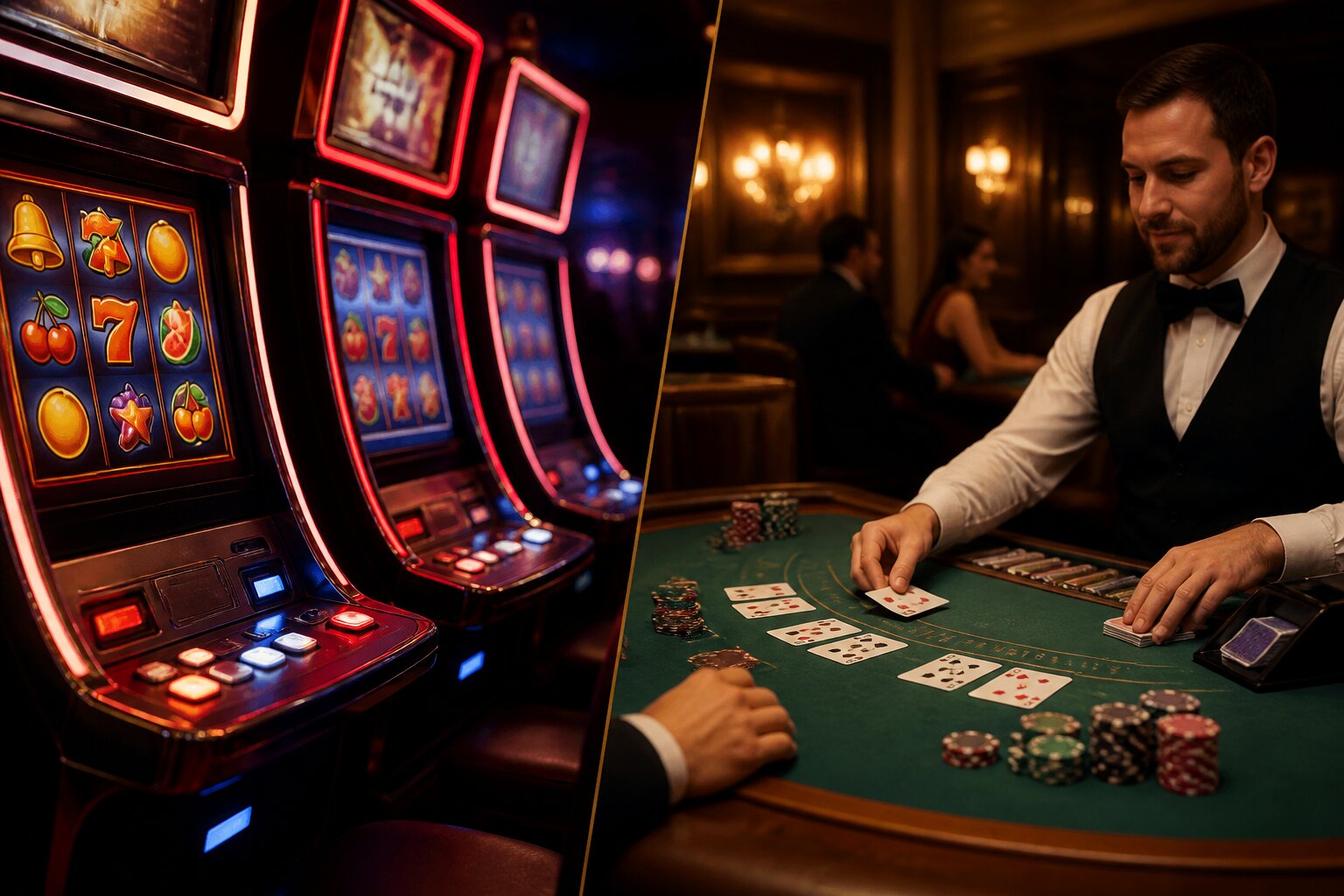
If you’ve ever stepped into a casino, either online or in person, you’ll know that slots and blackjack are among the most popular games around. But when it comes to truly enjoying yourself, which game really comes out on top?
Are you drawn to the bright lights and thrill of spinning reels, or do you prefer the suspense and strategy of facing the dealer? Choosing between slots and blackjack isn’t just about chance or skill — it’s also about personal taste, how much control you want, and what sort of excitement you’re after.
Whether you’re after a quick bit of fun or interested in games where you can work on your technique, this piece will help you decide which game might offer the better casino experience.
Understanding Casino Game Experiences
When people talk about the casino game 'experience', they’re really referring to how it feels to play, not just whether they win or lose. Different games offer unique forms of entertainment. Some are fast-paced and sensory, while others are more measured and involve a bit of thinking.
Atmosphere matters: the sounds, the pace, the company you keep, and the visual presentation all shape how a session feels. Slots are often designed around themes and effects that aim to capture attention quickly. Blackjack usually unfolds more quietly, with a social dynamic at the table that some players enjoy.
Another part of the experience is how quickly a game can be learned. Simple rules let players get started fast; more tactical games reward time spent understanding decisions and outcomes. All of these elements combine to determine whether a game feels right for a particular player. To see how one of the most immediate experiences is created, let’s look at how slots work.
How Do Slots Work?
Slots are among the simplest games you’ll find in any casino. You choose a stake and start the reels; when they stop, certain symbol alignments produce wins. Modern slots use a Random Number Generator (RNG) so each spin is independent and produced by a random process. That means outcomes can’t be predicted or influenced by prior spins.
Slots are also built around themes and features that keep play entertaining: free spins, bonus rounds, and symbol mechanics that change how wins are formed. A technical measure to be aware of is the Return to Player (RTP) percentage, which indicates the long-term expected payback—calculated over many plays. For example, an RTP of 96% suggests that, over a large number of spins, the game returns an average of £96 for every £100 wagered, though individual sessions will vary widely.
Players must be 18 or over to play. Next, we’ll look at a game where choices during play add another dimension to the experience.
What Makes Blackjack Unique?
Blackjack stands apart because it mixes random dealing with decisions that a player can make each hand. The goal is to have a hand value close to 21 without going over while also aiming to beat the dealer’s hand.
Those choices — whether to take another card, stand, split pairs, or double — introduce a strategic element that many players find rewarding. Learning basic strategy helps reduce simple errors and can improve the way you play, though the cards themselves are still generated randomly.
Blackjack is often played at communal tables, creating a social rhythm that differs from solitary play. Live-dealer blackjack versions online reproduce that interaction, with the same decision points and table etiquette. The balance of decision-making and chance gives blackjack a distinct identity among casino games. Turning to how these differences shape the setting, the next section compares the atmospheres you can expect.
Comparing Atmosphere: Slots vs Blackjack
The atmosphere around slots and blackjack can feel quite different, both in physical casinos and online. Slots tend to create a vivid, high-energy setting, filled with lights and sound effects that advertise features and wins. Players usually focus on their own machine or device, making the experience private even in a busy room.
Blackjack typically brings a calmer, more social scene. At a table there’s conversation, a steady pacing to the rounds, and a shared focus on the cards. Online live-dealer blackjack keeps that communal feel through chat and the visible dealing of cards, while standard online blackjack can be a quieter, quicker experience.
Which environment suits you will depend on whether you like being part of a group or prefer a solitary session. These differing vibes also feed into how payouts and session dynamics feel, which is the topic we’ll explore next.
Which Game Offers Better Payout Potential?
When comparing payout potential, consider the odds, payout style and how frequently wins occur. Both games are designed to give the house a small edge, so neither offers guaranteed profits. Still, their payout patterns and expected returns differ in ways that can influence what players experience over time.
Return to Player Rates Explained
Return to Player (RTP) is a long-term average showing what a game returns to players as a percentage of wagers. As noted when discussing slots, RTP gives a rough expectation over many plays rather than predicting short sessions. Blackjack typically has a higher RTP than many standard slot games; when basic strategy is used, blackjack RTPs commonly approach 99% or slightly higher depending on the table rules. Slot RTPs vary more widely, often sitting in the mid-90s percentage range for many titles.
Bear in mind that RTP is theoretical and applies over thousands of rounds; a single session can differ substantially from the average.
Volatility and Payout Frequency
Volatility — or variance — describes how often wins occur and how large they tend to be. Blackjack is usually low volatility, which means wins are relatively frequent but small. Slots can be low, medium or high volatility: low-volatility slots pay smaller amounts more often, while high-volatility titles pay less often but can offer much larger prizes when they do.
Your preferred volatility will shape the feel of a session. If steadier returns are preferable, low volatility options can be more comfortable. If you favour the chance of a large payout at the cost of long dry spells, higher volatility games provide that trade-off. With that in mind, consider how each game keeps you involved during play, which the next section examines.
Player Interaction and Engagement
Interaction differs notably between the two games. Slots require little decision-making after each spin; engagement comes from themes, animations, and bonus mechanics that deliver intermittent excitement. The player experience is therefore sensory and immediate.
Blackjack offers continual choices that keep players mentally engaged. Each hand asks for a decision, and that ongoing judgement can make sessions feel more absorbing. For many players, that involvement strengthens the sense of connection to the game’s outcome.
Understanding game features such as RTP and volatility helps manage expectations and enhances engagement, whether through appreciating a slot’s bonus structure or learning when to exercise a particular blackjack decision. The next section considers how accessible each game is for someone starting out.
Is One Game Easier for Beginners?
Slots are generally the easiest entry point. Their rules are minimal — pick a stake and spin — and there is no need to learn strategic choices. This simplicity makes them well suited to those who want a straightforward, immediate experience.
Blackjack demands a little more from newcomers: knowledge of hand values and common options improves play. Basic strategy is not difficult to learn, but it does require attention to make the most of decisions in each hand. Players who enjoy sharpening technique typically find blackjack more satisfying over time.
Volatility again matters: beginners who prefer frequent, smaller wins often favour low-volatility options, while those who accept larger swings might try higher-volatility games. Choosing a game that matches comfort with variation and decision-making tends to produce the best first impressions. With myths and misconceptions common in both games, a clearer view helps set realistic expectations.
Common Myths About Slots and Blackjack
There are several persistent misconceptions around these games. One is that interacting with a live dealer alters the odds in blackjack; it does not — the dealer’s role is to oversee play and maintain the rules, not to affect randomness. Another is that slots operate on a cycle and are “due” to pay out after a run without wins. Modern RNG-based slots treat every spin independently, so previous outcomes do not influence future ones.
Believing in patterns or guarantees can lead to poor decisions; a more useful approach is to understand game mechanics, RTP and volatility so choices are based on facts rather than assumptions. With that clarity, picking the right game for a visit becomes easier.
How Do You Choose the Right Game for Your Casino Visit?
Choosing a game comes down to what you want from the session. If you’re after a simple, immediate experience with minimal learning, slots are a natural option. If you enjoy making tactical choices and being socially involved, blackjack is likely a better fit.
Consider how much time you have, whether you prefer a communal atmosphere, and how comfortable you are with swings in your balance. Think about volatility and RTP as tools to match the game to your mood: steadier, more frequent returns or less frequent, larger outcomes. Ultimately, the best game aligns with your pace, attention and interest.
When deciding, remember to check the specific rules and features of a game so you know what to expect from a session. That helps keep your play aligned with your goals and enjoyment.
Final Thoughts: Deciding What Suits You
Slots and blackjack each offer distinct experiences: slots with quick, visually driven play, and blackjack with ongoing decisions and a social table rhythm. Neither offers a guaranteed route to winning, and common myths about patterns or systems don’t change the underlying probabilities.
Play should be about entertainment. Set time and spending limits that fit your situation, and if gambling starts to affect other areas of your life there is help available at BeGambleAware.org. Choose the game that matches your temperament and how you like to spend your time, and your casino visit is far more likely to be enjoyable and under control.
**The information provided in this blog is intended for educational purposes and should not be construed as betting advice or a guarantee of success. Always gamble responsibly.