
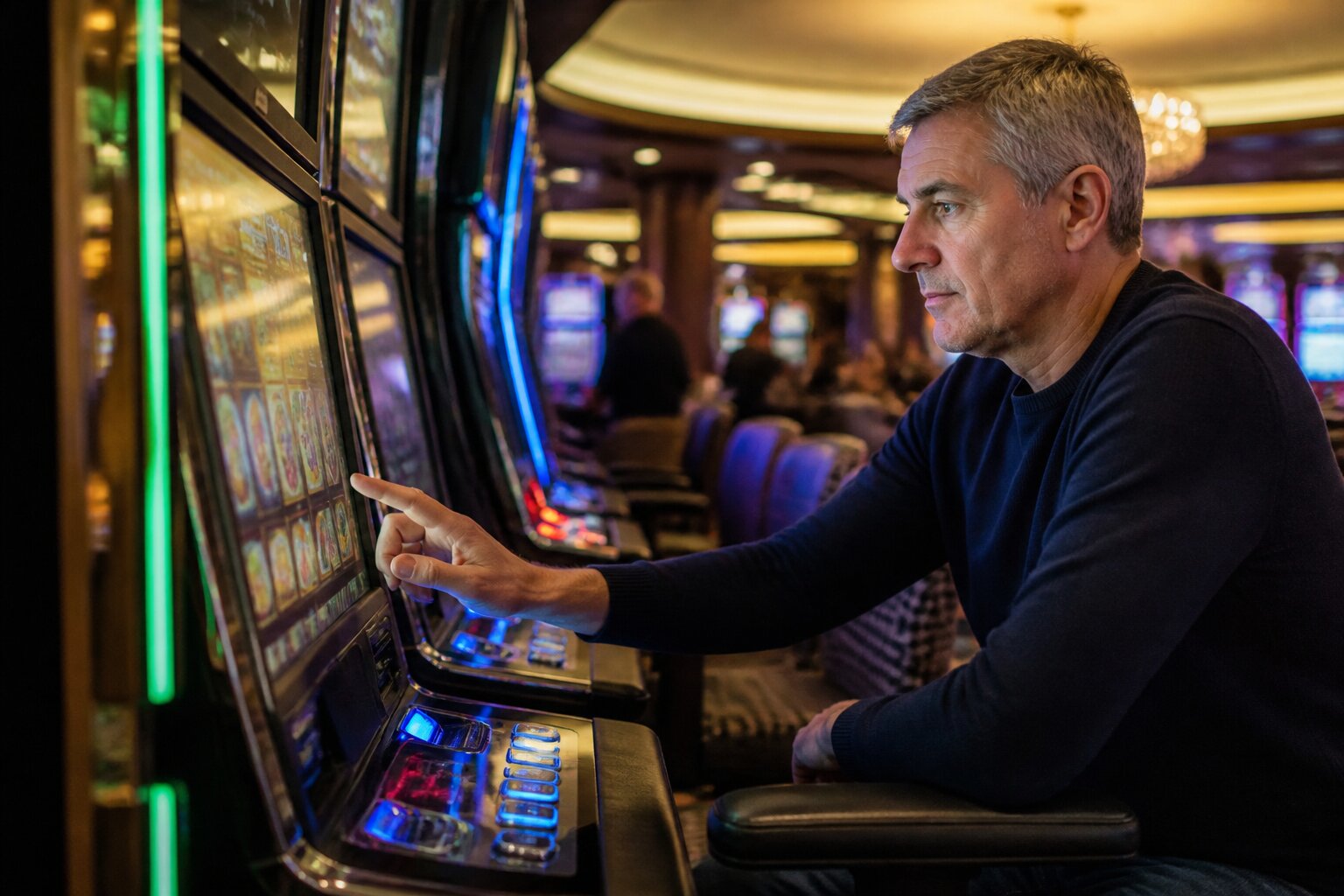
Ever noticed someone tapping, swiping, or giving a gentle knock on a slot machine screen and wondered what’s going on? These small actions are common in casinos and often attract curious glances.
There’s more to those behaviours than meets the eye: habit, psychology, design and social cues all play a part. In this post we explore why players do it, what — if anything — it changes, and what the behaviour tells us about how people play.
Read on to learn what’s behind the tapping and why it keeps happening from one machine to the next.
The Psychology Behind Tapping Slot Machines
Tapping the screen is usually about psychology rather than mechanics. Many players develop rituals that feel meaningful: tapping at a specific moment, nudging a machine, or repeating a phrase. These actions can come from watching others, copying a friend, or simply forming a habit over time.
A key factor here is the illusion of control, where people act as if their behaviour can influence the outcome. That feeling can make a session more engaging and help a player feel involved during pauses between spins. It can also be a way to manage nerves or heighten the emotional stakes when a bonus round appears.
It’s worth noting the technical side only once: the game’s result is determined by an internal system long before any on-screen animation finishes. So while these rituals affect how a player experiences the game, they do not change the underlying result.
Popular Beliefs: Does Tapping Help Win?
Stories circulate easily within casinos — someone taps and shortly afterwards the machine pays out, and that short sequence becomes a belief shared around. People also look for patterns or timings that might increase their chances, which explains why these ideas spread.
But the connection between a particular touch or timing and an improved outcome isn’t real. Repeating a ritual may feel effective because people remember the coincidences and forget the many times nothing happened. In practice, tapping or timing a screen doesn’t alter how the machine decides a result.
If you find these rituals entertaining, they’re harmless in moderation. Treat them as part of the experience rather than a technique that changes the game.
Human Behaviour & Superstitions in Casinos
Casinos are places where many rituals coexist. Some players prefer a particular machine, others have pre-play routines, and some carry charms or wear specific clothes. These behaviours often give a sense of continuity and control, even if they don’t influence outcomes.
Superstitious actions also serve social and emotional functions. They help people feel connected to a tradition, ease discomfort, or create a story to tell later. In communal settings like casinos, rituals can also be a form of communication — a way to show confidence, signal a mood, or join in with a group.
Understanding this helps explain why tapping persists: it fulfils personal and social needs without changing the technical operation of the machine.
Are There Any Benefits to Tapping the Screen?
When you strip away beliefs about changing results, tapping can still offer practical benefits. It can make the game feel more interactive and increase enjoyment for some players. A simple physical action can provide a sense of involvement and make time pass more pleasantly during slower moments.
During bonus features or animations, touching the screen can add a tactile element that enhances engagement. Small gestures may also help some players stay focused on the action, break up repetitive play and create a little ritual that feels satisfying.
Examples of tactile elements you might notice include:
- triggering on-screen animations or sound effects by tapping
- revealing bonus symbols or mini-game content
- speeding up or pausing decorative sequences in some titles
Effects on Game Function and Results
As previously noted, a game’s result is determined internally before the animation completes. Tapping the screen does not alter the outcome, odds, or payouts. Interactive features are designed to be part of the entertainment, not a mechanism to influence results.
That distinction matters: interaction changes how a player experiences a game, not how the game is decided. Keeping this clear helps set reasonable expectations and supports responsible play.
How Slot Machine Design Influences Player Actions
Designers use visuals, sounds and interactive elements to create an engaging experience. Bold colours, animated sequences and touchscreen prompts invite people to touch the screen, especially during bonus rounds where on-screen choices appear.
These features are deliberately attention-grabbing. They can heighten immersion and make a session feel more dynamic, which in turn encourages behaviours such as tapping or swiping. In other words, machines are built to invite interaction even though those interactions do not change how outcomes are determined.
This design intent explains much of the behaviour seen on casino floors and in online games — people respond to cues the machines give them.
Common Myths About Interacting With Slot Machines
A number of myths persist about influencing machines by interacting with them. Beliefs such as timing spins perfectly, tapping at a certain spot, or choosing a machine because it looks “due” for a payout are examples. These myths spread because people seek patterns where the underlying process is random.
Rather than repeat the technical details at length, keep this simple: nothing you do in the machine’s interface changes how results are chosen. Being aware of common misconceptions helps players focus on what does matter, such as how much time and money they want to spend and the entertainment value they expect in return.
Knowing the facts reduces wasted effort on rituals and keeps play sensible.
Responsible Gaming: What Should Players Know?
Enjoying slots responsibly means treating them as entertainment and setting boundaries so play stays under control. That includes being mindful of time and money spent, and taking advantage of tools or limits offered by operators to manage gambling behaviour.
Some practical approaches include using account controls to limit deposits or session length, taking regular breaks away from the floor or screen, and recognising signs that play is becoming problematic. If gambling ever feels like it’s causing stress or interfering with daily life, seeking support early is important. There are confidential services and support organisations that can offer advice and help.
Keeping play enjoyable depends on clear limits and being willing to use the safeguards available.
Play within your means and look after your wellbeing first.
**The information provided in this blog is intended for educational purposes and should not be construed as betting advice or a guarantee of success. Always gamble responsibly.