
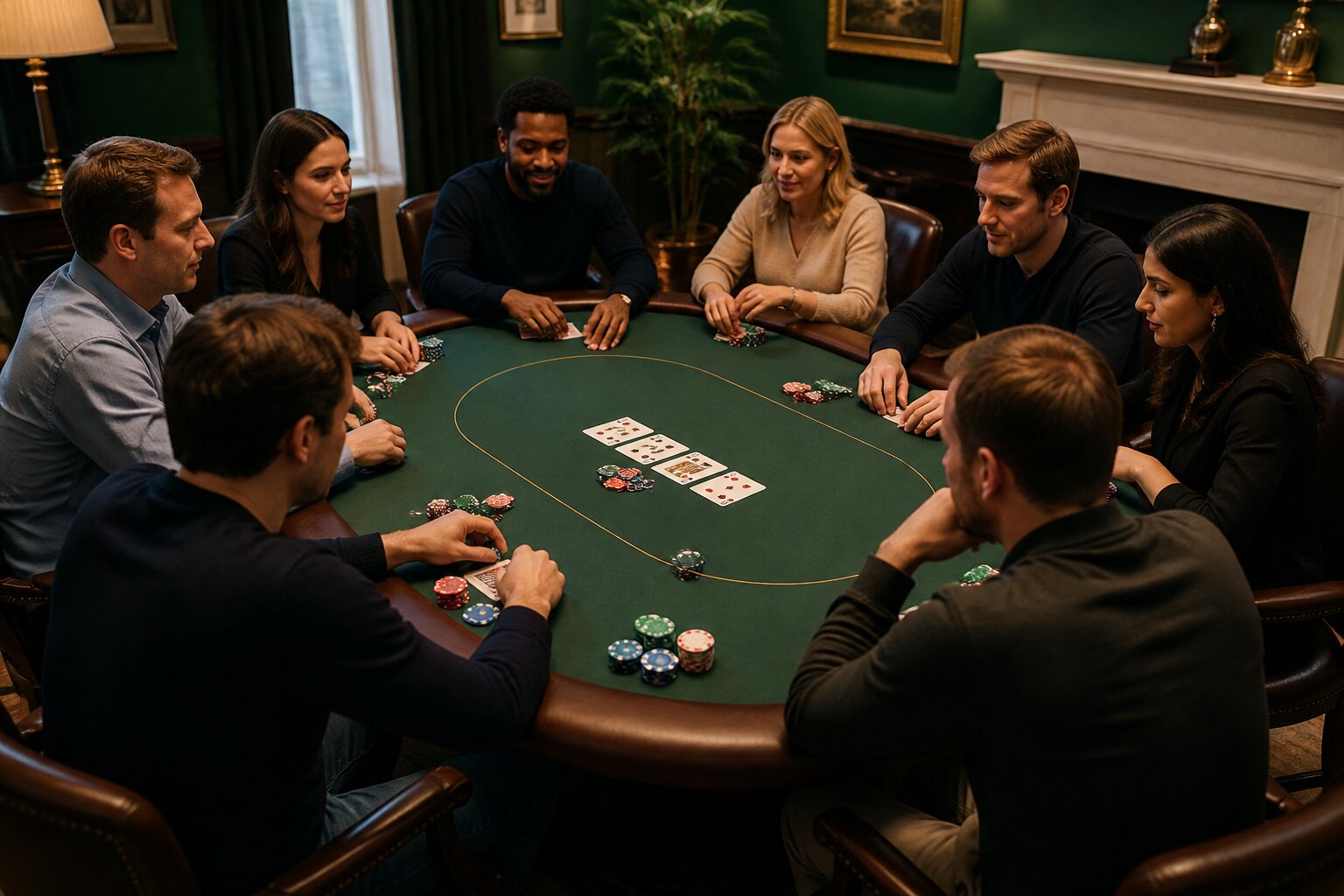
Ever sat down for a game of poker and wondered if there’s a “right” number of people for the table? Whether you’re playing for a laugh at home, heading to a local casino, or logging on to a popular online site, it’s a question that catches plenty of us out.
Too many players and each hand can drag; too few and the social aspect and reading of opponents change noticeably. The ideal number depends on the variant you’re playing—Texas Hold’em, Omaha, or Seven Card Stud—but there’s a reason certain table sizes are the norm from kitchen-table home games to major tournament rooms.
Finding the sweet spot is about fairness, pace and enjoyment. Read on to see how the usual formats compare and which might suit your next game.
What Is the Typical Number of Players at a Poker Table?
Across most live and online poker rooms, the most common formats for Texas Hold’em cash games are either 6 or 9 seats. Six-handed tables are usually called 6-max, while a full ring table generally seats 9 players. These arrangements balance the pace of play with time to observe other players.
In live tournaments, starting tables commonly hold 9 or 10 players. As players are eliminated, organisers combine tables to keep numbers balanced until final tables are reached. Online play is more flexible: heads-up games with two players and occasional 8-handed tables appear, but the 6- and 9-player formats remain widespread.
Remember that poker is strictly for adults; under-18s must not take part or access online games. With that covered, the next section compares how each table size feels in practice and why you might prefer one over another.
Standard Poker Table Sizes Compared
Different table sizes bring different rhythms and strategic considerations. Below is a comparison of the most common setups you will encounter.
| Table Size | Number of Players | Typical Use |
|---|---|---|
| Heads-Up | 2 | One-on-one cash games, sit & go tournaments |
| 6-Max | 6 | Fast-paced cash games, smaller online tournaments |
| 8-Max | 8 | Occasionally for online cash, some modern tournament formats |
| 9-Max | 9 | Standard full ring cash games, most live casino tables |
| 10-Max | 10 | Some major live tournaments, less common for cash games |
Heads-up play is intensely focused, with every decision directly affecting one opponent. 6-max tables increase involvement for each player and speed up action; the blinds come around faster and you will be in more hands. 9-max and 10-max tables slow the game slightly, giving more time to observe opponents and develop longer-term strategies. These differences influence bet sizing, hand selection and the psychological flow of play, which is useful to bear in mind when choosing where to sit.
Looking next at how these numbers interact with specific poker variants will clarify why some games favour certain table sizes.
How Do Player Numbers Differ Between Poker Variants?
Table size often depends on the game being played. Some variants require limits because of the number of cards dealt or the way betting rounds work.
Texas Hold’em vs Other Popular Games
Texas Hold’em is the UK’s most-played variant and adapts well to 6- and 9-player setups in both cash and tournament play. It scales comfortably: fewer players mean more frequent involvement, more players mean more multi-way pots.
Omaha, particularly Pot-Limit Omaha, commonly supports up to 9 or 10 players. Because each player receives four-hole cards, larger tables change the odds and lead to bigger, more complex pots. Seven Card Stud tends to cap at around 8 players due to the deck and the number of cards required per player. Variants such as Razz or Draw games are typically kept to 6–8 players for similar practical reasons.
Whether at home or in a cardroom, the variant should guide your table choice; some formats simply work better with a particular number of opponents. The following section looks at how flexible you can be with unusual player counts.
Can Poker Be Played with Unusual Player Counts?
Casual games often bend the standard rules. Home games with three, four or other odd numbers of players are perfectly viable and can be great fun. Smaller groups alter dynamics: betting becomes more aggressive, and positional play takes on greater importance.
Large social events or charity tournaments sometimes place 11 or 12 players around a table. Above about ten players, however, the game begins to slow considerably and managing the flow of play becomes harder, particularly in Hold’em where the number of dealt cards and betting rounds matter. Online platforms occasionally run special sit & go tournaments or short-handed cash games with atypical counts, but regulated live poker typically keeps tables within the usual 9 or 10 maximum to preserve fair play and manageable pacing.
No matter the size, make sure everyone playing is an adult and that basic safeguards are observed. Next, we’ll weigh up the advantages of full versus short-handed tables so you can decide which suits your next poker night.
Benefits of Full and Short-Handed Poker Tables
Full ring tables with 9 or 10 players create a measured atmosphere. Hands take longer and there are more opportunities to observe patterns in opponents’ betting and timing. This suits players who prefer a more strategic, observational style where larger, multi-way pots are common.
Short-handed tables, typically six players or fewer, keep action constant. Because the blinds rotate quickly and players are involved more often, games tend to be more aggressive and require quicker reads and adaptability. These tables reward a wider range of hands and more proactive betting strategies.
Choosing between the two comes down to the kind of experience you want: a social, thoughtful evening with plenty of table talk, or a brisk, competitive session focused on frequent decisions. Consider the skill levels at your table too—short-handed games can challenge casual players, while full ring games might be too slow for those wanting more hands per hour. The next section explains how to pick the right table size for your specific gathering.
Choosing the Right Table Size for Your Poker Night
Select a table size that fits the mood and practicalities of your event. If you want a relaxed social evening with time for conversation and snacks, a full table of 8 or 9 players will suit. For a tighter group aiming for more hands and faster play, five or six players provides a livelier, more tactical session.
Beyond comfort in seating, agree on stakes and any house rules before you start so expectations are clear. Make sure everyone is of legal age and aware of boundaries they are comfortable with. Keep an eye on each player’s well-being and be ready to pause or adjust the game if anyone becomes uncomfortable.
With those basics set, you’ll have a fair, enjoyable game whether you’re at a kitchen table or a tournament room, and you’ll know which table size matches the tone you want for the night.
Play Casino Games Online at Daisy Slots
We’d love to welcome you to our friendly community at Daisy Slots, where we’re all about making your gaming experience enjoyable and entertaining. Whether you’re new to online casino games or have played before, there’s a place for you with us.
It’s simple to begin: just create your account, make a deposit and you can start exploring everything we have to offer. We look forward to having you with us soon.
**The information provided in this blog is intended for educational purposes and should not be construed as betting advice or a guarantee of success. Always gamble responsibly.