
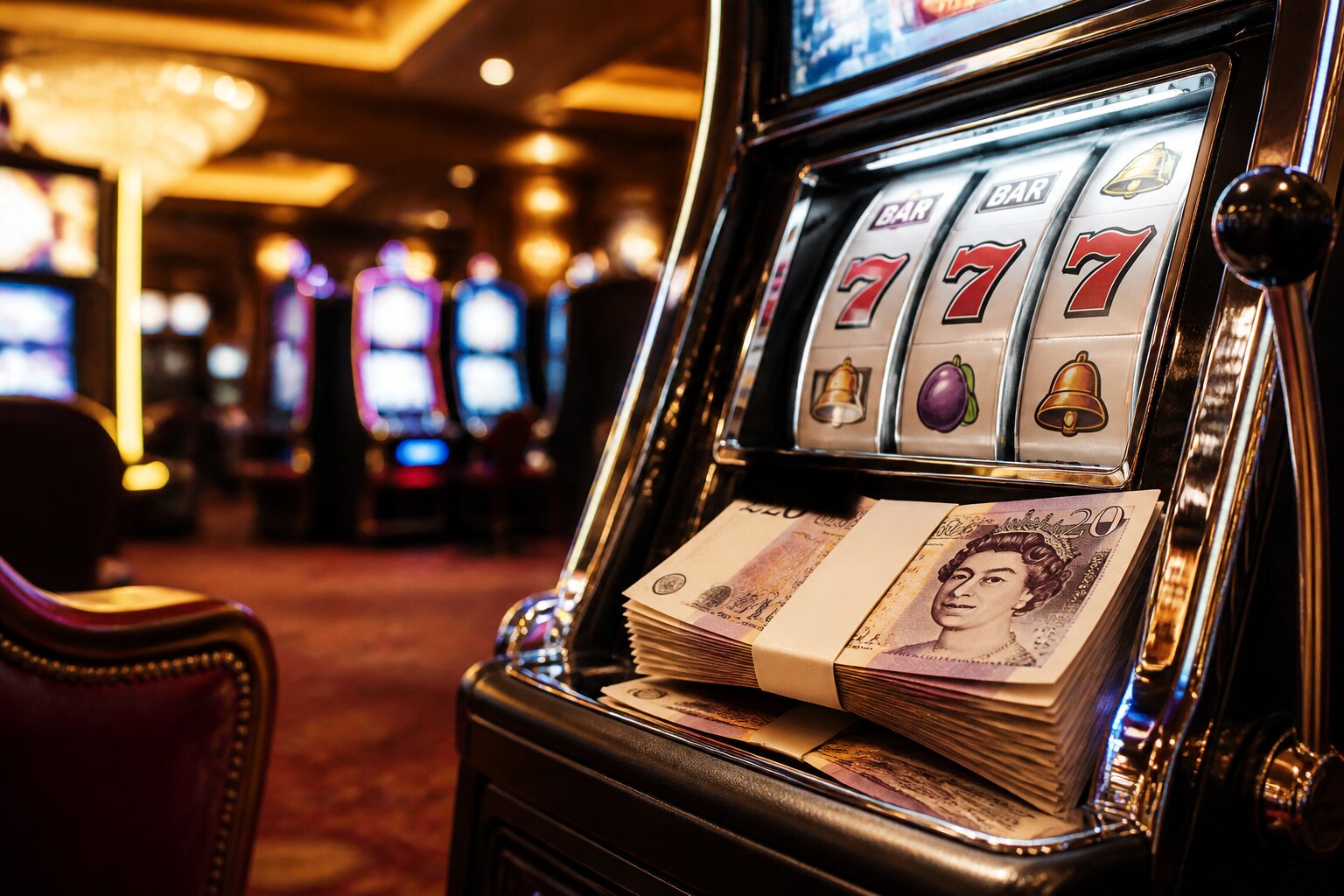
Have you ever seen a big jackpot hit in a casino or read about someone walking away with a huge payout after a single spin? It’s natural to wonder whether slot machines actually deliver those big prizes or if the displays and headlines give a misleading impression.
There are plenty of myths about how jackpots work and why they pay out. Clearing up those misconceptions helps you understand what really happens when the reels spin.
Below we separate fact from fiction, explain how odds and payout percentages operate, and show the difference between fixed and progressive jackpots so you know what to expect before you play.
Understanding Slot Machine Jackpots
A slot machine jackpot is the top prize available on a particular game, and it’s often what draws people to the reels. In UK slots you will commonly encounter two broad types of jackpots: fixed and progressive.
A fixed jackpot pays a set sum whenever the qualifying combination appears. For example, a slot might carry a fixed top prize of £1,000, which means every time that specific win occurs the prize is the same. This predictability makes fixed jackpots easier to compare across games.
A progressive jackpot grows over time because a small portion of each bet contributes to a shared prize pool. As more bets are placed, the pot increases until a winning event triggers the full payout. Progressive pools can reach substantial sums over time and may be linked across many machines or games.
All legitimate UK slots use certified random number generation so outcomes are determined by chance, not by timing or who is playing. Next, we’ll look at the common myths that arise from misunderstanding how these systems work and why they persist.
Common Misconceptions About Jackpot Wins
Misunderstandings about jackpots are widespread. Below are several persistent beliefs and the realities that correct them.
“This machine is due for a win.”
The idea that a machine which has not paid for a while is more likely to pay soon misunderstands how random number generation works. Each spin is independent, so prior results do not alter future odds.
“The casino controls when a jackpot is paid.”
Licensed games must operate using certified software that cannot be adjusted to trigger wins at particular times. Independent testing and regulation ensure outcomes are not scheduled or manipulated.
“Jackpots are more likely to pay out at certain times.”
The time of day or how busy a venue is does not change the probability of a payout. The underlying mathematics of the game remain the same whether it’s peak or quiet hours.
“Only new players win big.”
The software does not track or favour new players. Chances of a jackpot do not depend on a player’s history with a game.
These points address many of the stories and assumptions you might hear around casinos. With those myths cleared up, the next section explains the actual odds behind jackpot wins and how to interpret them.
Jackpot Odds: What Are Your Real Chances?
When people ask about their real chances, the answer depends on the specific game and the type of jackpot. Game mathematics determine odds, and reputable games make these details available in the paytable or information menu.
Fixed jackpot odds are set by the game’s design. For instance, a traditional single-machine jackpot might be designed so the top prize occurs, on average, once every 10,000 spins. Modern online titles vary widely, and published top-prize odds can range from a few thousand to many tens of thousands of spins for a single payout event.
Progressive jackpots usually show much longer odds because their prize values are larger. On multi-game progressive networks the chance of winning the main pool can be extremely low—often many millions to one—because winning criteria are calibrated to keep the pot building over a long period.
Regulation requires clear information about how games operate, so you can check the exact odds where they are provided. Understanding those figures helps set realistic expectations about how often top prizes occur and why large jackpots are rare by design. The following section looks at how payout percentages, the other side of the math, relate to those odds.
How Payout Percentages Actually Work
Payout percentages, commonly called RTP (Return to Player), show the theoretical portion of stakes a game will return to players over a very large number of spins. RTP is expressed as a percentage; for example, an RTP of 96.5% means that, over the long run, £96.50 would be returned for every £100 wagered.
RTP is calculated from the game’s probabilities and prize structure and is verified by independent testing bodies. It is not a promise about any single session. Short-term results can vary widely; a brief play sequence might yield a big win or a run of small returns, but the long-term average is what RTP describes.
Providers display RTP and related information within each game’s details so players can make informed choices. If you wish to manage your playing, tools such as deposit limits and reality checks are commonly offered to help keep play within chosen boundaries. With a grasp of both odds and jackpots, it becomes clearer how jackpots fit into a game’s overall payout profile.
Progressive vs Fixed Jackpots: Know the Difference
Knowing whether a jackpot is fixed or progressive helps decide what kind of experience to expect and how to plan your play.
Fixed jackpots are steady and transparent. When a game has a fixed top prize you know the exact maximum payout in advance, and odds tend to be shorter than for large progressives because the prize size is capped.
Progressive jackpots accumulate value across bets. They can start at a modest amount and grow as players contribute, sometimes across a network of games. That growth can produce very large payouts, but the design also means the top prize will be awarded only rarely.
Key contrasts include:
- Prize amount: fixed prizes stay the same; progressive prizes can increase and reach much higher totals.
- How they build: fixed prizes are static; progressives grow with play.
- Odds: progressives typically have longer odds due to larger top prizes.
Deciding between the two comes down to whether you prefer predictable top payouts or the chance, however infrequent, of a much larger prize. The next section explains how independent testing and regulation protect fairness so you can trust those distinctions.
Can Casinos Control Jackpot Payouts?
Casinos and sites in the UK cannot influence when jackpots are paid. Games run on certified random number generators that produce independent outcomes for each spin. Independent testing laboratories assess games for randomness and fairness before they are approved for use.
Regulatory standards require transparency and regular checks to maintain integrity. That means outcomes cannot be scheduled or altered to favour specific times, players, or bet sizes. Whether playing on a venue floor or through a web browser, the mechanisms that determine jackpots operate the same way under the same standards.
Knowing that payouts are governed by established technical and regulatory safeguards should give confidence that game outcomes are not being steered. With this understanding of how jackpots, odds, RTP and oversight all fit together, you have a clearer picture of what to expect when you play.
Play Online Slots at Daisy Slots
We welcome you to explore all that our site has to offer and enjoy playing in your own time. There is plenty to discover, and we are always glad to have new players join us.
Getting started is simple: just create an account, make a deposit and you will be ready to play. We look forward to seeing you enjoy the experience with us.
**The information provided in this blog is intended for educational purposes and should not be construed as betting advice or a guarantee of success. Always gamble responsibly.