
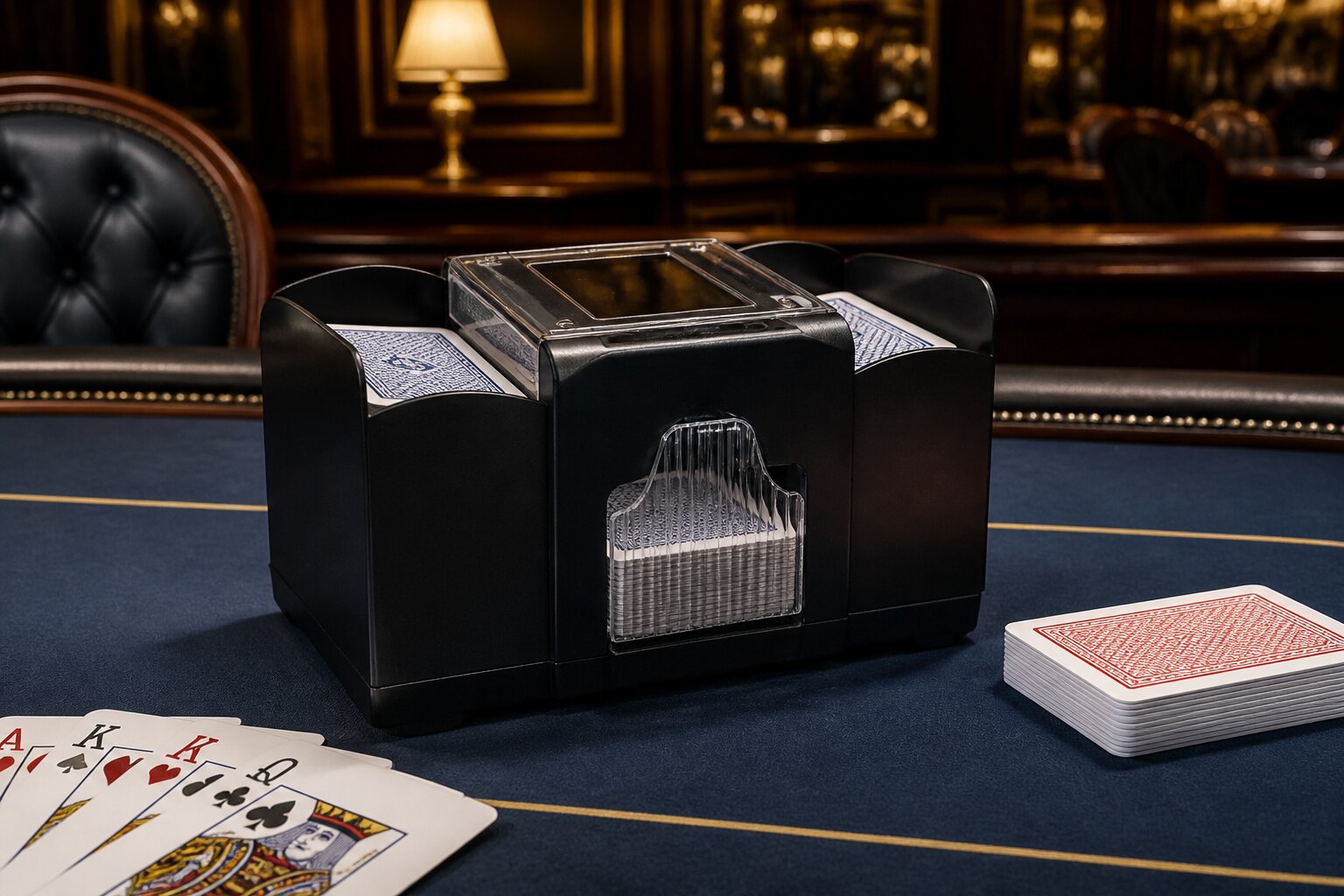
Ever sat at a casino table and wondered whether the deck is truly random? You are not alone. The buzz of card games such as blackjack and poker depends on a fair shuffle, and as casinos move from manual methods to machines, that familiar whirr has become part of the experience.
Automatic shufflers now handle most of the work behind the scenes. Understanding how they operate and why casinos use them can give you confidence at the table and something interesting to talk about while chips are counted.
What Are Casino Shuffle Machines?
Casino shuffle machines are devices that automatically mix playing cards at the tables. You usually see them at blackjack and poker games, where they replace or assist the traditional hand shuffle.
Instead of the dealer riffle-shuffling by hand, the dealer feeds used cards into the machine, which then randomises the deck using mechanical movements and electronic checks. Many models include sensors that count cards and look for damage or marking, so only a complete, untampered deck proceeds to play.
The main benefits are consistency and speed. Machines limit human error, ensure each shuffle meets regulatory standards, and shorten the pause between rounds so the table keeps moving. With that in mind, the next section explains how the different parts inside these units work together.
How Do Automatic Card Shufflers Work?
Automatic card shufflers combine mechanical elements and electronic monitoring to produce a thoroughly mixed deck every time.
Once the dealer places cards into the machine, internal sensors count and inspect them. This prevents games continuing with missing or altered cards and is an important step in preserving integrity. Mechanically, the unit may split the deck into packets, lift and reinsert sections, or use rotating wheels to interleave cards. Different designs aim to replicate or exceed the randomness achievable by hand.
A completion panel or indicator usually tells staff when the machine has finished its checks and the deck is ready, or if an error requires attention. These built-in safeguards give dealers and players a clear signal that the next round can begin with a properly mixed deck. That practical setup leads into the range of shuffler types and where each one is typically used.
Types of Automatic Shufflers Used in Casinos
Casinos select shufflers to suit particular games and tempos. The main categories are continuous shufflers, batch shufflers, manual devices and hybrid models, each chosen for different table needs.
Continuous vs Batch Shufflers: What’s the Difference?
Continuous shufflers accept cards throughout play and mix discarded cards back into the deck while the game continues. They are common at multi-deck blackjack tables where keeping play flowing is a priority. By reintroducing cards as the game progresses, continuous units reduce downtime between hands and support higher table throughput.
Batch shufflers take an entire deck or decks, shuffle them completely, then return the mixed pack to the dealer. This approach is favoured for poker and single-deck games where a full shuffle before each hand is important. Batch machines perform a thorough randomisation and deliver the deck only once all checks are complete.
Manual and Hybrid Shufflers Explained
Manual shufflers are simple devices that require the dealer to operate them, helping randomise cards without full automation. They remain useful in smaller venues or private games where full machine infrastructure is unnecessary.
Hybrid shufflers combine mechanical automation with dealer input. The machine performs the core mixing, while staff load and trigger the cycle. Hybrid models are a compromise for settings that want increased consistency but also value human oversight or a particular tournament rhythm.
With the types described, it helps to see why casinos prefer automated machines overall, and how that choice aligns with regulatory expectations and operational needs.
Why Do Casinos Use Shuffle Machines?
Casinos use shuffle machines principally to preserve fairness, improve transparency, and keep games running efficiently. These goals are aligned with regulatory standards and the practical realities of busy table floors.
Removing the shuffle from human hands reduces the chance of accidental patterns or disputes, and it standardises the process across different dealers and shifts. Continuous units help maintain a steady game flow in high-volume settings, while batch machines make sure a full, verified shuffle precedes each hand in games where that matters more.
Operators also rely on machine error detection and card-tracking features to prevent problems before they affect play. The following section looks in greater depth at how these systems support fairness and integrity at the table.
Impact of Shuffle Machines on Fairness and Game Integrity
Shuffle machines strengthen fairness by eliminating many of the variables inherent to human shuffling. Built-in card recognition, anti-tampering measures and routine testing reduce the risk of missing or duplicated cards and make deliberate manipulation far more difficult.
Regulatory frameworks require machines to meet certain performance and security standards. Devices undergo certification and ongoing checks so their randomisation methods and card-tracking functions remain reliable. This means players at any compliant venue can expect the same baseline of integrity during play.
Different shuffler styles serve different needs, but when correctly maintained and audited, they all aim to deliver the same outcome: an impartial deck, properly checked, ready for the next deal. That reliability also depends on the maintenance practices described next.
Common Myths About Shuffle Machines
Several misconceptions circulate about shuffle machines and their use. Clearing these up helps understand the true purpose of the technology.
One myth is that machines are rigged to favour the house. In practice, devices used in regulated venues must meet independent testing and certification, and their operation is subject to oversight to ensure fair randomisation.
Another belief is that machines only speed play so players lose more quickly. While machines do reduce downtime between hands, their main role is to deliver consistent, reliable shuffles and to keep games moving for the convenience of all participants.
Some people assume shuffles by machine are easy to predict or tamper with. Modern units include strong security and detection mechanisms to prevent manipulation and to flag irregularities immediately to staff.
Having addressed common misunderstandings, the article now turns to how operators keep these machines working correctly over time.
Care and Maintenance of Shuffle Machines in Casinos
Regular maintenance keeps shuffle machines accurate and dependable. Routine cleaning removes dust and card residue that can obstruct sensors, while technicians check moving parts for wear and apply manufacturer-approved servicing and software updates.
Diagnostics confirm that randomisation routines and card-counting functions remain within required tolerances. Security systems are tested so the unit will lock out and alert staff if it detects duplicate, missing or altered cards. External audits also verify that servicing and operation meet regulatory expectations.
Proper care ensures machines continue to support fair play and reliable game flow. When maintenance and oversight are in place, shuffle machines provide a transparent, consistent foundation for every table’s game, and that is the best reassurance any player can have about the integrity of the next deal.
Enjoy Casino Games at Daisy Slots
Fancy adding a bit of excitement to your leisure time? We’d love for you to experience the fun our casino games can bring.
It’s easy to get involved: just create an account, make a deposit and you’re ready to enjoy what we have to offer. We look forward to welcoming you to our friendly community.
**The information provided in this blog is intended for educational purposes and should not be construed as betting advice or a guarantee of success. Always gamble responsibly.